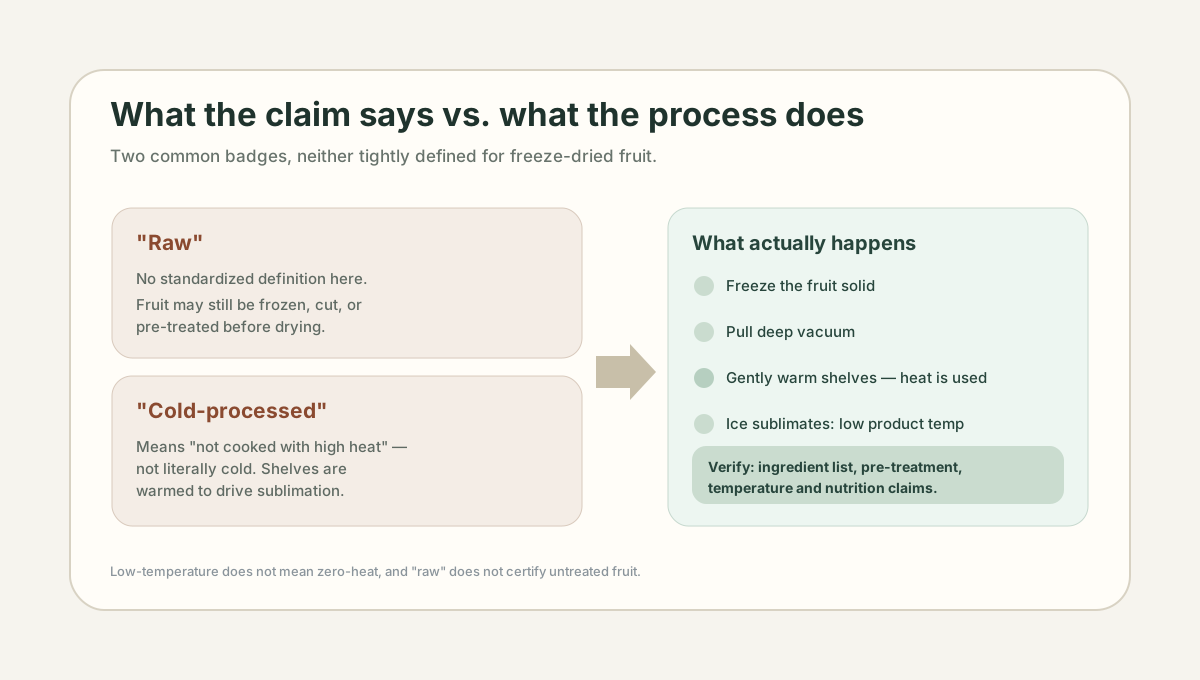
- Freeze-drying removes water at low temperatures under vacuum rather than with high heat, which is the real basis for 'cold-processed' style claims.
- 'Raw' has no standardized legal definition for freeze-dried fruit, so the same word can mean very different things between brands.
- The process is low-temperature, not zero-heat: shelves are usually warmed to drive sublimation, so 'cold' is relative, not literal.
- Treat these as directional marketing terms, not guarantees; verify pre-treatment, temperature claims, and any nutrient statements against the spec sheet and ingredient list.
"Raw" and "cold-processed" are two of the most common badges on premium freeze-dried fruit. They are appealing because they gesture at something real: freeze-drying does not blast the fruit with the high heat of an oven or a hot-air tunnel. But the words are doing more marketing work than the process strictly supports, and neither term has a tight, standardized definition for this category.
This guide explains what the claims usually mean, where they quietly overstate, and what to verify instead of taking the adjective at face value.
The direct answer
"Cold-processed" is a reasonable, if loose, description of freeze-drying because the process removes water at low temperatures under vacuum rather than by cooking. "Raw" is shakier: it has no standardized meaning for freeze-dried fruit, so it can describe anything from genuinely untreated fruit to fruit that was frozen, cut, and pre-treated before drying. Both terms are directional, not guarantees.
Why the claims exist: how freeze-drying differs from other drying
To judge these claims, it helps to know what freeze-drying actually does. The fruit is frozen solid, placed under a deep vacuum, and then gently warmed so the ice turns straight from solid to vapor without passing through liquid water. FDA's basic description of the process is freezing plus vacuum plus applied heat for sublimation.
That is genuinely different from oven drying or hot-air drying, where fruit sits in hot air for hours and its temperature can climb well above what freeze-drying uses. Because freeze-drying keeps product temperatures low, it tends to be gentler on structure, color, and some heat-sensitive compounds. This real difference is the honest basis for "cold-processed" language.
Where "cold-processed" overstates
The problem is the word "cold." Freeze-drying is low-temperature relative to cooking, but it is not a cold process from start to finish. The dryer shelves are usually warmed on purpose, because sublimation needs energy. Without that heat, the ice would not leave the fruit in a reasonable time.
So "cold-processed" is best read as "not cooked with high heat," not as "never warmed." The product temperature is kept low to protect structure, but heat is part of the process, not absent from it. A brand claiming a literally cold, no-heat process is describing a marketing ideal rather than the physics.
Why "raw" is the weaker claim
"Raw" carries more baggage because people read it as "nothing was done to this fruit." For freeze-dried fruit, that reading rarely holds, and the term is not standardized here the way regulated terms are.
Several ordinary steps can sit behind a "raw" freeze-dried fruit without contradicting the brand's own definition:
- the fruit was frozen before drying
- it was washed, peeled, cored, or sliced
- it was pre-treated to protect color, such as a dip in ascorbic or citric acid
- it was part of a blend with added ingredients
None of those are problems in themselves. But they show that "raw" is describing the drying method, not certifying that the fruit is completely untouched. Because there is no fixed definition, two brands can both say "raw" and mean different things.
When a label says "raw," mentally translate it to "dried without high cooking heat." Then check the ingredient list and any process notes to see what actually happened before drying. The adjective sets an expectation; the ingredient statement tells you the truth.
The nutrition angle: cautious, not automatic
Both claims are often paired with an implication that the fruit keeps more of its nutrition. Low-temperature drying can be gentler on some heat-sensitive compounds than high-heat methods, and freeze-drying is well regarded for preserving structure and flavor. That is a fair general point.
But "gentler than high heat" is not the same as "retains everything." The actual outcome depends on the fruit, the specific nutrient, whether the fruit was pre-treated, and how the whole process was run. Broad claims like "retains all the nutrients of fresh fruit" go beyond what a label adjective can support. Treat quantitative nutrition claims as things a brand should be able to back with data, not as automatic consequences of the word "raw."
What to verify instead
Because these terms are unregulated for freeze-dried fruit, their value comes from the specifics behind them. A few checks separate a meaningful claim from a decorative one.
- Read the ingredient statement. A single-ingredient product ("strawberries") supports a "raw"-style story better than a blend with added sugar, oils, or coatings.
- Look for pre-treatment. Ascorbic or citric acid, or added color, are common and legitimate, but they complicate a strict "raw" reading.
- Check any temperature claims. If a brand states a maximum product temperature, that is more informative than the word "cold."
- Ask for a spec sheet. Commercial buyers can request process and specification detail rather than relying on front-of-pack adjectives.
- Be wary of absolute nutrition claims. "Gentle, low-temperature drying" is defensible; "retains 100 percent of nutrients" usually is not without evidence.
What these claims do and do not tell you
Put simply, "raw" and "cold-processed" reliably tell you one thing: the fruit was dried without the high heat of oven or air drying. That is a real and reasonable distinction, and it is why freeze-dried fruit often keeps better color and structure.
They do not, on their own, tell you that no heat was used, that the fruit was completely untreated, or that every nutrient survived intact. Those are separate questions answered by the ingredient list, the spec sheet, and any data the brand can provide.
Bottom line
On freeze-dried fruit, "cold-processed" is a fair shorthand for low-temperature vacuum drying, and "raw" is a looser, undefined term that mostly means "not cooked with high heat." Both point at a genuine advantage of the process, but neither is a regulated guarantee. Read them as directional marketing, then confirm the details that actually matter — ingredients, pre-treatment, and any temperature or nutrition claims — before you rely on them.
Frequently Asked Questions
Is freeze-dried fruit actually raw?
There is no standardized definition of 'raw' for freeze-dried fruit, so it depends on the brand. Freeze-drying does not cook the fruit with high heat, which is why the term is used, but the fruit may have been frozen, cut, or pre-treated first, and 'raw' does not certify any of that.
Does 'cold-processed' mean no heat is used at all?
No. Freeze-drying is low-temperature compared to oven or air drying, but the dryer shelves are usually warmed to supply the energy that drives sublimation. 'Cold-processed' reflects the absence of high cooking heat, not a literally cold process throughout.
Do these claims mean more nutrients are preserved?
Low-temperature drying can be gentler on some heat-sensitive compounds than high-heat drying, but the size of any nutritional benefit depends on the fruit, the specific nutrient, and the whole process. Treat broad 'retains all nutrients' claims cautiously unless the brand provides data.
Are 'raw' and 'cold-processed' regulated terms?
They are not tightly defined for freeze-dried fruit the way terms like 'organic' or the Nutrition Facts panel are. They function mainly as marketing descriptors, so their reliability comes from the specifics a brand can back up, not from the words themselves.
What should I check instead of trusting the claim?
Look at the ingredient list for pre-treatments or added sugar, check any stated processing temperatures, and ask for a spec sheet if you are a commercial buyer. Concrete details are more meaningful than the label adjectives.
Primary sources & further reading
- Lyophilization of Parenteral (7/93) U.S. Food & Drug Administration Referenced for the description of freeze-drying as freezing plus vacuum plus applied heat for sublimation, which is why the process is low-temperature but not heat-free.
- Freeze-Drying of Plant-Based Foods Foods / PubMed Central Referenced for the low product temperatures during drying and the general gentleness of the process toward structure and some heat-sensitive compounds.
- Food Labeling Guide U.S. Food & Drug Administration Referenced for the general framework of regulated versus unregulated label terms and the importance of the ingredient statement and Nutrition Facts panel.
External links open in a new tab. We do not receive compensation from any organization listed; sources are referenced because they are primary, current, and publicly verifiable.