- Parenthetical sub-ingredients usually identify the components inside a compound ingredient or inclusion.
- On freeze-dried fruit products, the parenthetical line often reveals whether a fruit piece is plain, sweetened, flavored, coated, or carried with other ingredients.
- U.S. rules generally allow a manufacturer either to list the compound ingredient with its parenthetical components or to list every component directly in the full ingredient statement.
- For label reading, the fastest habit is to read the named ingredient first, then ask what the parentheses add to its commercial meaning.
Ingredient lists often look straightforward until one item opens into parentheses.
That is where a freeze-dried fruit product can stop being "just fruit" and become something more specific.
The direct answer
Parenthetical sub-ingredients on a freeze-dried fruit label usually mean that one named ingredient in the formula is itself made of multiple components. The parentheses are there to show what is inside that ingredient, and those inner components often reveal whether the product is plain fruit, sweetened fruit, flavored fruit, coated fruit, or a more engineered inclusion.
The named ingredient is the headline. The parentheses are the fine print that often changes the meaning.
Why these parenthetical lists exist
Under U.S. ingredient-list rules, foods generally list ingredients by common or usual name and in descending order by weight. When one ingredient is itself made of two or more ingredients, the label may show that by listing the main ingredient name followed by its components in parentheses.
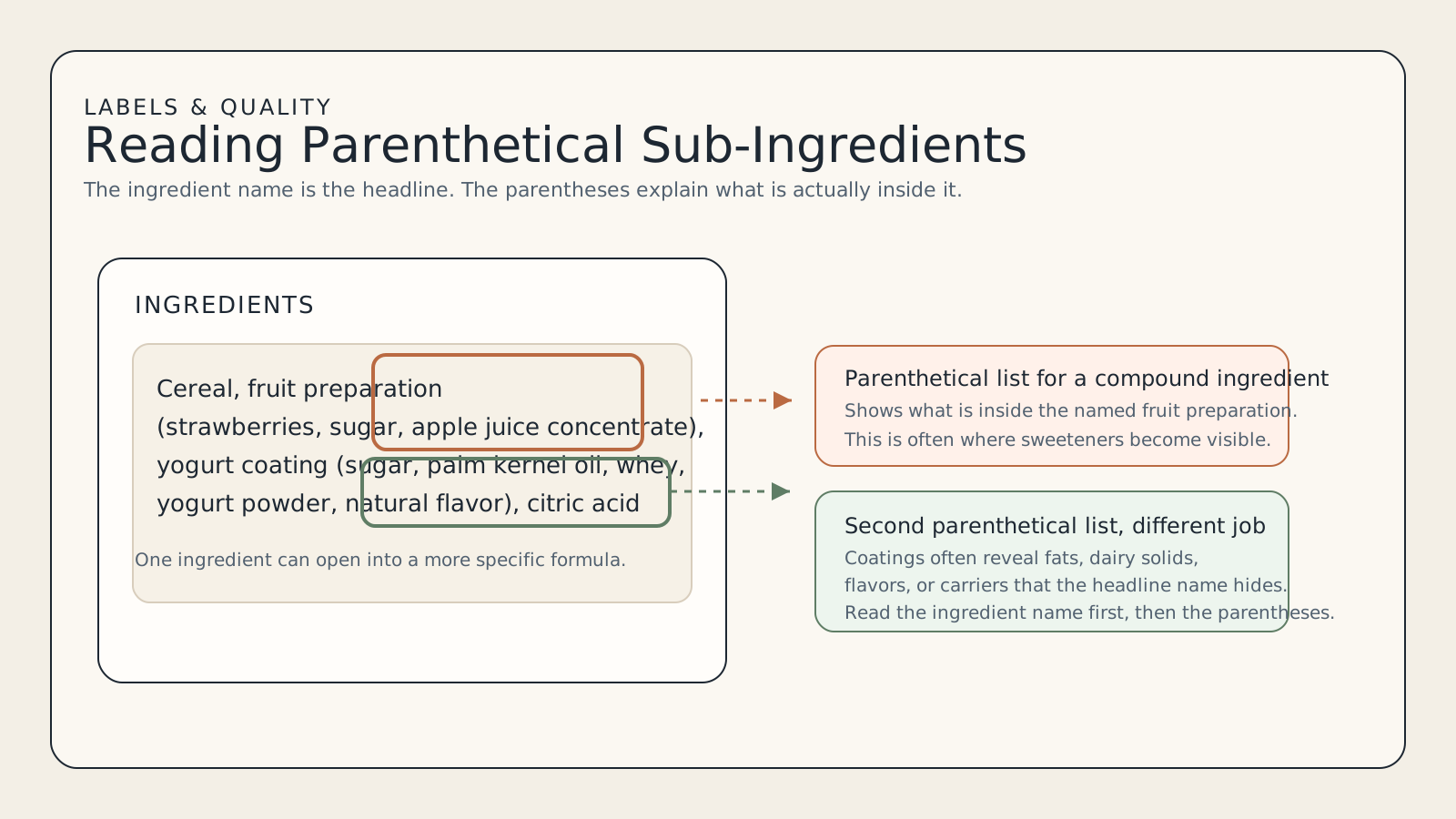
That is why a label may show something like:
- fruit preparation
(strawberries, sugar, apple juice concentrate) - yogurt coating
(sugar, palm kernel oil, whey, yogurt powder, natural flavor) - seasoning blend
(citric acid, natural flavor, color)
The important point is that the product is not only made of the headline ingredient name. It is made of the underlying components too.
The same formula can be written two different ways
One reason these labels confuse readers is that the manufacturer often has more than one allowed path.
In general, a company may either:
- list the compound ingredient name and then show its components in parentheses, or
- break those components out directly into the overall ingredient statement in the finished food
That means two labels can describe a similar formula with different visual logic.
So when comparing products, the right reading habit is not "Does this label use parentheses?" It is "What ingredients are actually present once I unfold the full list?"
Why this matters in freeze-dried fruit
Freeze-dried fruit packaging often leans on simplicity.
That is reasonable when the bag truly contains plain fruit. But many products in the category are not plain fruit-only bags. They may include:
- sweetened fruit pieces
- fruit preparations
- coated inclusions
- flavor systems
- carrier-based powders
- anti-caking systems
The parenthetical section is often where that reality becomes visible.
For example, a named ingredient that sounds fruit-led may turn out to contain:
- added sugar
- juice concentrate used for sweetness
- starches or carriers
- oil-based coating components
- natural flavors
That does not automatically make the product bad. It does make the product more specific than the front panel may suggest.
Read the ingredient name first, then the parentheses
A simple way to avoid getting lost is to read in two passes.
First pass: what is the named ingredient?
Ask what role the ingredient is claiming:
- freeze-dried strawberries
- mango pieces
- yogurt coating
- fruit preparation
- berry blend
Second pass: what do the parentheses add?
Ask what the parentheses reveal:
- plain components only
- sweetener components
- flavor additions
- coating fats
- carriers or stabilizers
This second pass is where the product usually shifts from "fruit" to a more precise commercial category.
What parentheses do not tell you
They are useful, but they have limits.
Parenthetical sub-ingredients usually do not tell you:
- the exact percentage of each component
- whether one component is visually dominant in the bag
- whether the product will eat like a plain-fruit snack
- whether the added components are doing sweetness, texture, coating, or shelf-handling work more than flavor work
That is why label reading still needs the surrounding context:
- overall ingredient order
- Nutrition Facts
- product name
- actual product format
A practical label shortcut
When you see parentheses on a freeze-dried fruit label, ask four quick questions:
- What is the named ingredient?
- What does the parenthetical list add to it?
- Do those additions change the product from plain fruit into a more formulated snack or ingredient?
- Would I describe this bag differently after reading the parentheses than I would have from the front panel alone?
If the answer to the last question is yes, the parentheses did their job.
Bottom line
Parenthetical sub-ingredients matter because they show what is inside a compound ingredient, and on freeze-dried fruit labels that often reveals the product's real formula more clearly than the headline name does.
Read the ingredient name first. Then read the parentheses as the explanation of what that ingredient really is.
Frequently Asked Questions
What do parentheses usually mean in an ingredient list?
They usually mean that one named ingredient is itself made from multiple components, and the label is showing those sub-ingredients together after the main ingredient name.
Does a parenthetical list mean the product is highly processed?
Not automatically. It only means one ingredient has internal components. The important question is what those components are and whether they change the product from plain fruit into a more formulated item.
Can a manufacturer list the components without parentheses instead?
Often yes. U.S. rules generally allow either a compound ingredient followed by a parenthetical list or an ingredient statement that lists each component directly in descending order in the finished food.
What should I watch for inside the parentheses?
Sweeteners, juice concentrates used as sweeteners, flavors, oils, starches, carriers, anti-caking ingredients, or coating components. Those often change the product type more than the main ingredient name suggests.
Do parentheses tell me exact percentages?
No. They identify components, not exact amounts. You still need the overall ingredient order, Nutrition Facts panel, and product context to judge how much each component matters.
Primary sources & further reading
- 21 CFR 101.4 - Food; designation of ingredients Electronic Code of Federal Regulations Referenced for the U.S. requirement to list ingredients by common or usual name and, for certain compound ingredients, either declare parenthetical components or incorporate those components directly into the finished-food ingredient statement.
- Guidance for Industry: Food Labeling Guide U.S. Food & Drug Administration Referenced for FDA's practical ingredient-list and label-reading guidance used to interpret packaged-food labels.
External links open in a new tab. We do not receive compensation from any organization listed; sources are referenced because they are primary, current, and publicly verifiable.