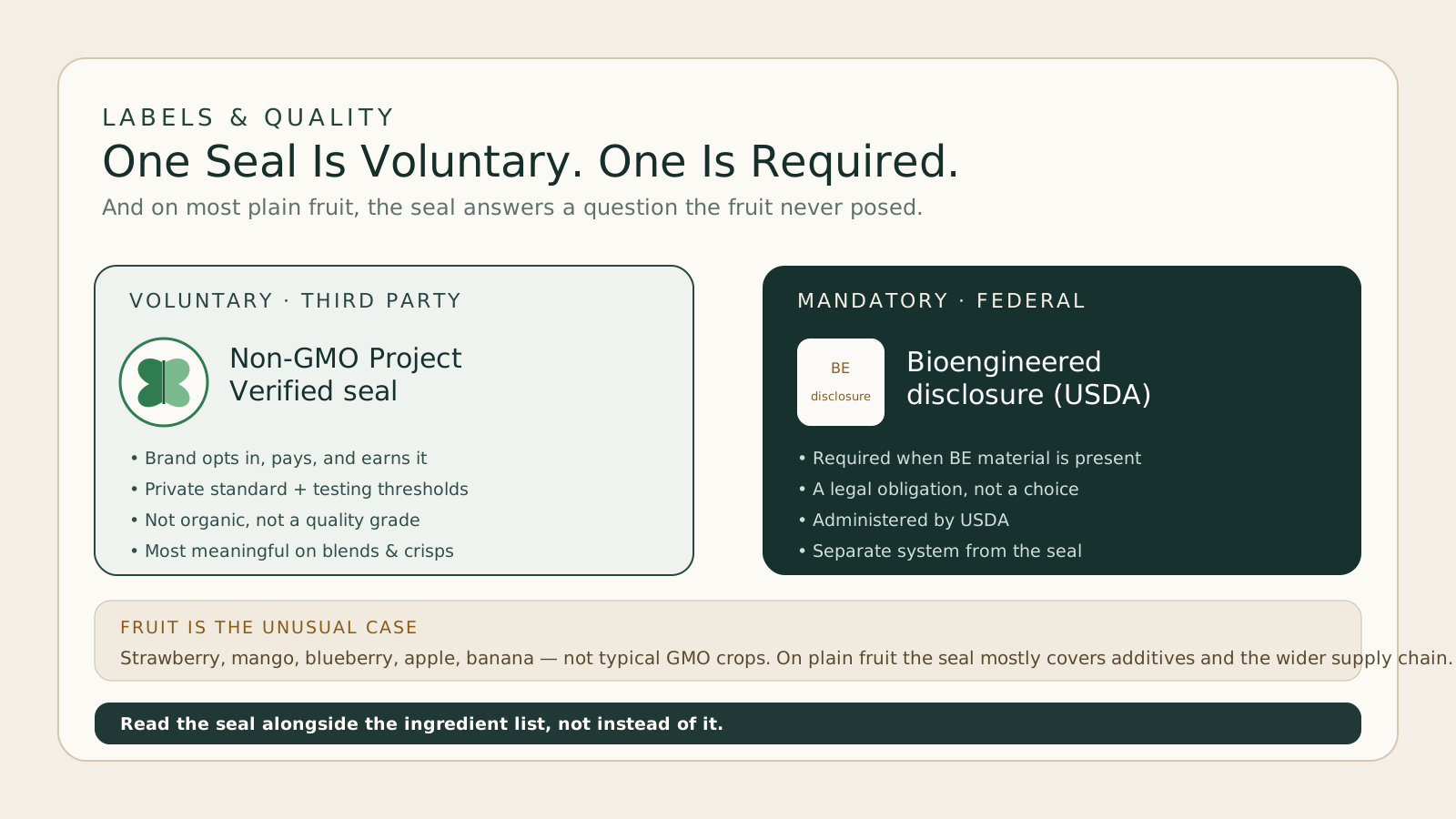
- Non-GMO Project Verified is a voluntary third-party certification, separate from the mandatory USDA Bioengineered disclosure.
- Most common fruits are not genetically engineered crops, so on plain freeze-dried fruit the seal often addresses additives, carriers, and processing inputs more than the fruit.
- The seal is not an organic claim, a nutrition claim, or a quality claim, and it should be read alongside the ingredient list, not instead of it.
The butterfly seal is one of the most recognized marks on a grocery shelf, and on a bag of freeze-dried fruit it tends to read as a clean signal of "better." It is worth slowing down on what it actually certifies, because on fruit specifically, the seal often answers a question most fruit was never going to fail.
The direct answer
"Non-GMO Project Verified" means a product has gone through a voluntary, third-party verification run by a private organization, the Non-GMO Project, against that organization's own standard. It is not a government program, and it is not the same thing as the mandatory federal Bioengineered (BE) disclosure that some products must carry.
For most freeze-dried fruit, the seal is more meaningful as a statement about the brand's whole ingredient chain, including any additives, than about the fruit itself, because most common fruits are not genetically engineered crops in the first place.
Two different things that both mention GMOs
Shoppers often blur two separate label elements. They are not the same.
- The Bioengineered (BE) disclosure is mandatory. It is a federal requirement administered by USDA, and foods that contain detectable bioengineered material are required to disclose it through specified label methods. This is a legal obligation, not a brand choice.
- Non-GMO Project Verified is voluntary. A company chooses to enroll a product, meet the program's requirements, pay for verification, and display the seal. It is a private certification operating alongside, not as part of, the federal rule.
So one mark is "the law says this must be disclosed," and the other is "this brand opted into a third-party check and earned a seal." A product could, in principle, interact with each system differently, which is exactly why reading them as interchangeable causes confusion.
If a label carries the butterfly seal, that is a brand's voluntary verification. If it carries a Bioengineered disclosure, that is a required statement. Seeing one tells you nothing automatic about the other.
Why fruit is an unusual case
Here is the part specific to this category. The crops that are commonly genetically engineered are a fairly short list, and most of the fruits people freeze-dry are not on it. Strawberries, mango, blueberries, bananas, apples, and most other everyday fruits are not the typical genetically engineered crops.
That has a practical consequence. On a bag of plain, single-fruit freeze-dried product, the fruit itself was unlikely to be a GMO concern to begin with. So what is the seal doing there?
Usually one of a few things:
- the brand verifies across its entire line, and the seal rides along on every product
- the verification is really covering the non-fruit inputs, such as carriers, anti-caking agents, added acids, coatings, or flavor components in blends and crisps
- it is a shelf-positioning choice meant to match a non-GMO-conscious shopper's expectations
None of these are deceptive. But a buyer who assumes the seal "protects" them from GMO fruit is often crediting it for solving a problem the fruit did not pose. On multi-ingredient products, the seal is more substantive, because that is where genetically engineered inputs are more plausible.
What the seal does not tell you
The seal is narrow by design. It speaks to genetic-engineering status under one standard, and nothing else.
It does not tell you:
- whether the product is organic, which is a separate USDA certification
- anything about added sugar, which appears in the ingredient list and Nutrition Facts
- anything about crunch, color, moisture, or breakage
- anything about country of origin
- whether the nutrition is better in any measurable way
It is also best understood as verification against the program's standard and testing thresholds, not as a proof of literal zero, which is difficult to demonstrate for any ingredient. Reading it as an absolute absence claim overstates what any verification can practically deliver.
How to actually use it when buying
The seal is one data point. Put it in its place.
- Check the ingredient list first. On plain freeze-dried fruit, the ingredient line should be short. That tells you more about what is in the bag than the seal does.
- Care more about the seal on blends and crisps. Multi-ingredient products are where non-GMO verification of carriers, sweeteners, or coatings is more relevant.
- Do not read it as organic or as a quality grade. If those matter, look for the specific organic certification and the actual quality signals separately.
- Match it to your own priorities. If non-GMO sourcing is a real procurement requirement for you or your customers, the seal is a convenient shorthand. If it is not, do not pay a premium for a reassurance that does not change the fruit.
Bottom line
Non-GMO Project Verified is a voluntary, third-party seal, distinct from the mandatory Bioengineered disclosure, and it certifies one narrow attribute. On most plain freeze-dried fruit, the underlying fruit was never a likely GMO crop, so the seal speaks mainly to the brand's broader supply chain and any added ingredients. Read it for what it is: a single, specific verification, useful on blends, weak as a stand-in for organic, nutrition, or quality. The ingredient list still does the heavier work.
Frequently Asked Questions
Is Non-GMO Project Verified the same as the Bioengineered disclosure?
No. The Bioengineered (BE) disclosure is a mandatory federal labeling requirement administered by USDA for foods that contain detectable bioengineered material. Non-GMO Project Verified is a voluntary seal from a private organization that a company chooses to pursue and pay for. One is a legal obligation to disclose; the other is a marketing-facing verification a brand opts into.
Does the seal mean the fruit contains zero GMO material?
It is best read as a verification against the program's standard and testing thresholds rather than an absolute guarantee of zero. Verification programs work to defined action thresholds and process requirements, not to a claim of literal absence, which is difficult to prove for any ingredient.
Why would plain freeze-dried fruit carry a non-GMO seal at all if fruit usually is not a GMO crop?
Partly because most common fruits are not genetically engineered, the seal on plain fruit often reflects the brand verifying its whole supply chain, including any carriers, anti-caking agents, added acids, or coatings, and meeting the program's requirements. It can also simply be a brand-wide labeling choice applied across a product line.
Is a non-GMO seal a sign of higher quality or better nutrition?
No. It speaks only to genetic-engineering status under a specific standard. It does not measure crunch, color, moisture, breakage, added sugar, or nutrition. A bag can be verified non-GMO and still be a mediocre product, and an unverified bag can be excellent. Read it as one narrow attribute, not a quality grade.
Primary sources & further reading
- Product Verification — The Non-GMO Project The Non-GMO Project Referenced for the description of Non-GMO Project Verified as a voluntary third-party verification with its own standard and testing requirements.
- BE Disclosure (National Bioengineered Food Disclosure Standard) USDA Agricultural Marketing Service Referenced for the mandatory federal Bioengineered disclosure requirement, distinct from any voluntary non-GMO seal.
- How GMOs Are Regulated for Food and Plant Safety in the United States U.S. Food and Drug Administration Referenced for context on which foods involve genetic engineering and how bioengineered foods are regulated.
External links open in a new tab. We do not receive compensation from any organization listed; sources are referenced because they are primary, current, and publicly verifiable.