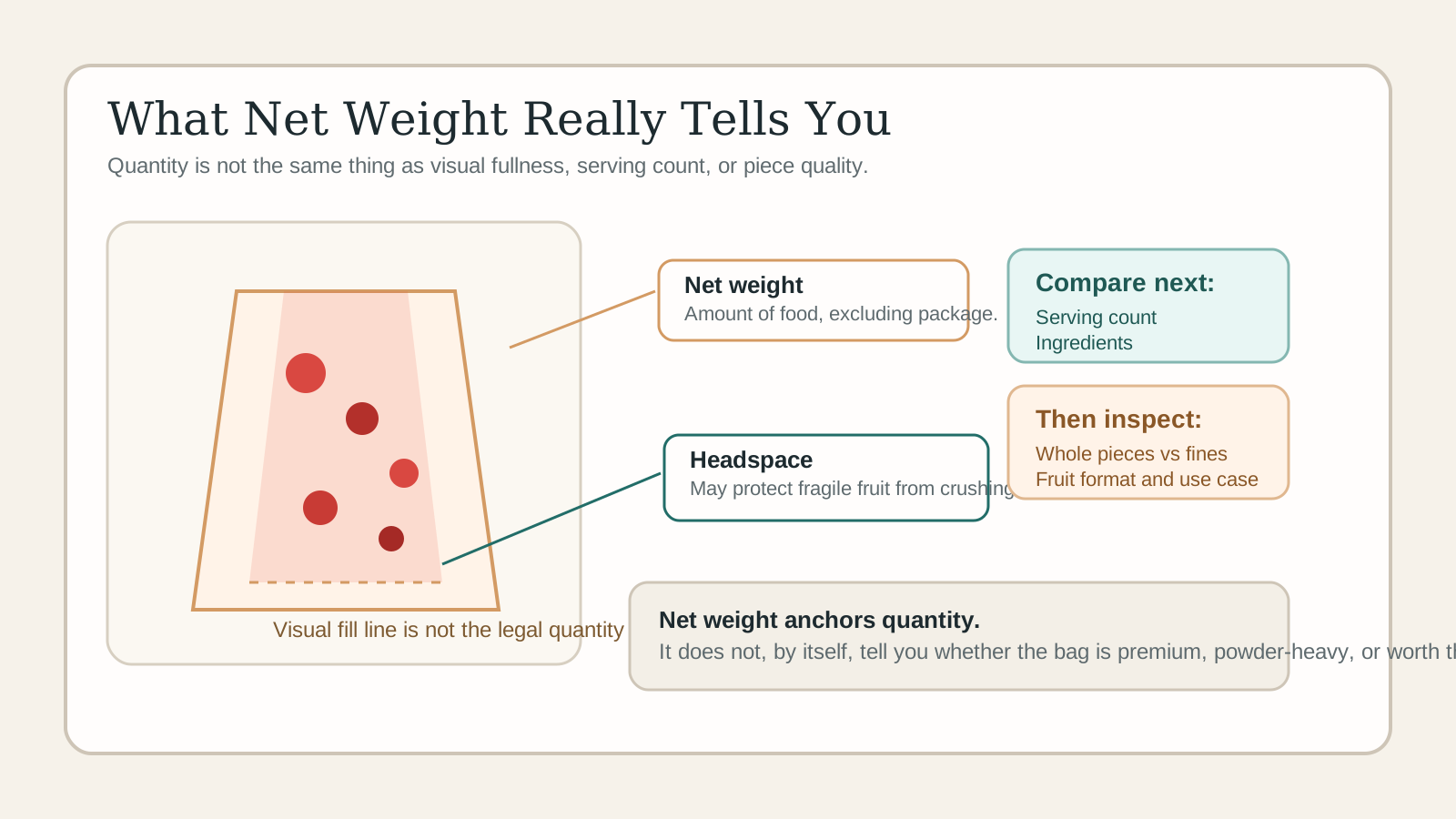
- Net weight is the amount of product in the package after excluding the package itself, not a promise about visual fullness.
- Freeze-dried fruit is low-density and fragile, so a pouch can look roomy while still carrying its declared quantity.
- The smarter comparison is net weight plus serving size, ingredient list, and piece format, not net weight by itself.
- For packaged goods, lot-level quantity control is about accurate declaration and reasonable package-to-package consistency, not about every bag feeling identical in the hand.
Freeze-dried fruit is one of the easiest categories to misread by feel.
The bag can look large, the pieces can feel feather-light, and the declared amount can still be accurate.
The direct answer
Net weight tells you how much product is in the package, not how full the pouch looks and not how satisfying the bag feels in the hand. In freeze-dried fruit, those impressions split apart quickly because the product is low-density, fragile, and highly expanded compared with its weight.
That means net weight is necessary, but it is not enough to judge value by itself.
What net weight is meant to communicate
At its simplest, net weight is the quantity of food in the package after excluding the package itself.
That matters because packaged food needs a common unit buyers can compare across:
- brands
- pouch sizes
- fruit types
- single-serve and multi-serve formats
Without a declared quantity, comparison becomes guesswork.
Why freeze-dried fruit can look "underfilled" without being short
Freeze-dried fruit behaves strangely compared with dense snacks.
It is:
- light for its volume
- brittle under compression
- irregular in piece shape
- often sold in pouches that need some protective headspace
So a pouch can appear roomy while still carrying its declared quantity. Visual fullness is not the same thing as net quantity.
That is why a freeze-dried strawberry pouch and a nut pouch with the same bag size can feel radically different even when both are honestly labeled.
Why weight alone can still mislead
Net weight is helpful, but it cannot answer every quality question.
Two bags with the same weight can still differ meaningfully in:
- whole pieces versus fragments
- plain fruit versus added ingredients
- large slices versus smaller bits
- fruit type and density
- number of servings
A heavier bag may be a better deal. It may also be a different product definition.
The comparisons that matter more in practice
For freeze-dried fruit, a stronger read combines four things:
- net weight
- serving size or servings per container
- ingredient line
- piece format and breakage level
That combination tells you much more than weight alone.
Example:
- a bag with modest net weight but mostly intact fruit pieces may feel premium
- a heavier bag with more fines or sweetened inclusions may be the better value for topping use
- a large low-weight pouch may be normal for airy whole fruit, not proof of short fill
The point is not that weight does not matter. The point is that the category needs context.
Use net weight to measure quantity, then use format and ingredients to judge what kind of quantity you are actually buying.
Why lot control matters more than bag-to-bag feel
Packaged-goods control is not really about whether every bag feels identical in the hand.
It is about whether the labeled quantity is accurate and whether the packaging lot stays inside acceptable control.
That is why NIST's packaged-goods framework talks in terms of:
- an average requirement across the lot
- an individual-package requirement so shortages are not unreasonably large
That logic matters for freeze-dried fruit because piece shape, fragment distribution, and natural settling can change how a bag feels without changing the declared quantity the way people assume.
What net weight does not say about quality
Net weight does not tell you:
- whether the fruit is crisp
- whether the pouch stayed dry in storage
- whether the fruit is mostly whole pieces
- whether sugar or carriers were added
- whether the bag represents a good price for the intended use
Those questions still need the rest of the label and, often, a look at the actual contents.
When headspace should prompt a closer read
Headspace is not automatically suspicious. Sometimes it is part of a sensible packaging design for brittle fruit.
But a buyer should read more closely when the bag feels misleading and other signals are weak:
- tiny net quantity relative to the sales claim
- vague serving information
- excessive fines at the bottom
- a pouch whose visuals imply large visible pieces that are not actually there
That is a label-honesty question, not a simple weight question.
The best shopper and buyer habit
The best practical habit is simple:
- read the net weight
- check the serving count
- read the ingredient list
- look for whole pieces versus powder
That sequence usually separates quantity from presentation.
Bottom line
Net weight tells you how much freeze-dried fruit is in the package, but it does not tell you how full the pouch should look or whether the product is the best value for your use. In a light, bulky, fragile category, those are separate questions.
Use net weight as the quantity anchor. Then use ingredients, format, and visible quality to decide what that quantity is actually worth.
Frequently Asked Questions
What does net weight mean on a freeze-dried fruit bag?
It means the weight of the food in the package, excluding the package itself. It does not describe how full the bag looks.
Why can a freeze-dried fruit bag look half full but still be correctly labeled?
Freeze-dried fruit is light, brittle, and bulky for its weight. A bag may need headspace for protection and still contain the declared amount of product.
Does a heavier bag always mean better value?
No. Heavier can mean more product, but it can also reflect different serving size, different fruit format, added ingredients, or more fragments. Weight alone is not the whole quality story.
Are all bags in a lot supposed to weigh exactly the same?
Not in a literal piece-for-piece sense, but the lot should be controlled so the declared quantity is accurate overall and individual packages are not unreasonably short.
What should shoppers compare along with net weight?
Compare the ingredient list, serving count, fruit format, and the visible proportion of whole pieces to fines. Those factors often matter as much as the declared weight.
Primary sources & further reading
- Food Labeling Guide U.S. Food & Drug Administration Referenced for FDA's food-labeling guidance around net quantity declaration placement, expression, and reading on packaged foods.
- NIST Handbook 133 - Current Edition National Institute of Standards and Technology Referenced for the current U.S. weights-and-measures handbook used to check the net contents of packaged goods.
- Net Contents of Packaged Goods FAQs National Institute of Standards and Technology Referenced for NIST's explanation that there is no blanket tolerance for short weight, and that packaged-goods checks rely on average and individual-package requirements.
External links open in a new tab. We do not receive compensation from any organization listed; sources are referenced because they are primary, current, and publicly verifiable.