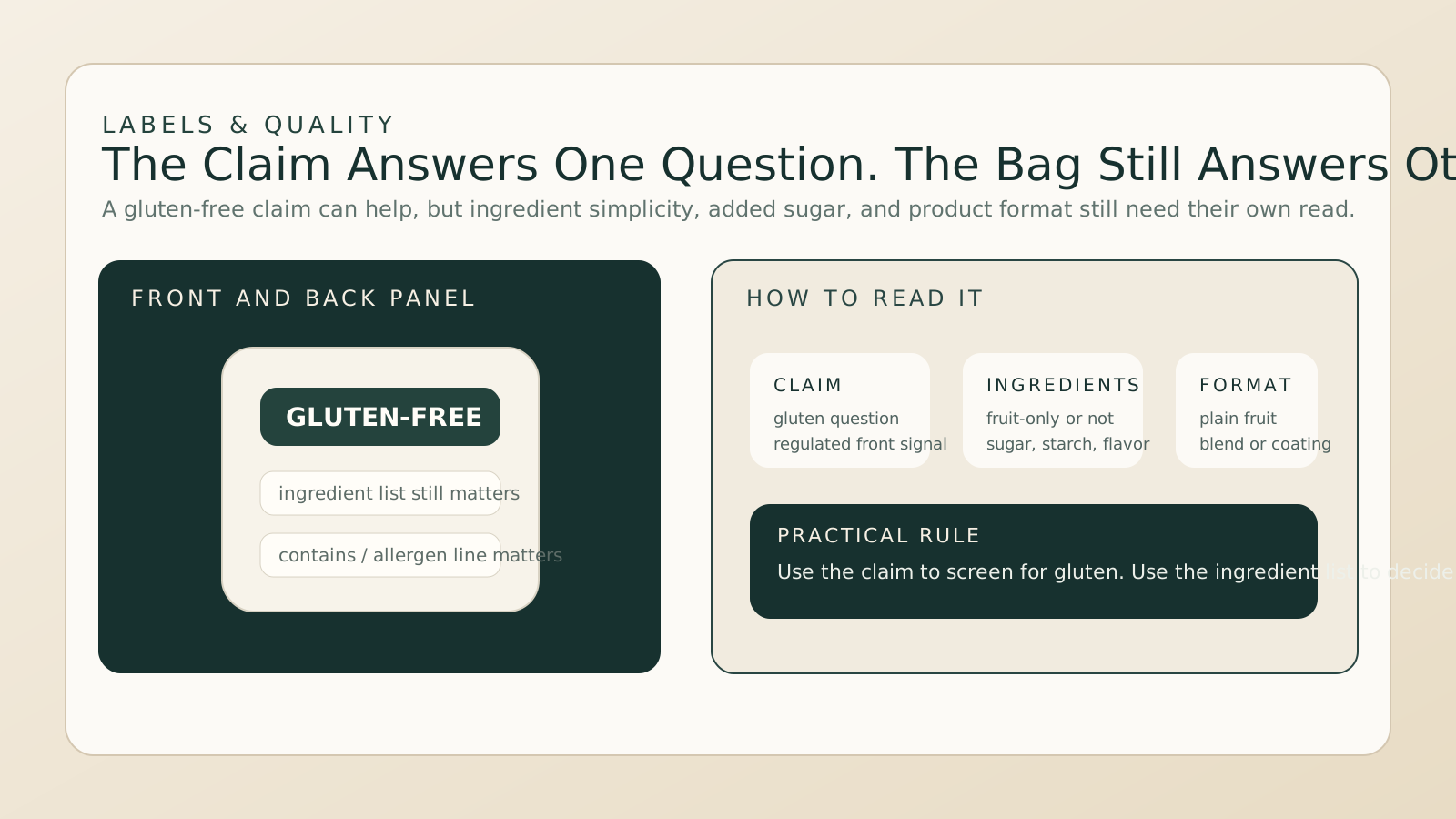
- `Gluten-free` is a defined FDA claim, not only a marketing phrase.
- A plain fruit-only freeze-dried product is often naturally gluten-free, but flavored, coated, blended, or granola-adjacent products deserve extra scrutiny.
- The claim does not mean the product is more natural, lower in sugar, or free from every allergen concern.
- Buyers should read the ingredient list, any `Contains` statement, and the actual product format together instead of treating the front-of-pack claim as the whole answer.
Gluten-free can be one of the easiest front-of-pack phrases to overread.
On freeze-dried fruit, that usually happens in two directions at once. Some buyers assume the phrase is automatically redundant because fruit is naturally gluten-free. Others assume the phrase proves the product is unusually clean or simple.
Both shortcuts miss the point.
The direct answer
On freeze-dried fruit labels, gluten-free is a defined FDA claim that a manufacturer may use if the product meets the rule. It is useful, but it does not answer every other quality question about the bag.
In practical terms:
- it can help with gluten screening
- it does not prove the product is fruit-only
- it does not automatically mean low sugar
- it does not replace reading the ingredient list
Why the claim can still matter on a naturally gluten-free product
Plain fruit does not contain gluten. So if the product is truly just freeze-dried strawberry, apple, mango, or blueberry, the starting ingredient is already in a naturally gluten-free category.
The claim still matters because many products sold near plain freeze-dried fruit are not only fruit. The category now includes:
- coated fruit snacks
- yogurt-covered items
- cereal or granola blends
- fruit crisps with added ingredients
- powders with carriers or flavor systems
That means the front of the bag may look fruit-forward while the formulation underneath is more complicated.
The claim helps answer the gluten question. It does not settle the simplicity question.
Ingredient list and gluten-free claim do different jobs
This is the most useful reading habit.
The gluten-free claim answers: does the manufacturer represent this product as meeting the gluten-free standard?
The ingredient list answers: what is this product actually made of?
Those are related, but not identical.
A fruit crisp with added sugar and a starch-based seasoning can still qualify for a gluten-free claim. A plain strawberry product can also qualify. The claim does not tell you which one you are holding.
That is why buyers comparing products should still ask:
- Is it fruit-only?
- Is it a blend?
- Is it coated?
- Is there added sugar or flavor?
- Is there any granola, cereal, or bakery-style inclusion nearby in the formula?
Wheat allergy is not the same question
This is another place where people merge two different label issues.
Under U.S. allergen law, wheat is a major allergen that must be declared clearly when it is intentionally used. Gluten, however, is the broader protein concern connected with wheat, barley, and rye in the gluten-free framework.
That means:
- a wheat-allergy read still needs allergen attention
- a gluten-free read still needs ingredient attention
For most plain freeze-dried fruit, this difference does not create drama. For mixed snacks, coated fruit, and cereal-adjacent products, it matters more.
When the claim is most useful
The claim is most informative when the product is not obviously just fruit.
Examples:
- fruit-and-granola snack cups
- yogurt-coated fruit bites
- blended breakfast toppers
- dessert inclusions
- powders used in formulated mixes
In those products, the claim tells you something real because the formula has more moving parts.
On a single-ingredient fruit pouch, the claim may be partly reassurance and partly merchandising. That does not make it dishonest. It just means the buyer should keep it in proportion.
What the claim does not mean
Gluten-free does not automatically mean:
- 100% fruit
- no added sugar
- no natural flavor
- no starch or carrier
- premium fruit quality
- stronger texture or fresher aroma
Those are different quality questions, and they need different label clues.
This is where experienced buyers separate health-positioning language from actual product definition.
A better way to read the bag
For freeze-dried fruit, the cleanest read is a three-step sequence:
- Read the statement of identity and ingredient list.
- Check the gluten-free claim and any allergen wording.
- Decide whether the product is plain fruit, a formulated snack, or something in between.
That sequence prevents a common mistake: letting one reassuring front-of-pack phrase substitute for the full product definition.
Bottom line
Gluten-free on a freeze-dried fruit label is a real regulatory claim, not empty decoration. It can be useful, especially on blended or formulated products.
But it still answers only one question. Buyers who want to know whether the bag is plain fruit, sweetened, coated, or otherwise built should keep reading.
Frequently Asked Questions
Is plain freeze-dried fruit usually gluten-free?
Usually yes when it is simply fruit, because fruit itself does not contain gluten. The useful caution starts when the product includes granola, yogurt coating, flavor systems, carriers, or other added ingredients.
Does `gluten-free` on the bag mean the same thing as fruit-only?
No. A product can qualify for a gluten-free claim and still contain added sugar, flavor, starch, or other non-fruit ingredients.
If the bag does not say `gluten-free`, is it automatically unsafe?
Not automatically. Some plain-fruit products may simply choose not to make the claim. The ingredient list still matters, especially if the product is a straightforward single-ingredient fruit.
Why can the ingredient list still matter if the claim is regulated?
Because the claim answers a gluten question, while the ingredient list answers a product-composition question. A gluten-free fruit crisp and a plain freeze-dried strawberry are not automatically the same product.
Does `gluten-free` also mean safe for a wheat allergy?
Not necessarily. Gluten-free and wheat-allergen concerns overlap but are not identical. Buyers who are screening for wheat allergy still need to read the allergen information carefully.
Primary sources & further reading
- Gluten-Free Labeling of Foods U.S. Food & Drug Administration Referenced for FDA's explanation that `gluten-free` is a voluntary but defined claim and for its discussion of fermented or hydrolyzed foods.
- Food Allergen Labeling and Consumer Protection Act of 2004 (FALCPA) U.S. Food & Drug Administration Referenced for U.S. allergen-labeling requirements, including the special treatment of wheat as a major allergen.
- Guidance for Industry: Food Labeling Guide U.S. Food & Drug Administration Referenced for the broader label-reading framework around statement of identity, ingredients, and non-misleading food claims.
External links open in a new tab. We do not receive compensation from any organization listed; sources are referenced because they are primary, current, and publicly verifiable.