- U.S. labeling rules require a firm name and address; if that firm is not the actual manufacturer, the name must be qualified with a phrase like 'Distributed by,' 'Manufactured for,' or 'Packed by.'
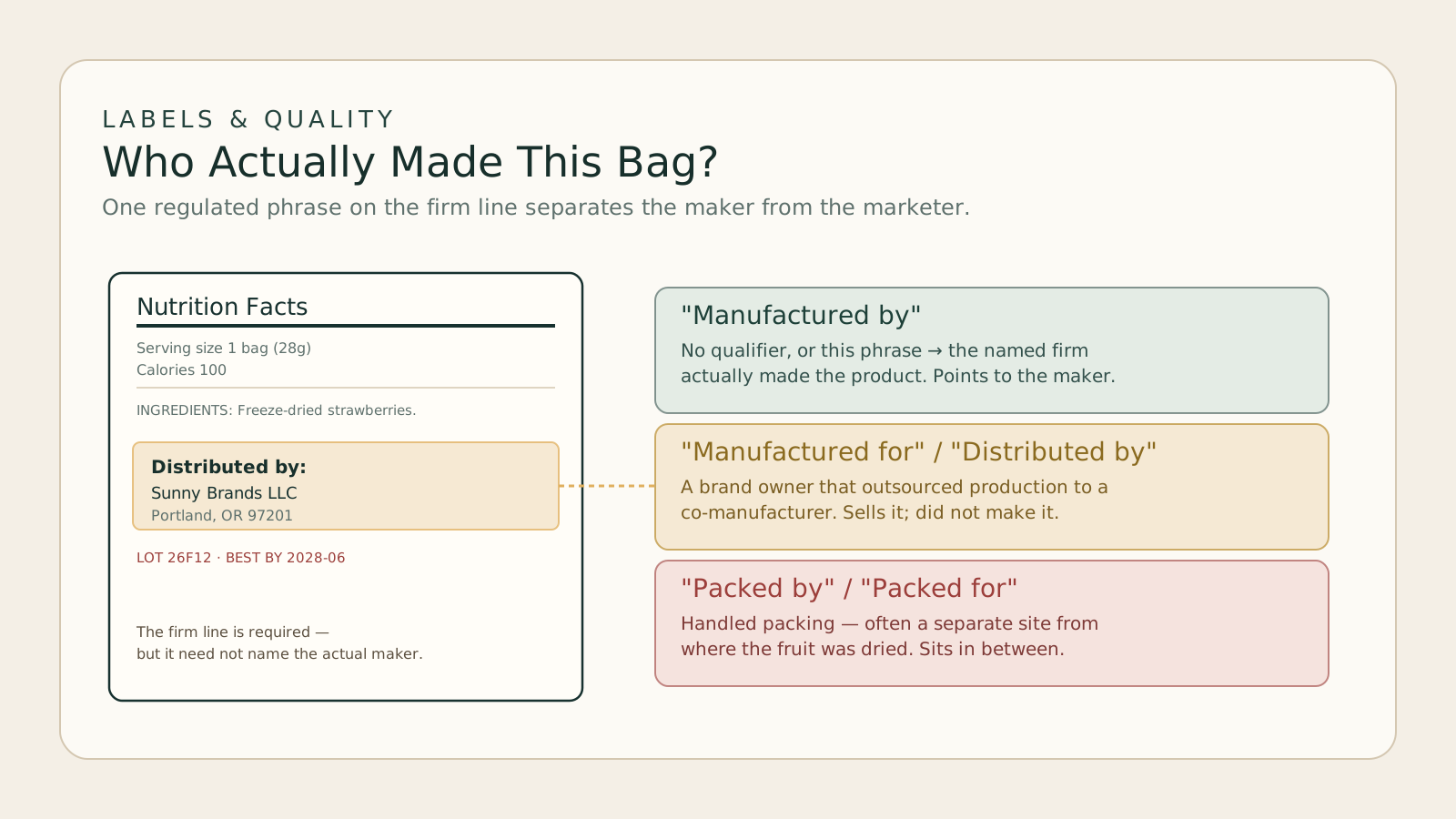
- 'Manufactured by' (no qualifier) means the named company made it; 'Manufactured for' or 'Distributed by' usually signals a brand owner who outsources production to a co-manufacturer.
- The line does not have to reveal who the actual maker is, which is why brands can keep their co-packer confidential — a real limit for buyers trying to trace a product.
- For sourcing and recalls, treat the qualifier plus any lot code as a starting clue, then confirm the real manufacturer through documents, not the label alone.
Turn a bag of freeze-dried fruit over and, somewhere near the ingredients, there is a small line with a company name and a city. It is easy to skim past. But the exact wording of that line is governed by labeling rules, and the phrase in front of the name carries real information about who actually made what you are holding.
The direct answer
U.S. labeling rules require every packaged food to show the name and place of business of the manufacturer, packer, or distributor. If the company named on that line is the one that actually manufactured the product, the name can stand on its own or read "Manufactured by." If the named company did not make it, the rules require a qualifying phrase — "Manufactured for," "Distributed by," "Packed by," or similar — so the label does not falsely imply that the brand ran the production line.
In plain terms: no qualifier usually means the named company is the maker; a qualifier usually means the named company is a brand owner that had someone else make it.
The three phrases, decoded
"Manufactured by" (or a bare name and address) points to the actual producer. The company on the label owns or operates the facility that processed the fruit.
"Manufactured for" or "Distributed by" almost always signals a brand that outsources production. The named firm designed and sells the product, but a separate co-manufacturer did the freeze-drying and finishing. This is extremely common in the category.
"Packed by" or "Packed for" sits in between. It indicates the named company handled packing, which may or may not be the same company that did the drying. With freeze-dried fruit, bulk product is often dried at one facility and then re-packed or portioned at another, and "Packed by" reflects that split.
The qualifier is not marketing language a brand chose for tone. When a firm that is not the manufacturer prints its name, the rules require the connecting phrase precisely so shoppers are not misled into thinking the brand made the food. The difference between "Manufactured by" and "Manufactured for" is a regulated distinction, not a copywriting choice.
What the line does not tell you
Here is the limit that frustrates buyers: the firm statement does not have to name the actual manufacturer. A brand can satisfy the rule by listing only its own name and address with a qualifier, keeping the co-manufacturer's identity off the label entirely.
That is why several different brands of freeze-dried strawberries — each reading "Distributed by" a different company — can all trace back to the same co-packer running the same lots. The labels look like separate makers. The product may be identical. The shopper cannot tell from the front of the bag, and often cannot tell from the back either.
Sometimes there are clues. A facility may be identifiable through a registration number, a lot code structure, or an address that matches a known plant. But these are inferences, not disclosures. As a buyer, you should never treat the printed firm line as proof of who made the product.
Why this matters more for freeze-dried fruit
Few categories are as heavily private-labeled and co-packed as freeze-dried fruit. The equipment is expensive, the cycles are long, and many brands sensibly buy from specialist processors rather than building their own freeze dryers. The result is a market where the brand on the front and the manufacturer behind it are routinely different companies.
For a curious shopper, this mostly means resisting the assumption that more brands equals more makers. For a commercial buyer, it has sharper consequences. If you are qualifying a supplier, comparing two "competing" products, or tracing a quality problem, the firm statement tells you the commercial role of the named company but not the production source you actually need to verify.
How to use the firm statement in practice
For shopping, read the qualifier as a quick signal of the relationship. "Manufactured by" points you toward the maker; "Distributed by" tells you the brand is a marketer that sourced the product elsewhere. Neither is better or worse for quality on its own.
For sourcing and food safety, use the line as a starting clue and confirm the rest through documents. The actual manufacturer should be identifiable in your supplier agreement, the certificate of analysis, the facility registration, and lot records — not assumed from the label. In a recall, regulators and your own traceability records, not the printed firm name, are what tie a lot back to its maker.
See "Manufactured by": treat the named firm as the likely producer, then verify. See "Distributed by" or "Manufactured for": treat the named firm as the brand owner and ask who the co-manufacturer is. Either way, the label is the first clue, and the paperwork is the proof.
The takeaway
The firm-name line on a freeze-dried fruit bag is small, regulated, and more informative than it looks. The qualifier in front — manufactured by, manufactured for, distributed by, packed by — tells you whether the brand made the product or merely sells it. What it deliberately leaves out is the identity of the actual co-manufacturer, which is exactly why serious buyers read the phrase as a hint and then confirm the maker through documents.
Frequently Asked Questions
Is a company required to put its name on the label?
Yes. U.S. food labeling rules require the name and place of business of the manufacturer, packer, or distributor to appear on the label. This is the 'signature line' or firm statement, usually on the information panel near the ingredients.
What does the qualifier in front of the name tell me?
If the company named is the one that actually made the food, the name can stand alone or read 'Manufactured by.' If the named company did not make it — for example a brand that outsources production — the name must carry a qualifying phrase such as 'Distributed by,' 'Manufactured for,' or 'Packed by' so the label does not imply they are the maker.
Does 'Distributed by' mean the product is lower quality?
No. It only describes the commercial relationship: the named firm sells the product but did not manufacture it. Many excellent products are made by specialist co-manufacturers for brands that focus on sourcing and marketing. The qualifier is about who did what, not about quality.
Can I identify the actual manufacturer from the label?
Often not directly. The rules let a brand list only its own name with a qualifier, keeping the co-manufacturer confidential. Sometimes a manufacturer's facility is identifiable through a lot code or a registration number, but as a buyer you should confirm the real maker through supplier documents rather than relying on the printed firm line.
Why does this matter for freeze-dried fruit specifically?
Freeze-dried fruit is frequently private-labeled and co-packed. The same physical lot can appear under several brand names, each reading 'Distributed by.' Knowing how to read the firm statement helps buyers and curious shoppers tell brand owners from manufacturers and avoid assuming each label is a separate maker.
Primary sources & further reading
- Food Labeling Guide — Name and Place of Business U.S. Food and Drug Administration Referenced for the requirement to declare the name and place of business and to qualify the firm name when it is not the manufacturer.
- 21 CFR 101.5 — Food; name and place of business of manufacturer, packer, or distributor Code of Federal Regulations Referenced for the specific rule that a non-manufacturer firm name must be accompanied by a qualifying phrase such as 'Manufactured for' or 'Distributed by.'
External links open in a new tab. We do not receive compensation from any organization listed; sources are referenced because they are primary, current, and publicly verifiable.