- Country-of-origin marking is meant to tell the U.S. ultimate purchaser where the imported article is considered to originate, not to narrate every growing, drying, and packing step.
- 'Packed in' or 'distributed by' statements do not mean the fruit itself was grown or freeze-dried in that country.
- Imported bulk fruit that is repacked or further processed can create origin questions that are more complicated than a front-of-pack line suggests.
- Buyers should treat origin wording as a starting clue, then confirm the origin policy, lot-switch rules, and where repacking happens.
Origin language can sound more definitive than it really is.
On a freeze-dried fruit pouch, a country name may be doing several different jobs at once: customs marking, brand storytelling, or simple packing disclosure. Buyers who treat those as the same thing can misread the product quickly.
The direct answer
Country of origin on a freeze-dried fruit label usually tells you where the imported article is considered to originate for marking purposes, not the full story of where the fruit was grown, freeze-dried, repacked, or merchandised. A phrase such as packed in answers a different question than product of, and a distributor address answers a different question again.
The pouch can be useful. It is just not the whole file.
What the origin line is supposed to do
CBP explains country-of-origin marking as a way to inform the ultimate purchaser in the United States of the country in which the imported article was made or is considered to originate. That is a customs-marking function.
It is not automatically a full farm-to-pack narrative.
For freeze-dried fruit, that distinction matters because the commercial chain can involve:
- fruit grown in one country
- freezing or drying in another
- bulk shipment and repacking somewhere else
- final branding and distribution through a separate U.S. company
One short line on the pouch cannot always carry all of that detail.
"Packed in" is not the same as "Product of"
This is the most common consumer and buyer misunderstanding.
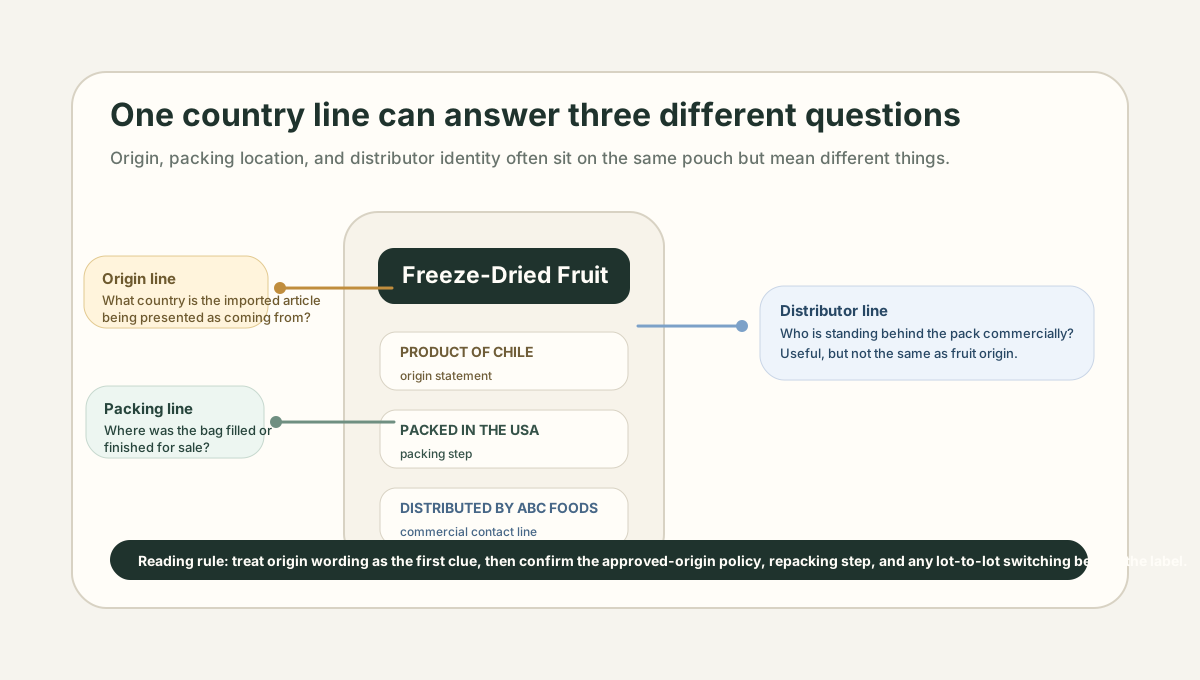
If a pouch says packed in the USA, that wording is describing the packaging step. It does not necessarily mean the fruit was grown in the USA or freeze-dried there. Likewise, a distributed by address tells you who is commercially behind the package, not where the fruit itself came from.
FDA's Food Labeling Guide covers the basic label framework for the manufacturer, packer, or distributor statement. That line is required label infrastructure. It should not be mistaken for an origin claim by itself.
The practical reading rule is:
product ofor origin marking points you toward originpacked inpoints you toward the packing stepdistributed bypoints you toward the commercial owner or marketer
Those are related facts, but they are not interchangeable facts.
Why freeze-dried fruit can make origin feel blurrier
Freeze-dried fruit often moves in more than one commercial form:
- finished retail pouches
- bulk slices or dices for repacking
- powder for ingredient use
- mixed-fruit systems assembled from multiple components
That means the "article" being imported may not match the final retail format the shopper sees. CBP's own guidance warns that complicated origin issues can require closer analysis and may justify a binding ruling request instead of casual assumptions.
For a buyer, that is the key warning sign: if the supply chain has several transformation or repacking steps, the pouch wording may be directionally useful but still incomplete.
What the container can and cannot prove
CBP's marking guidance also discusses containers. In simple terms, filled containers can carry the origin of their contents in the normal retail setting, but that still does not answer every commercial question a buyer may care about.
A country line on the bag can help answer:
- what country the imported article is being presented as originating from
- what the end buyer is meant to see at purchase
It cannot, by itself, prove:
- whether backup origins are approved in the supply contract
- whether the fruit was repacked after import
- whether one fruit in a blend follows the same policy as another
- whether the supplier can switch sources seasonally without relabeling
Those answers live in the sourcing file, not only on the pouch.
Why buyers should ask for an origin policy
The cleanest commercial habit is to ask suppliers for an origin policy instead of relying only on label language.
That policy should clarify:
- primary origin or approved origins
- whether the product is single-origin or can switch by lot
- where freeze-drying happens
- where repacking or final packing happens
- whether the label changes when the origin changes
This matters most when the fruit's value depends on origin perception. Mango, strawberry, cherry, and premium tropical fruits often carry real commercial differences by origin or variety. A vague pouch line is a weak basis for a premium claim.
A better reading habit for brand owners and buyers
When reviewing a freeze-dried fruit label, ask three separate questions:
- What country is the bag explicitly naming as origin, if any?
- What country is only being named as a packing or distributor location?
- What does the sourcing file say happens when the preferred origin is unavailable?
That three-part read is usually enough to separate real origin information from origin atmosphere.
When the issue becomes genuinely technical
Some origin questions stop being label-reading exercises and become customs questions. If fruit is imported in one form, transformed or repacked in another, or blended with materials from multiple countries, the correct origin analysis can become more technical than a marketing team should guess at casually.
That is exactly why CBP points importers toward formal rulings when facts get complicated.
Country-of-origin marking is still useful. The mistake is treating it as complete. On freeze-dried fruit, the pouch is often the first clue, while the approved-origin policy is the stronger buying document.
Bottom line
Country of origin on a freeze-dried fruit label is a meaningful signal, but it is a limited one. It helps tell the U.S. purchaser where the imported article is being presented as originating, not every detail of the growing, drying, packing, and distribution chain.
Read product of, packed in, and distributed by as different statements. Then confirm the sourcing policy behind them before treating origin as part of the product's premium story.
Frequently Asked Questions
Does 'packed in the USA' mean the fruit is from the USA?
No. 'Packed in' describes where the packaging step happened, not necessarily where the fruit was grown or where the freeze-drying happened. That wording should not be read as the same thing as a true country-of-origin statement.
What is country-of-origin marking trying to tell the buyer?
CBP says the purpose is to inform the ultimate purchaser in the United States of the country in which the imported article was made or is considered to originate for marking purposes. That is narrower than a full sourcing story.
Can repacking change the origin message?
It can make the story more complicated. Depending on what happens after import, the origin analysis may no longer be as simple as where the bag was filled. Complex cases can require a closer customs analysis or even a binding ruling.
Is a distributor address the same thing as origin?
No. FDA's label framework expects a manufacturer, packer, or distributor line, but that address is not the same thing as the origin of the fruit itself.
Why should buyers ask for an origin policy instead of only reading the pouch?
Because a pouch may tell you one country while the supplier's real commercial policy allows seasonal switching, multiple approved origins, or repacking in a different country. The policy explains the sourcing system behind the printed words.
Primary sources & further reading
- Marking of Country of Origin on U.S. Imports U.S. Customs and Border Protection Referenced for CBP's explanation that foreign-origin articles must be marked for the U.S. ultimate purchaser, for container-marking principles, and for the agency's warning that complex origin questions may require a binding ruling.
- Guidance for Industry: Food Labeling Guide U.S. Food & Drug Administration Referenced for FDA's packaged-food label framework, including manufacturer, packer, or distributor statement guidance.
External links open in a new tab. We do not receive compensation from any organization listed; sources are referenced because they are primary, current, and publicly verifiable.