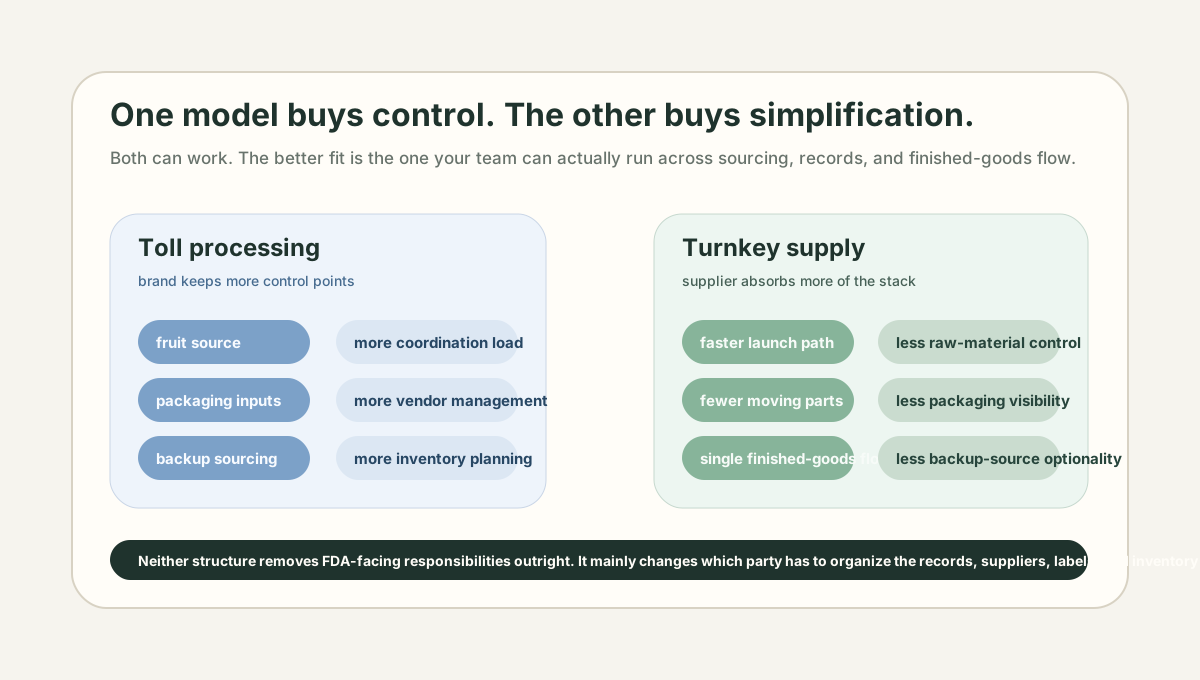
- Toll processing usually gives the buyer more control over raw fruit, cut spec, packaging, and backup sourcing, but it also creates more coordination work.
- Turnkey supply is often faster to launch because the processor handles more of the procurement and production stack.
- FDA registration, preventive-controls, labeling, and import responsibilities do not disappear just because a third party is making or packing the product.
- The best commercial model is the one your team can operate cleanly across quality, logistics, and documentation, not only the one with the sharpest quote.
A freeze-dried fruit brand can reach the shelf through two very different operating models and still end up with a pouch that looks similar to consumers.
That surface similarity hides a much more important difference: who is actually running the system behind the pouch.
The direct answer
Toll processing usually gives a freeze-dried fruit buyer more control over raw fruit selection, format, packaging choices, and backup sourcing. Turnkey supply usually gives the buyer more speed, fewer moving parts, and less daily operational burden.
The trade-off is simple to say and harder to live with:
- toll processing buys control by creating more coordination work
- turnkey supply buys simplicity by giving up some control
The right choice depends less on brand ambition than on operational reality.
What the two models usually mean
The exact contract language varies, but the distinction is practical.
Toll processing
The buyer typically owns more of the supply-chain design. That may include the fruit source, packaging materials, label files, and release criteria. The processor performs the freeze-drying and may also pack the product, but the buyer is often orchestrating more of the upstream and downstream decisions.
Turnkey supply
The supplier delivers a more complete solution. They often source the fruit, manage more of the packaging workflow, run production, and hand the buyer a finished item under an agreed specification.
Neither model is automatically better. Each one simply moves the control points.
Where toll processing can be stronger
Toll processing tends to make sense when the buyer cares deeply about one or more of these:
- locking a specific fruit origin or variety
- controlling the pouch structure or component vendors
- using the same fruit across multiple processors or channels
- separating fruit procurement from drying capacity
- building a supply base that can be switched or dual-sourced more deliberately
That control can be strategically valuable. A brand that wants a very specific strawberry cut, a particular foil structure, or a direct relationship with a fruit processor may not want those choices hidden inside a turnkey quote.
But control is only useful if the team can exercise it without creating chaos.
Where turnkey supply can be stronger
Turnkey supply is often the cleaner launch model for smaller teams, newer brands, or channels that value speed over intricate supply-chain design.
It is usually better when the buyer wants:
- faster onboarding
- fewer vendor relationships
- less coordination of fruit, packaging, and freight
- simpler forecasting against one finished-goods supplier
- one throat to choke when a retail shipment is late
A processor already running the fruit, film, fill weights, and case pack may be able to move faster than a brand trying to coordinate each piece independently for the first time.
That simplicity has real value. Many teams underprice the burden of being their own supply-chain architect.
Compliance and documentation do not vanish
This is where some commercial conversations become too optimistic. FDA's frameworks still matter regardless of whether a brand chose toll processing or turnkey supply.
FDA's food-facility registration system applies to facilities that manufacture, process, pack, or hold food when the law requires registration. FDA's preventive-controls rule also makes clear that registered domestic and foreign food facilities generally must comply with current good manufacturing practice and risk-based preventive-controls requirements unless an exemption applies.
That does not mean every brand must become the plant operator. It does mean outsourced production is not the same as outsourced accountability.
Questions still have to be answered cleanly:
- Which facility is making or packing the food?
- Who controls the food-safety records?
- Who owns the label copy and final accuracy?
- If ingredients are imported, who is the importer and who handles that file?
- If a complaint arrives, who can produce the supporting records quickly?
Those questions are manageable in either model. They are simply distributed differently.
Inventory control is often the hidden divider
Many buyers choose the model based on unit cost and underestimate inventory structure.
Under toll processing, the buyer may end up owning or coordinating more of:
- raw fruit timing
- packaging component ordering
- storage windows between steps
- minimums across multiple vendors
- rework decisions when one input is late
Under turnkey supply, those frictions are often bundled inside the processor's system. The buyer sees a finished-goods quote instead of several smaller operational commitments.
That can be a blessing or a blind spot. A bundled system is easier to buy, but sometimes harder to dissect when costs rise or quality shifts.
The sourcing question is really a management question
A common mistake is choosing toll processing because it sounds more sophisticated. Another is choosing turnkey because it sounds easier. Both can fail for the same reason: the team chose a model it could not manage well.
Toll processing is usually the better fit when a buyer has:
- a clear sourcing thesis
- enough volume to justify custom decisions
- staff who can manage quality, packaging, and logistics detail
- reason to preserve optionality across suppliers
Turnkey supply is usually the better fit when a buyer has:
- limited internal bandwidth
- a need to launch quickly
- less interest in custom procurement
- more value in predictable finished-goods flow than in maximum sourcing control
This is why some sophisticated brands still use turnkey arrangements and some lean startups struggle with toll structures. The model has to fit the operator, not only the ambition.
Questions to settle before choosing
Before choosing one structure over the other, a buyer should be able to answer:
- Who will own the raw fruit relationship?
- Who chooses and buys the packaging materials?
- Who controls the release spec and complaint thresholds?
- Who can produce registration, preventive-controls, and label-support records quickly?
- Who absorbs delays when fruit, film, or freight slips?
- Which model makes backup supply easier in real life, not only in theory?
The sharper those answers are, the easier the right model becomes.
The FDA sources below define facility, food-safety, labeling, and import frameworks. The article's commercial comparison is an editorial inference from those frameworks: the more responsibilities a buyer keeps, the more control it gains, but the more operational discipline it also has to supply.
Bottom line
Toll processing versus turnkey supply in freeze-dried fruit is really a choice about operational ownership. Toll processing buys control over more variables. Turnkey supply buys speed and simplification.
The best model is not the one that sounds more advanced. It is the one your team can run cleanly across sourcing, quality, labels, records, and inventory when the category stops being theoretical and starts shipping.
Frequently Asked Questions
What is toll processing in freeze-dried fruit?
In practical terms, toll processing means the brand or ingredient buyer owns more of the supply-chain design and pays a processor to perform the freeze-drying and sometimes packing work. The buyer often has more say over the fruit source, packaging inputs, and release spec.
What is turnkey supply?
Turnkey supply means the processor or supplier provides a more complete finished-goods solution. They usually source the fruit, run the process, manage more of the packaging flow, and deliver a saleable item under the agreed spec.
Which model gives the buyer more control?
Toll processing usually does, especially over fruit sourcing, packaging structure, and backup-vendor choices. But that extra control only helps if the buyer has the team and systems to use it well.
Which model is usually faster to launch?
Turnkey supply often is, because fewer supply-chain decisions sit with the brand. The processor may already have approved raw-material channels, packaging vendors, and plant workflows in place.
Does using a processor remove FDA-related responsibilities?
No. The exact duties depend on the structure, but FDA registration, preventive-controls expectations, labeling accuracy, and import responsibilities still have to be handled by the appropriate parties. Outsourcing production is not the same thing as outsourcing accountability.
Primary sources & further reading
- Online Registration of Food Facilities U.S. Food & Drug Administration Referenced for FDA's registration framework covering facilities that manufacture, process, pack, or hold food and for foreign-facility registration requirements.
- FSMA Final Rule for Preventive Controls for Human Food U.S. Food & Drug Administration Referenced for the rule's explanation that registered domestic and foreign food facilities generally must comply with current good manufacturing practice and risk-based preventive controls unless an exemption applies.
- Guidance for Industry: Food Labeling Guide U.S. Food & Drug Administration Referenced for FDA's label-framework guidance for manufacturer, packer, or distributor statements and other core packaged-food labeling expectations.
- Importing Human Foods U.S. Food & Drug Administration Referenced for FDA's importer-facing overview of food entry and registration verification responsibilities.
External links open in a new tab. We do not receive compensation from any organization listed; sources are referenced because they are primary, current, and publicly verifiable.