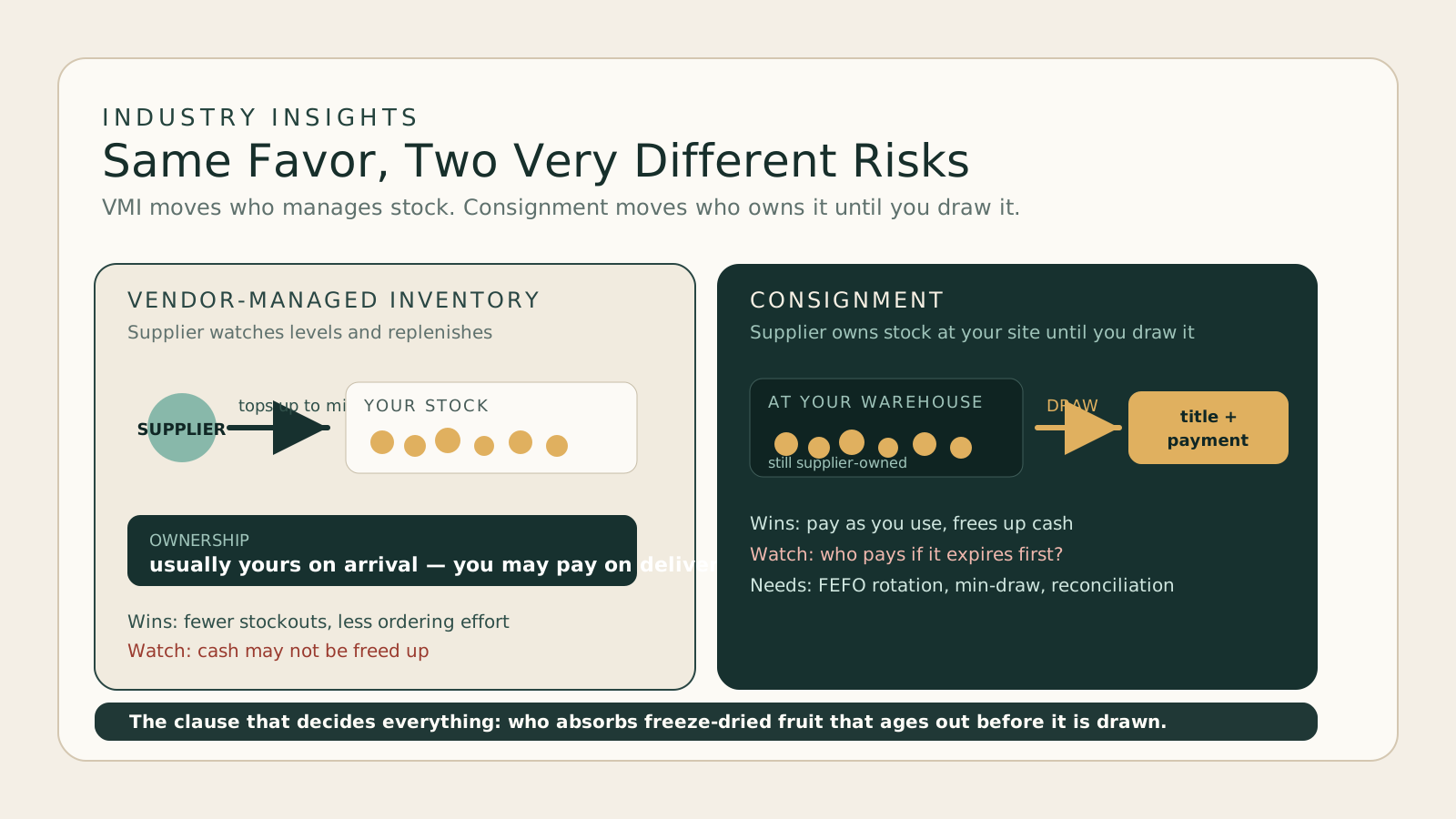
- In vendor-managed inventory (VMI), the supplier monitors and replenishes your stock to agreed targets, but you usually still own the goods once they arrive.
- In consignment, the supplier owns the stock sitting in your location until you draw it down, so you pay only as you use it.
- Freeze-dried fruit's long but finite shelf life makes expiry, FEFO rotation, and shrinkage the terms that decide whether these models actually save money.
- Both models live or die on shared forecasts, clear min/max levels, count reconciliation, and who owns loss, damage, and aging stock.
When a freeze-dried fruit supplier offers to "hold stock for you," it sounds like a pure favor. Less risk of running out, less cash tied up, fewer panic orders.
It can be all of those things. But "holding stock" is shorthand for at least two different arrangements that allocate risk very differently. Mixing them up is how a buyer ends up owning a pallet of slowly fading strawberries they thought belonged to the supplier.
The direct answer
Two models hide behind the same friendly phrase.
Vendor-managed inventory (VMI) is about management. The supplier watches your stock levels, often through shared data, and replenishes to agreed targets so you do not have to place every order yourself. In most VMI setups, you still take ownership of the goods when they arrive or ship.
Consignment is about ownership. The supplier's stock physically sits at your location, but the supplier still owns it. You only pay, and title only transfers, when you draw the product into use.
They are not opposites, and a program can combine both: supplier-managed replenishment of consigned stock. The point is to know which lever each one pulls, because one frees up cash and the other mainly saves you ordering effort.
Why the distinction matters for freeze-dried fruit
For a generic industrial part, the main question is cost of carrying inventory. Freeze-dried fruit adds two wrinkles that change the math.
First, it is shelf-life sensitive. Sealed and stored well, it lasts a long time, but color, aroma, and crunch drift long before any printed date, and a hard expiry does eventually arrive. Stock that moves slowly is not just capital sitting still; it is quality quietly degrading.
Second, it is batch-coded and traceable. Lots have to rotate properly, and a recall or complaint has to be traceable to a specific code. A stocking program that does not enforce clean rotation can leave you holding the oldest lot precisely when you least want it.
So the contract terms that look like fine print, expiry handling, rotation, and aging reports, are exactly the terms that decide whether the model saves money or hides a loss.
VMI in practice
In a working VMI arrangement, the buyer and supplier agree on minimum and maximum stock levels for each item. The supplier gets visibility into your consumption, through a shared sheet, a portal, or periodic counts, and ships to keep you between those bounds.
What you gain:
- fewer stockouts on fast movers
- less time spent reordering and chasing
- smoother production for the supplier, which can support better pricing
What to nail down:
- who owns the stock on arrival (usually you, unless paired with consignment)
- the forecast the supplier replenishes against, and how often it updates
- accountability if the supplier over-ships and you end up overstocked on aging fruit
VMI without consignment can still leave you paying for inventory the moment it lands. That is fine if your real problem was ordering effort and stockouts, not cash.
Consignment in practice
Under consignment, the supplier delivers freeze-dried fruit to your warehouse but keeps it on their books. You count it, store it, and protect it, but you do not pay until you pull it for production or sale. At that draw, ownership transfers and the invoice clock starts.
What you gain:
- working capital relief, because unused stock is not yet your cost
- buffer stock on site without prepaying for it
- a fast path to material when demand spikes
What to nail down:
- who pays for expiry, obsolescence, and aged stock (the make-or-break clause)
- minimum draw or consumption commitments the supplier will likely require
- shrinkage, damage, and insurance while their goods sit in your building
- count reconciliation cadence so both sides agree on what has been drawn
In a consignment deal for freeze-dried fruit, find the sentence that says what happens to stock that ages out before you draw it. If it pushes all expiry risk to you with a minimum-draw commitment, you are closer to a regular purchase than a true risk transfer.
Where these models fit, and where they do not
These programs reward predictability. They struggle with volatility and short shelf windows.
Good fit:
- steady, repeatable usage of a few core SKUs (a strawberry and a banana you run every week)
- a trusted supplier relationship with real demand visibility
- products with comfortable remaining shelf life on delivery
Poor fit:
- erratic, seasonal, or promotional demand that strands stock
- many low-volume SKUs, where aging risk multiplies across items
- thin remaining shelf life on incoming lots, which turns buffer stock into a countdown
The honest test is simple: if you would not commit to consuming the stock on a sensible timeline, a stocking program does not remove that risk. It just decides who is holding it when the clock runs out.
Questions to ask before signing
Whatever the label on the program, push for plain answers:
- Who owns the stock at each stage, and exactly when does title transfer?
- What forecast drives replenishment, and who is accountable if it is wrong?
- How is first-expiry-first-out rotation enforced and verified?
- Who absorbs expired, damaged, or obsolete freeze-dried fruit?
- How often do we reconcile physical counts against the records?
- What are the exit terms if either side wants to unwind the program?
The takeaway
VMI and consignment are not the same favor. VMI hands the supplier your replenishment; consignment hands them your inventory ownership until you use it. For freeze-dried fruit, the value of either depends less on the headline convenience and more on the unglamorous terms, expiry, rotation, minimum draws, and reconciliation, that decide who absorbs the cost of fruit that ages before it sells.
Get those clauses right and a stocking program is a genuine cash and reliability win. Skip them and you have simply agreed to store someone else's risk in your own warehouse.
Frequently Asked Questions
What is the difference between VMI and consignment?
VMI is about who manages replenishment: the supplier watches your levels and tops them up. Consignment is about who owns the stock: the supplier retains ownership of goods at your site until you consume them. A program can be one, the other, or both at once.
Which model frees up the most cash for a buyer?
Consignment typically does, because you do not pay for the freeze-dried fruit until you draw it from stock, so it sits on the supplier's balance sheet. VMI alone may not change ownership, so you can still be paying for inventory on arrival.
Who pays if consigned freeze-dried fruit expires?
That depends entirely on the contract. It is the single most important clause to pin down. Suppliers will often push expiry and obsolescence risk back to the buyer through minimum draw commitments, so read who absorbs aged or expired stock.
Does shelf life make these models risky for freeze-dried fruit?
Freeze-dried fruit lasts a long time sealed, but it is not infinite, and aroma, color, and crunch drift well before any hard expiry. Slow-moving consigned stock can quietly age, so first-expiry-first-out rotation and aging reports matter more than for a non-perishable part.
What does a supplier get out of consignment?
Stickier accounts, better demand visibility, and a strong position as your default source. In exchange they carry working capital and aging risk, which is why they usually ask for forecast commitments, minimum draws, or pricing that reflects the service.
Primary sources & further reading
- Vendor-Managed Inventory (VMI) Investopedia Referenced for the general definition of VMI as a supplier-managed replenishment arrangement and its working-capital implications.
- Consignment Inventory Investopedia Referenced for the definition of consignment, where ownership of goods remains with the supplier until sold or consumed.
- Code of Federal Regulations Title 21 — Food Labeling, Date Labeling U.S. Government / FDA Referenced for the regulatory backdrop on dating and labeling that underlies expiry and rotation obligations for stocked food product.
External links open in a new tab. We do not receive compensation from any organization listed; sources are referenced because they are primary, current, and publicly verifiable.