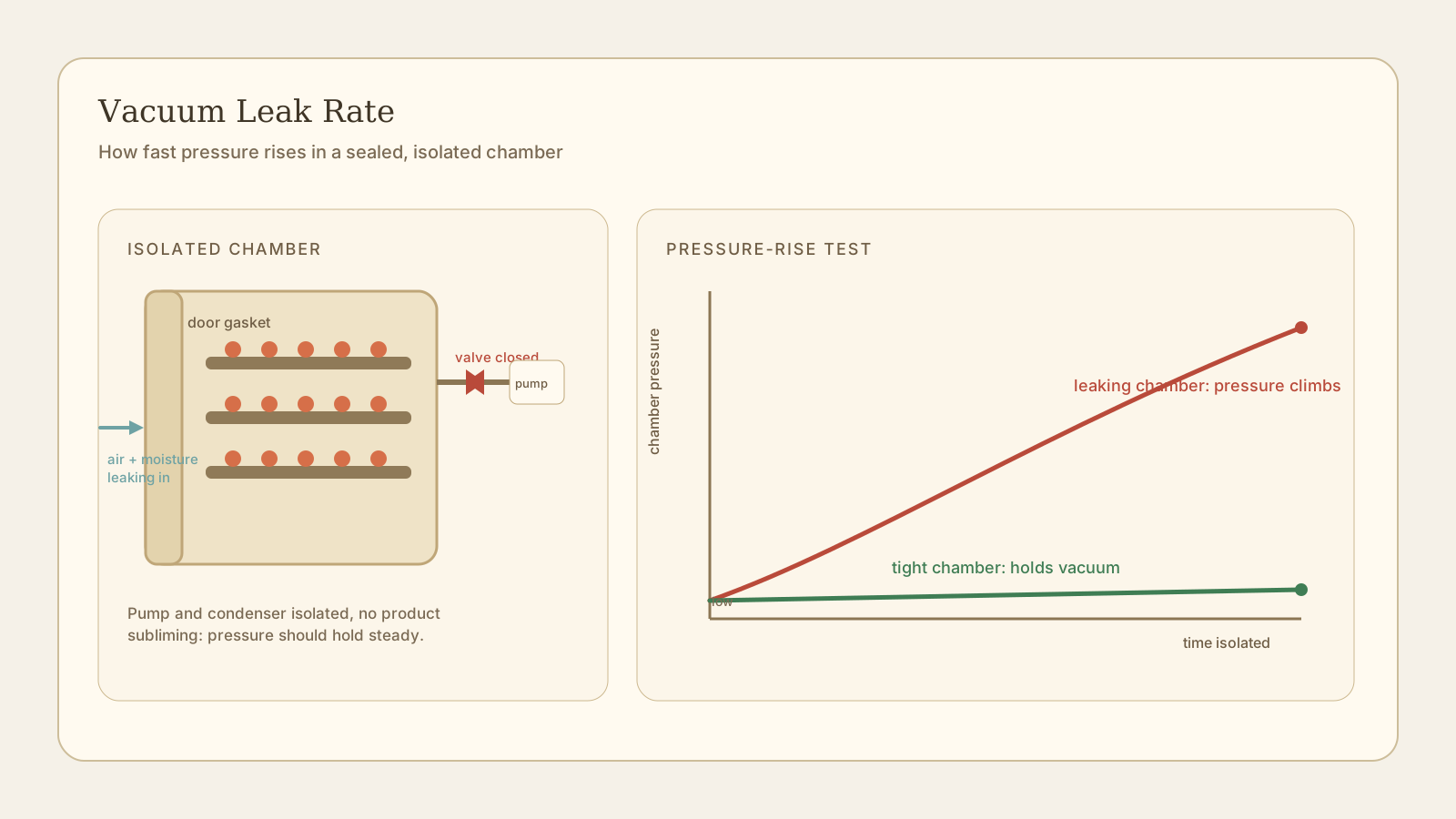
- Leak rate is the speed at which pressure rises in a sealed, isolated chamber, and it reflects how much outside air and moisture sneak into the system during drying.
- A rising leak rate raises working pressure, slows water-vapor removal, and can leave soft centers even when the recipe and load look unchanged.
- A scheduled pressure-rise (leak-up) test on an empty, dry chamber is the standard way to separate a true vacuum problem from a product or recipe problem.
- Buyers rarely see leak-rate data, but a supplier who tracks and trends it is usually running a more predictable freeze-drying operation.
A freeze dryer rarely announces a vacuum problem. The pump still runs, the gauge still reads a number that looks low, and the trays still come out dry on top. The trouble shows up later, as cycles that creep longer, endpoints that feel less certain, and the occasional lot with centers that are softer than the spec promised.
Often the hidden variable is leak rate: how well the chamber actually holds vacuum once the doors are shut and the cycle is running.
The direct answer
Leak rate is the speed at which pressure rises inside a sealed, isolated chamber. It is a measure of how much outside air, and the moisture that rides with it, works its way into the system while the machine is supposed to be under deep vacuum.
For freeze-dried fruit, leak rate matters because the whole process depends on a large pressure difference between the cold trap and the chamber. That difference is what pulls water vapor out of the fruit during primary drying. A leak shrinks the usable part of that difference by adding a steady gas load the pump and condenser have to fight, on top of the water vapor the fruit is already giving off.
The cycle does not stop. It just gets slower and less predictable.
Why a small leak has an outsized effect
Freeze-drying runs at very low pressure, so a leak that would be trivial at room conditions becomes significant inside the chamber. A few mechanisms compound:
- The leak adds non-condensable gas (mostly air) that the condenser cannot freeze out, so the vacuum pump has to carry it instead.
- Higher chamber pressure means the boundary between frozen and dried fruit sees a smaller driving force, so sublimation slows.
- Incoming air carries moisture, which adds to the very load the cycle is trying to remove.
None of this is dramatic on any single minute. Over a multi-hour fruit cycle, it adds up to a real difference in how long primary drying actually needs.
Where leaks come from
Leaks are usually mechanical and mundane rather than exotic:
- door gaskets that are dirty, dried out, pinched, or aging
- valve seats and isolation valves that no longer seal fully
- thermocouple and probe feedthroughs
- drain valves and sight-glass seals
- fittings disturbed during cleaning or maintenance
Fruit operations are messy by nature. Sugary juice, sticky fines, and frequent cleaning all work against the seals that keep a chamber tight. A gasket that sealed perfectly six months ago can develop a slow leak without any obvious sign.
How leak rate is measured
The standard tool is a pressure-rise test, also called a leak-up test. The logic is simple:
- Run the chamber down to deep vacuum.
- Isolate it by closing the valves to the pump and condenser.
- Record how fast pressure climbs over a fixed time window.
A tight chamber holds nearly steady. A leaking chamber shows pressure marching upward. To get a clean reading, the test is run on an empty, dry chamber, because any product or residual ice will sublime and raise pressure on its own, masking the real leak.
Running the test the same way every time matters more than any single value. The published best-practice work on lyophilizer leak testing stresses isolating the chamber, allowing the system to stabilize, and defining the test period clearly so results can be compared run to run.
A low base pressure on the gauge is not proof of a tight chamber. A pump can pull a chamber down to a good reading and still let pressure climb the moment it is isolated. Base pressure tells you where the system can get to; leak rate tells you whether it can stay there.
Why food operators set their own limits
Most of the published numbers for acceptable leak rate come from pharmaceutical lyophilization, where vacuum integrity is tied to sterility assurance and the limits are strict. Food freeze-drying does not inherit those exact thresholds.
What transfers is the method, not the number. A fruit processor usually establishes a baseline leak rate for each specific machine when it is clean, dry, and known to be in good condition, then watches the trend. A reading that doubles from its own baseline is a signal worth investigating, regardless of how it compares to someone else's spec.
This is why a single universal pass/fail figure is the wrong thing to chase. The useful question is whether a given dryer is drifting away from its own healthy baseline.
How a leak shows up in the finished fruit
The frustrating part of a slow leak is that the symptoms look like other problems:
- cycles that run long for no obvious reason
- batch-to-batch inconsistency on the same recipe
- soft or chewy centers in the densest pieces, while surfaces look fine
- endpoint checks that disagree with the recipe clock
If a leak quietly stretches the time real drying needs, but the cycle still ends on its old schedule, the thickest pieces can cross the finish line with more residual moisture than intended. That extra moisture then narrows the margin the packaging is supposed to protect.
A documented leak-rate trend is what lets an operator rule the equipment in or out before blaming the fruit, the freezing step, or the recipe.
What buyers can reasonably ask
Buyers almost never receive leak-rate data, and they should not expect a chart with every shipment. But the topic is a useful probe during a supplier review:
- Do they run scheduled pressure-rise tests on their dryers?
- Do they track results over time rather than only reacting to failures?
- How do they tell an equipment problem apart from a recipe or load problem?
- What triggers gasket and valve maintenance?
A supplier who can answer these in operational terms is usually running a more controlled process. One who treats the freeze dryer as a black box that either works or does not is more likely to ship the occasional drifting lot without knowing why.
Bottom line
Vacuum leak rate is a quiet variable that shapes freeze-dried fruit cycle reliability from underneath. A leaking chamber does not fail outright; it raises working pressure, slows water-vapor removal, and erodes confidence in the endpoint.
A simple, repeatable pressure-rise test on an empty, dry chamber turns that invisible drift into a number an operator can trend and act on. For buyers, the existence of that discipline is a better quality signal than any single leak-rate figure on its own.
Frequently Asked Questions
What is freeze dryer leak rate in plain terms?
It is how fast pressure climbs inside the chamber when the vacuum pump and condenser are isolated and no product is subliming. A tight chamber holds steady. A leaky one shows pressure rising minute by minute as air and water vapor seep in.
Why does a leak slow the cycle instead of just stopping it?
Sublimation still happens, but the leaking air raises the working pressure and adds a gas load the pump and condenser must fight. That narrows the pressure gap that drives water vapor out of the fruit, so primary drying takes longer to reach the same endpoint.
Can a leak cause soft or chewy centers?
It can contribute. If a leak quietly lengthens the time real drying needs, but the recipe ends on the old schedule, the densest pieces can finish primary drying late and carry extra moisture into the bag.
How is leak rate actually measured?
With a pressure-rise or leak-up test: pull the chamber down to vacuum, close the valves to isolate it, and record how fast pressure climbs over a set period on an empty, dry chamber so product sublimation does not mask the result.
Is there one universal pass/fail number for food freeze dryers?
No. Most published leak-rate limits come from pharmaceutical lyophilization. Food operators usually set their own internal limit for each machine and watch the trend over time rather than chasing a single industry number.
Primary sources & further reading
- Lyophilizer Leak Rate Testing - An Industry Survey and Best Practice Recommendation Journal of Pharmaceutical Sciences Survey of how lyophilizer leak-rate (pressure-rise) tests are run and interpreted, including isolation of the chamber and stabilization before measurement.
- Leak Rate Testing for Freeze Dryers: A Scientific Approach BioProcess Online / Baxter BioPharma Solutions Background on why vacuum integrity matters for freeze-dryer process control and how leak-rate testing is approached.
- Primary and Secondary Drying in Freeze-Drying Electronic Code of Federal Regulations FDA current good manufacturing practice rule requiring adequate process controls and equipment suitable for its intended use during processing.
External links open in a new tab. We do not receive compensation from any organization listed; sources are referenced because they are primary, current, and publicly verifiable.