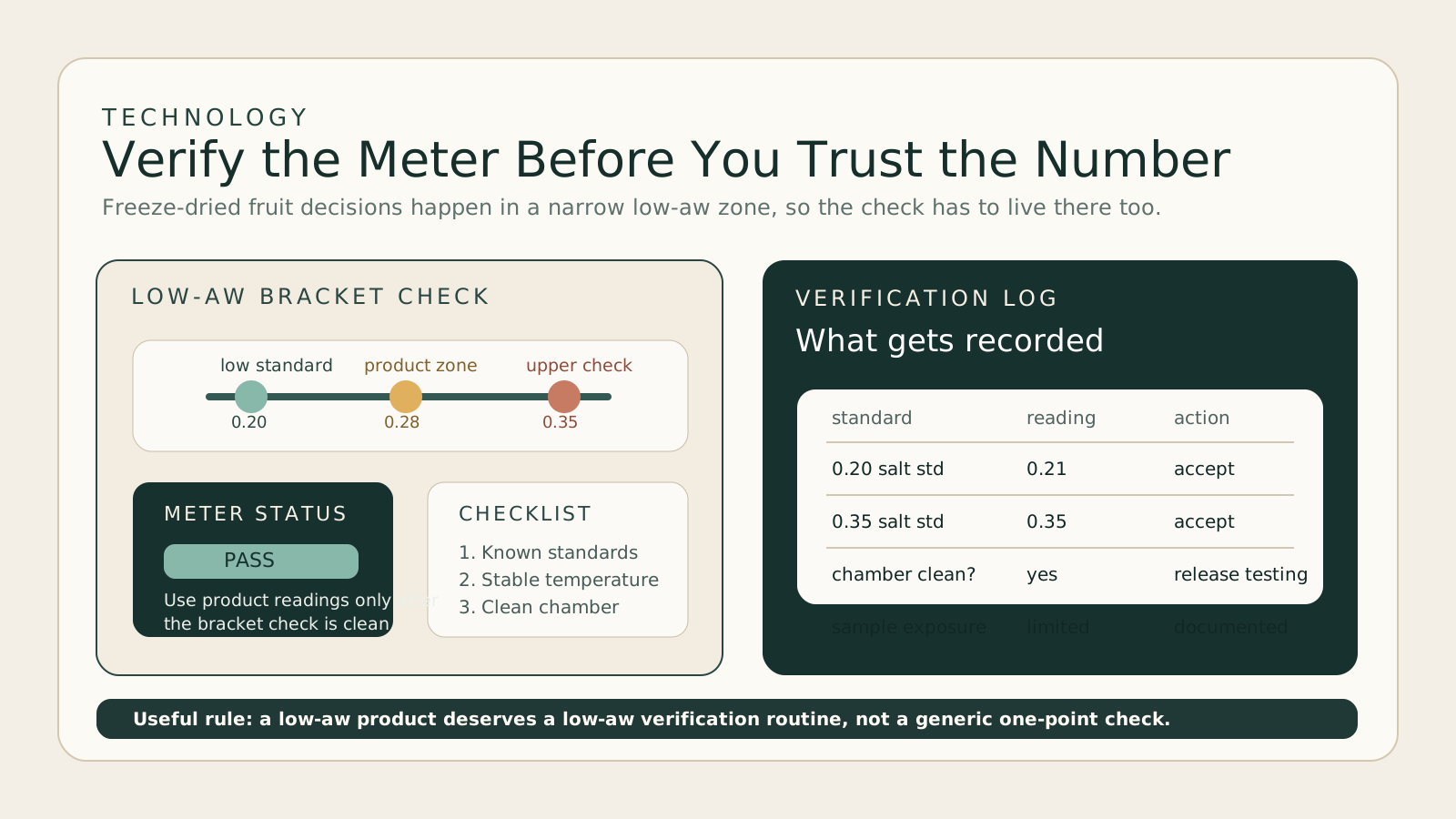
- Freeze-dried fruit usually lives in a narrow low-aw range, so verification should bracket that working zone rather than rely on one distant check point.
- Stable reference standards, temperature control, and chamber cleanliness matter because small low-aw errors can change release decisions for brittle products.
- Meter verification is not the same thing as good lot sampling; a well-verified instrument can still produce a misleading result from a poorly handled sample.
- A useful verification log shows the standard used, the reading obtained, the action taken, and whether product testing should pause.
Water activity looks simple on paper. The meter gives a decimal, the decimal goes on the COA, and the lot appears either safe or questionable.
For freeze-dried fruit, that shortcut is too casual. The product is brittle, hygroscopic, and often released in a narrow zone where a small instrument drift can turn a comfortable reading into a borderline one.
The direct answer
To verify a water activity meter for freeze-dried fruit, check it against stable reference standards that bracket the product's working range, control temperature and chamber condition, and treat sample handling as part of the measurement system. The goal is not merely proving that the screen lights up. The goal is proving that the low-aw reading you are about to use for a release or process decision is believable.
Why low-aw verification matters more than teams expect
Freeze-dried fruit often lives in a low water-activity range because the product is sold on crispness and shelf stability. That makes the measurement useful, but it also makes the reading sensitive in practical terms.
If a premium fruit specification is built around staying clearly inside a low-aw target, a small error can change the quality conversation quickly:
- a lot may look comfortably dry when it is only marginally dry
- a lot may be held unnecessarily because the meter is reading high
- two suppliers may appear different when the difference is really instrument control
The more brittle and moisture-sensitive the product, the less room there is for casual verification.
Start with known standards, not the lot
FDA's water-activity guidance explains the measurement in equilibrium-relative-humidity terms and discusses the use of reliable humidity references, including saturated salt systems. That is the right mindset for verification.
Before trusting any product result, the instrument should first prove that it can read a known condition correctly. This matters because a freeze-dried fruit sample is not a reference material. It is the unknown you are trying to interpret.
The practical rule is simple:
- verify first
- test product second
- decide third
Reversing that order turns the product into a calibration experiment.
Verify in the range where freeze-dried fruit actually lives
This is the most common weak habit. A site may perform one generic instrument check and assume the meter is therefore equally trustworthy everywhere on the scale.
That is not the useful question for freeze-dried fruit. The useful question is whether the meter is reading correctly in the low-aw range where your actual decisions happen.
NIST's humidity fixed-point work is helpful here because it frames saturated solutions as stable reference environments, not as vague approximations. In practice, that supports a bracketing approach: use verification points that sit around the product's expected zone rather than relying only on a distant high-aw point.
For a freeze-dried fruit program, that means asking:
- what aw range do our release decisions normally sit in
- which standards best test that neighborhood
- what acceptance window is tight enough to matter commercially
That approach is much stronger than treating all aw checks as interchangeable.
Temperature and chamber condition are part of the measurement
Water activity is tied to equilibrium, and equilibrium takes conditions seriously. If the standard, chamber, and instrument are not stabilized, the reading may still be numeric without being decision-grade.
Common avoidable problems include:
- loading a warm sample straight from production
- opening the chamber repeatedly during setup
- leaving residue or fruit dust in the chamber
- running standards and samples at noticeably different temperatures
These are not cosmetic details. In low-moisture foods, small environmental sloppiness can create enough drift to weaken the usefulness of the result.
Verification does not fix bad sample handling
A verified meter can still produce a weak product reading if the sample itself is mishandled.
Freeze-dried fruit starts exchanging moisture with room air quickly. That means the sample plan should protect the result from avoidable exposure and from selection bias. A sample built from attractive top-of-bag pieces may not represent the lot. A sample built mostly from fines may overstate how exposed material behaves relative to intact pieces.
Useful handling habits include:
- opening the package only when the chamber is ready
- building a representative sample
- limiting bench exposure time
- avoiding unnecessary crushing or warming of the sample
This is why verification and sampling discipline belong in the same conversation. One without the other creates false confidence.
What a useful verification log looks like
A good verification record is not long for the sake of looking serious. It is specific enough that another person can reconstruct what happened and decide whether product data from that period should be trusted.
At minimum, log:
- date and time
- instrument identity
- reference standard used
- expected value or acceptance range
- observed reading
- pass or fail decision
- action taken if out of range
If the check fails, the most important part of the log is not the number. It is the response. Did the site repeat the check? Clean the chamber? Pause product testing? Review any lots already tested since the last acceptable verification? That is where quality discipline becomes visible.
When verification failure should change product decisions
Not every failed check means the last ten lots are automatically bad. But it does mean the site should stop acting as if the readings are unquestionably reliable.
The practical response is usually:
- stop new product release calls based on the instrument
- repeat the verification per procedure
- correct the obvious issue if one is found
- reassess affected product results if the failure window is unclear
That sequence protects both the buyer and the operator from pretending the instrument was trustworthy simply because the reading looked neat.
Bottom line
Verifying a water activity meter for freeze-dried fruit is really about protecting the credibility of a low-aw decision. Stable standards, bracketing the real product range, temperature control, clean chambers, disciplined sample handling, and a real response to failed checks all matter.
The decimal on the screen is only the end of the process. The quality of the process decides whether the decimal deserves trust.
Frequently Asked Questions
Why does freeze-dried fruit need careful water activity meter verification?
Because the product is often released inside a narrow low-aw band where a small reading error can change whether the lot looks comfortably dry or uncomfortably close to the texture-risk zone.
Is verification the same as calibration?
Not exactly. In day-to-day plant language, verification means checking the meter against a known standard to confirm it is reading acceptably before trusting product results. A full calibration or factory adjustment is a different level of intervention.
Why should the standards bracket the product range?
Because a strong check at a high-aw point does not prove the meter is equally accurate in the lower range where freeze-dried fruit is normally evaluated. The useful question is whether the instrument reads correctly where your product decisions happen.
Can a good meter still give a bad aw result?
Yes. Poor sample handling, a dirty chamber, hot product that has not equilibrated, or a sample built from unrepresentative fines can distort the result even when the instrument itself is performing correctly.
What should happen if a verification check fails?
Stop trusting new product readings, repeat the check according to the site's procedure, clean or stabilize the instrument if appropriate, and hold or review any product decisions that depended on the failed state.
Primary sources & further reading
- Water Activity (aw) in Foods U.S. Food & Drug Administration Referenced for FDA's explanation of water activity as equilibrium relative humidity and for its discussion of calibration checks and saturated salt solutions.
- Humidity Fixed Points of Binary Saturated Aqueous Solutions National Institute of Standards and Technology Referenced for the role of saturated salt solutions as stable humidity fixed points used in verification work.
- Official Methods of Analysis of AOAC INTERNATIONAL AOAC INTERNATIONAL Referenced for AOAC's role in publishing validated analytical methods and defensible measurement practice.
External links open in a new tab. We do not receive compensation from any organization listed; sources are referenced because they are primary, current, and publicly verifiable.