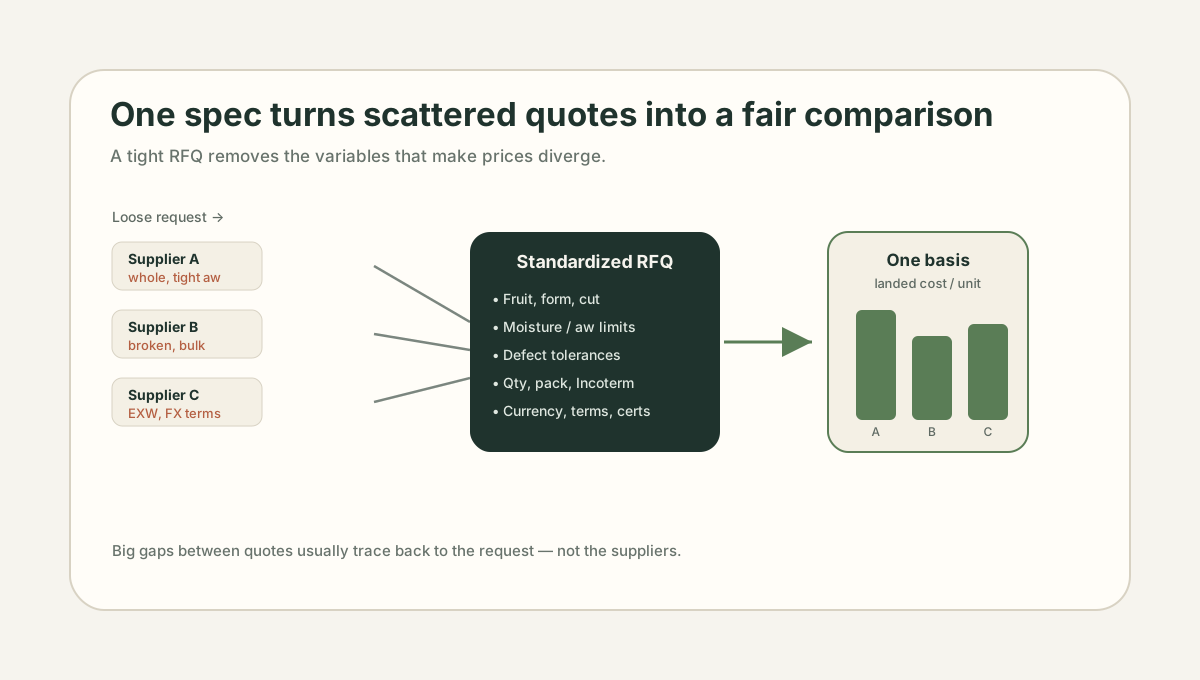
- Most 'huge price gaps' between freeze-dried fruit suppliers come from differences in spec, grade, pack, and Incoterm that the RFQ failed to pin down.
- Define the product precisely: fruit, variety class, form, cut, moisture and water activity limits, defect and breakage tolerances, and any added ingredients or processing aids.
- Standardize the commercial frame too: quantity, pack format, Incoterm, currency, payment terms, lead time, and required certifications, so quotes share one basis.
- Ask for price broken out per unit at stated volume tiers, plus MOQ and validity, so you can compare landed cost rather than headline numbers.
When a buyer says one freeze-dried fruit supplier came in 40 percent under another, the natural reaction is to assume one of them is overpriced or one is cutting corners. Sometimes that is true. More often, the two suppliers were quoting different products against a request that never pinned down what "the same" actually means.
A request for quotation is the tool that closes that gap. A well-built RFQ does not just ask for a price; it removes the variables that would otherwise let three suppliers answer three different questions. The discipline is worth it, because a comparable quote is the only kind you can negotiate or award with confidence.
The direct answer
To get comparable freeze-dried fruit quotes, write an RFQ that fixes both the product and the commercial frame before any supplier sees it. Specify the fruit, form, and quality limits tightly enough that "freeze-dried strawberry" cannot mean four different things, then standardize quantity, pack, Incoterm, currency, terms, lead time, and certifications so every reply rests on the same basis.
When those are locked, price differences start to reflect real differences in cost and efficiency, which is exactly what you want a quote to reveal.
Why loose requests produce scattered quotes
Freeze-dried fruit is not a single commodity with one grade. The same fruit can be sold whole or broken, diced fine or in large pieces, at different moisture and water-activity ceilings, with tighter or looser defect tolerances, plain or with processing aids, in retail pouches or bulk cartons. Each of those choices has a cost.
If the RFQ leaves them open, suppliers default to whatever they normally make, and you end up comparing a premium whole-piece retail spec against a value broken-piece bulk spec. The headline numbers look wildly different, but they are not measuring the same thing. The fix is to specify, not to trust that everyone pictured the same product.
Defining the product
Start with identity and form, then move to the limits that drive both quality and price:
- Fruit and variety class. Name the fruit and, where it matters, the variety group or characteristic (for example a firmer dessert-type versus a soft ripe type).
- Form and cut. Whole, halves, slices, dice at a stated size, or powder at a stated sieve range. Whole versus broken pieces alone can move price meaningfully.
- Moisture and water activity. State the maximum limits. These connect directly to crunch, stability, and how hard the process has to work.
- Defect and breakage tolerances. Give acceptable percentages for breakage, fines, off-color, and foreign material rather than leaving "good quality" to interpretation.
- Added ingredients and processing aids. Specify plain fruit, or name any anti-caking agents, acids, sweeteners, or coatings so a sweetened crisp is not quoted against 100 percent fruit.
Two suppliers can both be honest and still quote far apart if one assumed broken pieces at a higher moisture ceiling and the other assumed whole pieces at a tight one. The RFQ's job is to remove that assumption.
Standardizing the commercial frame
A perfectly specified product still produces incomparable quotes if the commercial terms float. Fix these alongside the spec:
- Quantity and volume tiers. State the order size and ask for pricing at a few volume breaks so you can see how cost scales.
- Pack and case format. Bag size, units per case, and case weight affect both price and downstream handling.
- Incoterm and destination. EXW, FOB, CIF, and DDP assign very different costs and responsibilities. Pick one as the baseline so quotes share a delivery boundary.
- Currency and payment terms. A price in a foreign currency on different payment terms is not directly comparable; name both.
- Lead time. State the delivery window you need so a fast quote is not unfairly compared with a slow one.
- Certifications and documentation. List the food-safety certification scope, organic or other claims, and any documents you require. For imports, your own verification duties under programs such as FSVP make this more than a formality.
Asking for the price the right way
How you request the number shapes how usable it is. Rather than "send your best price," ask for:
- unit price at each stated volume tier, in the named currency and Incoterm
- minimum order quantity and any tier thresholds
- a quote validity window, since fruit pricing moves with crop and freight
- any unavoidable surcharges broken out, not buried
This structure lets you build a like-for-like comparison and then estimate landed cost at your own door, which is the figure that actually governs your margin.
Comparing what comes back
Even with a tight RFQ, suppliers may quote different Incoterms or propose substitutions. Handle that by normalizing rather than rejecting:
- Convert every quote to an estimated landed cost at your destination by adding the freight, insurance, duty, and handling the quoted Incoterm excludes.
- Treat supplier-proposed alternatives as clearly labeled options, not as silent changes to the baseline.
- Flag any quote that deviated from the spec and decide whether the deviation is acceptable before comparing its price.
A quote that ignored your moisture ceiling or swapped whole pieces for broken ones is not cheaper; it is answering a different question.
Why the discipline pays off
A structured RFQ does more than tidy a spreadsheet. It signals to suppliers that you know the product, which tends to surface sharper pricing and fewer hidden assumptions. It shortens the back-and-forth, because the questions are already answered. And it gives you a defensible basis for the award, since you can show the quotes were compared on one spec and one commercial frame.
The effort is front-loaded. You spend more time writing the request and less time untangling why three numbers will not line up. For any repeat or sizable freeze-dried fruit purchase, that trade is almost always worth it.
The practical takeaway
Comparable quotes come from comparable requests. Pin down the fruit, form, cut, moisture and water-activity limits, defect tolerances, and any added ingredients, then lock the quantity, pack, Incoterm, currency, terms, lead time, and certifications. Ask for price by volume tier with MOQ and validity, and normalize every reply to landed cost before you compare. Do that and a wide price gap becomes information you can act on, rather than a mystery you have to chase.
Frequently Asked Questions
What is an RFQ in freeze-dried fruit buying?
A request for quotation is a structured document you send to suppliers asking them to price a precisely defined product under stated commercial terms. Its job is to make every reply comparable on the same basis rather than a loose ask for 'your best price on freeze-dried strawberries.'
Why do freeze-dried fruit quotes vary so much?
Often because the requests were loose. Differences in moisture and water activity limits, defect tolerances, piece size, whole versus broken pieces, pack format, Incoterm, and certification can each move price materially. When those are unspecified, suppliers fill the gaps differently and the quotes diverge.
What should a freeze-dried fruit RFQ always include?
Product identity and form, key quality limits, defect and breakage tolerances, quantity and volume tiers, pack and case format, Incoterm and destination, currency, payment terms, required lead time, certifications, and a quote validity window. Each removes a variable that would otherwise distort comparison.
Should I send the same RFQ to every supplier?
Yes for the core specification and commercial terms, so quotes stay comparable. You can still invite suppliers to propose alternatives or note where their standard differs, but capture those as clearly labeled options rather than letting them quietly change the baseline.
How do I compare quotes that use different Incoterms?
Convert each to an estimated landed cost at your destination by adding the freight, insurance, duty, and handling that the quoted Incoterm leaves out. Comparing an EXW price to a DDP price directly will mislead you; the responsibility split is different.
Primary sources & further reading
- Foreign Supplier Verification Programs (FSVP) for Importers of Food for Humans and Animals U.S. Food & Drug Administration Referenced for the buyer-side verification responsibilities that an RFQ's certification and documentation requirements should anticipate when importing freeze-dried fruit.
External links open in a new tab. We do not receive compensation from any organization listed; sources are referenced because they are primary, current, and publicly verifiable.