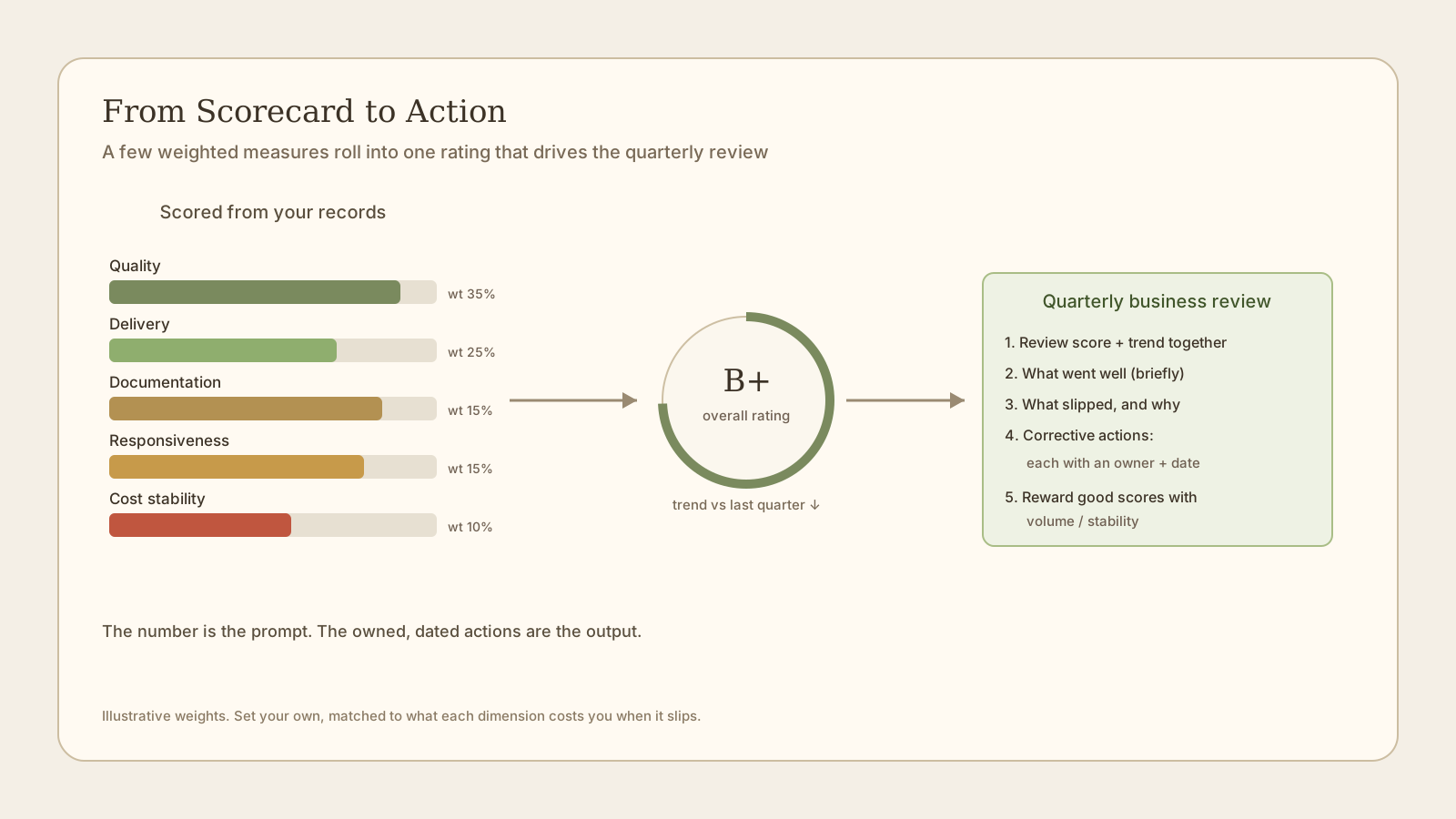
- Score the few dimensions that actually cause cost and risk, quality, delivery, documentation, responsiveness, and cost stability, rather than a long checklist that dilutes the signal.
- Use data you already collect, like on-time delivery, defect and complaint rates, and COA completeness, so the score reflects what happened rather than impressions.
- The quarterly review matters more than the number: it should turn a low score into a specific corrective action with an owner and a date, and reward good suppliers with stability and volume.
Most buyers put real effort into approving a freeze-dried fruit supplier. They run the RFQ, check certificates, qualify samples against production, and sign an agreement. Then the relationship goes quiet until something breaks. A late shipment, a soft lot, a price jump that arrives with no warning.
The tool that prevents that drift is unglamorous: a supplier scorecard, reviewed on a regular cadence. Done well, it turns a relationship from a series of surprises into a managed one. Done badly, it becomes a spreadsheet nobody reads and a quarterly meeting where both sides agree everything is fine. The difference is mostly in what you choose to measure and whether the review actually changes anything.
Score what hurts you when it slips
The temptation with a scorecard is to measure everything. Resist it. A long checklist spreads the signal so thin that a serious problem in one area gets averaged away by good marks in twelve trivial ones. The goal is a short set of dimensions that each map to a real cost or risk.
For freeze-dried fruit, five dimensions cover most of what matters:
- Quality. Defect rates against spec, lot rejections, customer complaints traced to the supplier, and how often incoming product matches the approved sample. This is the dimension that ends up in your finished product, so it usually carries the most weight.
- Delivery. On-time and in-full performance. A supplier who is reliable on quality but routinely late forces you to carry more safety stock, which is a real cost even when no lot is ever rejected.
- Documentation. Whether the COA, certificates, and lot records arrive complete, accurate, and on time. Missing or sloppy paperwork slows receiving, complicates claims, and is often an early warning that the supplier's systems are loose.
- Responsiveness. How quickly and how well they handle questions, complaints, and change requests. A supplier who answers a quality query in a day and one who disappears for two weeks are very different risks, even at the same defect rate.
- Cost stability. Not whether they are cheapest, but how predictable their pricing and quotes have been, and how they handle and communicate cost changes.
A scorecard is only as good as the dimensions you put on it. Pick the few things that actually cost you money or create risk when they slip, and weight them by how much they hurt.
Build the score from data you already have
A scorecard built on impressions becomes an argument. A scorecard built on records becomes a conversation. The aim is for most of the score to come from data you are already collecting in the normal course of receiving and using the product.
On-time delivery comes from your receiving records. Defect and rejection rates come from incoming inspection. Complaint counts come from your quality log. COA and certificate completeness comes from whether the documents were there and correct when the lot arrived. Responsiveness can be tracked as roughly as the time from raising an issue to a useful answer.
Put weights on the dimensions, score each on a simple scale, and roll them into one rating. The exact scale matters less than consistency: use the same definitions every period so the trend is real. A supplier sliding from a strong rating to a mediocre one over three quarters is telling you something even if you cannot name the single cause yet.
The review is where the value is
A scorecard that is never discussed is a filing exercise. The number only matters because it drives a conversation, and the quarterly business review is that conversation.
A good review has a predictable shape. Start with the score and the trend, so both sides are looking at the same picture. Cover what went well, briefly and honestly, because a review that is only complaints trains suppliers to get defensive rather than open. Then spend the real time on what slipped: not just that delivery dropped, but why, and what specifically changes before the next review.
The output that matters is a short list of corrective actions, each with an owner and a date. "Improve delivery" is not an action. "Move to confirmed ship dates with 48 hours notice on any delay, starting next order" is. Without that specificity, the same issues reappear next quarter and the review becomes theater.
If a quarterly review ends without at least one specific, owned, dated action on either side, it probably did not need to be a meeting. The score is the input; agreed actions are the output.
Make the scorecard cut both ways
The most common failure of supplier reviews is that they are purely a buyer scolding a supplier. The relationships that actually improve treat the scorecard as a two-way instrument.
That means using a good score for something the supplier values: a larger share of volume, a longer commitment, faster payment, or simply being the first call when you have new business. A supplier who sees that strong performance earns stability has a reason to protect it. It also means being honest about your own contribution to problems. Rush orders, late forecasts, and shifting specs on your side cause many of the delivery and quality issues that show up on the supplier's score. A review that surfaces those too is one a supplier will engage with rather than endure.
For higher-volume or higher-risk suppliers, it is also worth tracking delivery and quality monthly even if the formal review is quarterly, so a developing problem is visible before the next meeting rather than discovered in it.
Keep it proportionate
A scorecard should match the importance of the supplier. A sole-source supplier of your hero ingredient deserves a detailed scorecard and a serious quarterly review. A minor supplier of an occasional item does not need the same machinery, and forcing it there wastes effort on both sides.
The mechanics can be modest. A single spreadsheet with a tab per supplier, a column per scored dimension, and a weighted total is enough to run this well. The discipline, scoring from real data and actually holding the review, is what creates the value, not the sophistication of the system.
Bottom line
A freeze-dried fruit supplier scorecard works when it measures the few things that genuinely cost you money or create risk, is built from records rather than impressions, and feeds a quarterly review that produces specific, owned, dated actions.
Treated that way, it does two things at once: it catches drift in quality, delivery, and documentation before it becomes a pattern, and it gives good suppliers a clear reason to stay good. The number on the scorecard is just a prompt. The conversation it forces, and the actions that come out of it, are where the relationship actually improves.
Frequently Asked Questions
What should a freeze-dried fruit supplier scorecard actually measure?
Keep it to a handful of dimensions that drive cost and risk: quality (defects, complaints, lot rejections), delivery (on-time and in-full), documentation (COA and certificate completeness and accuracy), responsiveness (how fast and how well they handle issues and requests), and cost stability (how predictable pricing and quotes have been). A short, weighted set that you can score from real data beats a long checklist nobody trusts.
How often should the review happen?
Quarterly works for most ongoing freeze-dried fruit relationships. It is frequent enough to catch drift in delivery or quality before it becomes a pattern, but spaced enough that there is real data between reviews. High-volume or higher-risk suppliers may warrant monthly delivery and quality tracking with a quarterly formal review.
What is the difference between a scorecard and a business review?
The scorecard is the measurement: a periodic rating built from data. The business review is the conversation: a structured meeting where both sides look at the score, agree on what is going well and what is not, and commit to specific actions. A scorecard with no review tends to become a filed document; a review with no scorecard tends to become an opinion swap. They work together.
Can a small buyer run this without a big procurement system?
Yes. The mechanics can live in a single spreadsheet: one tab per supplier, columns for each scored dimension, and a simple weighted total. The discipline matters more than the tooling. What makes it work is scoring from real records you already keep and actually holding the review, not the sophistication of the software.
Primary sources & further reading
- Supplier Verification and Foreign Supplier Verification Programs (FSVP) U.S. Food & Drug Administration Referenced for the principle that supplier verification is an ongoing obligation, not a one-time approval, for imported food including ingredients.
- Supplier performance management overview ISO (ISO 9001 supplier evaluation principles) Referenced for the general principle of evaluating and monitoring suppliers against defined criteria and acting on the results.
External links open in a new tab. We do not receive compensation from any organization listed; sources are referenced because they are primary, current, and publicly verifiable.