- Percent Daily Value tells you how much a nutrient in one labeled serving contributes to a day's reference intake.
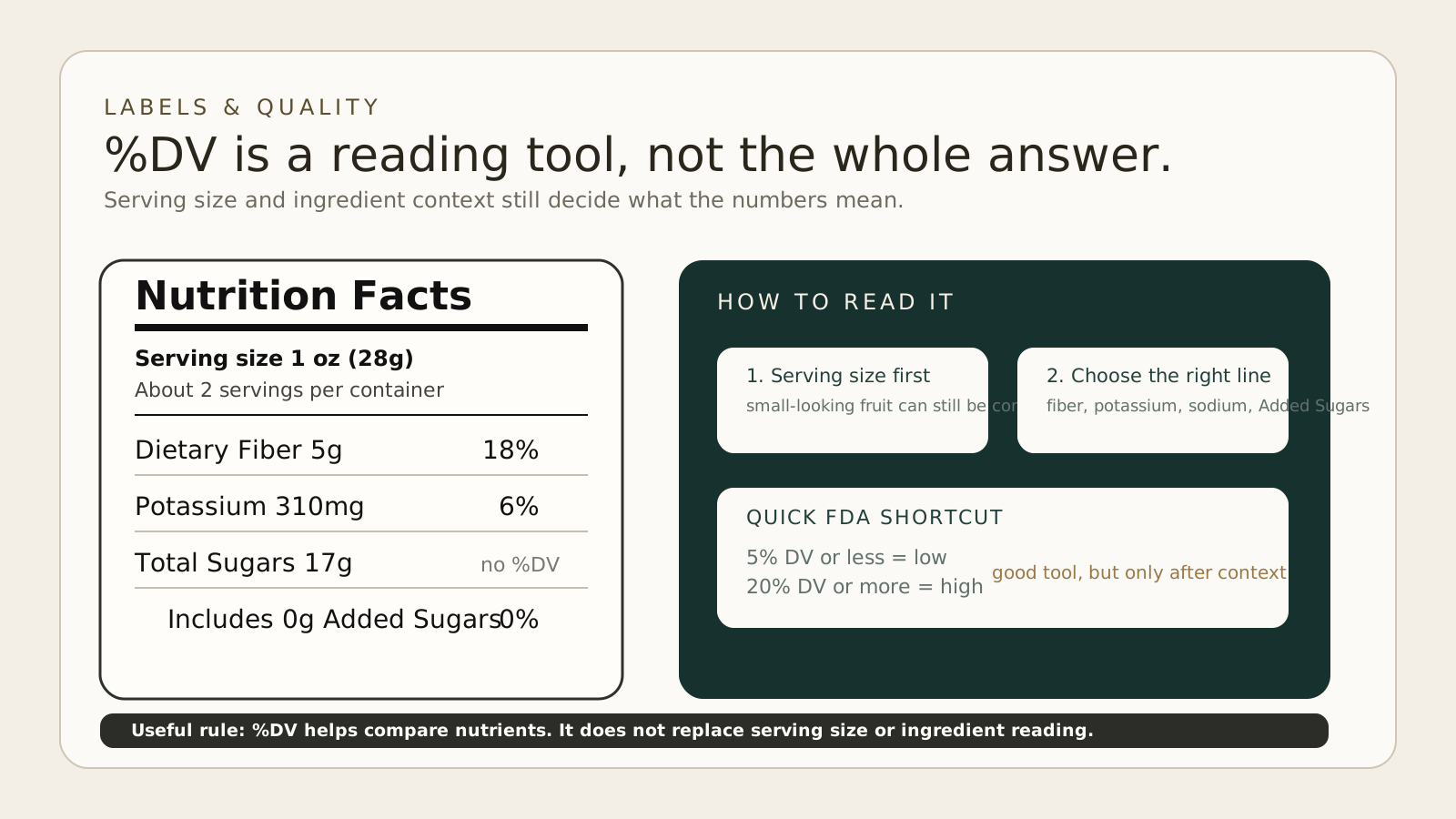
- The 5% and 20% shortcuts are useful, but only after you check serving size and confirm you are reading the right nutrient.
- Total sugars on the Nutrition Facts panel do not carry a %DV, while Added Sugars do when present.
- For freeze-dried fruit, %DV is most useful when it helps you interpret fiber, potassium, sodium, or Added Sugars alongside the ingredient list.
- A nutrient-looking label is not automatically a better fruit product. Plain fruit identity, format, and serving context still matter.
A lot of freeze-dried fruit labels look more intense than the product feels.
That is partly because the Nutrition Facts panel is describing a concentrated food.
The direct answer
Percent Daily Value tells you how much a nutrient in one labeled serving contributes to the Daily Value used on the Nutrition Facts label. On freeze-dried fruit, it is useful because the product is light, concentrated, and easy to misread by eye.
The right way to use %DV is:
- check serving size first
- confirm which nutrient you are reading
- compare the %DV in context with the ingredient line
Used that way, it is helpful. Used alone, it can make a bag look nutritionally clearer than it really is.
What %DV is actually telling you
FDA's label guidance frames %DV as a daily-diet comparison tool.
It is not:
- a quality score
- a freshness score
- a fruit-purity score
- a recommendation that you must eat exactly one serving
It is a reference point.
If one serving provides a small share of the daily reference amount for a nutrient, the %DV will be low. If it provides a larger share, the %DV will be higher.
That sounds simple, but freeze-dried fruit complicates the visual intuition because the serving often looks smaller and lighter than people expect.
Why freeze-dried fruit makes %DV easy to misread
When water is removed, the fruit's solids become more concentrated. That means a modest serving can still show meaningful numbers for nutrients that remain in the fruit.
The mistake is assuming that a small handful equals a nutritionally trivial serving.
Sometimes it does not.
That is why the panel has to be read in the right order:
- serving size
- servings per container
- nutrient line you care about
- ingredient list
If that order is skipped, a shopper may overreact to a high-looking number or underreact to a low-looking one.
The 5% and 20% shortcut is useful, but only after context
FDA's simple rule is one of the better label-reading tools:
- 5% DV or less is considered low
- 20% DV or more is considered high
That shortcut is genuinely useful on freeze-dried fruit. The problem is not the rule. The problem is applying it before asking whether the nutrient is one you want more of or less of.
Examples:
- low sodium is usually good
- higher dietary fiber may be helpful
- higher Added Sugars is not a clean-label win
So the shortcut is about direction, not automatic approval.
Which %DV lines matter most on freeze-dried fruit
For plain freeze-dried fruit, the practically useful lines often include:
- dietary fiber
- potassium
- sodium, when present at meaningful levels
- Added Sugars, if the product is not plain fruit
The ingredient list still decides the core identity of the product.
A bag with a tidy-looking %DV profile can still be a formulated snack if the ingredients include sugar, syrup, juice concentrate, carriers, or flavor systems. Conversely, a plain-fruit product may show modest %DV values and still be the more straightforward bag.
That is why %DV is interpretive help, not the product definition.
One easy mistake: total sugars versus Added Sugars
This is one of the most important reading habits in the category.
Total sugars are listed in grams, but total sugars do not carry a %DV on the Nutrition Facts panel. Added Sugars do carry a %DV when they are present.
That matters because freeze-dried fruit naturally contains fruit sugars. A shopper who expects a %DV next to total sugars may misread the panel or assume the absence of %DV means the product is unusually low in sugar. That is not what the panel means.
The better question is:
- are the sugars only from the fruit itself
- or did the product add sugars that now appear on the Added Sugars line
That distinction is usually more important than the raw sugar number by itself.
Why %DV does not settle the quality question
Percent Daily Value says nothing direct about:
- breakage level
- whether the fruit is mostly whole pieces
- whether the texture stayed crisp
- whether the bag contains plain fruit or a more engineered snack unless you also read the ingredient line
That is why two products can show similar %DV patterns and still be very different bags in practice.
A serious read on freeze-dried fruit quality still needs:
- ingredient list
- serving context
- format
- visible piece quality
- texture after opening
The fastest reliable reading sequence
If you want a quick but defensible read, use this order:
- serving size
- servings per container
- fiber, potassium, sodium, or Added Sugars %DV as relevant
- ingredient list
That sequence keeps the %DV in its proper place: useful, but not in charge of the whole judgment.
Bottom line
Percent Daily Value on freeze-dried fruit labels is a good comparison tool when you use it in context. It helps explain how a small serving fits into a day's nutrient reference amounts, especially for fiber, potassium, sodium, and Added Sugars.
But %DV is not the same thing as fruit quality. The bag still has to be read as a whole.
Frequently Asked Questions
What does % Daily Value mean on a freeze-dried fruit label?
It shows how much a nutrient in one serving contributes to the Daily Value used on the Nutrition Facts label. It is a comparison tool, not a complete product judgment.
Why can a small serving of freeze-dried fruit show a noticeable %DV?
Because removing water concentrates the fruit's solids into a lighter serving. A small-looking portion can still carry meaningful fiber, potassium, sugars, or other nutrients.
Does total sugar have a %DV on the label?
No. Total sugars are listed in grams, but the Nutrition Facts panel does not assign a %DV to total sugars. Added Sugars do have a %DV when present.
Is a higher %DV always better?
No. A higher %DV can be useful for nutrients you want more of, such as fiber in some products, but it can also signal more of something you may want to limit, such as sodium or Added Sugars.
What should I check before using %DV to compare two bags?
Check serving size first, then read the ingredient list, then compare the relevant %DV lines. Comparing %DV without aligned serving context can mislead you quickly.
Primary sources & further reading
- Daily Value on the Nutrition and Supplement Facts Labels U.S. Food & Drug Administration Referenced for FDA's explanation of Daily Value, Percent Daily Value, and the practical 5% and 20% label-reading shortcuts.
- How to Understand and Use the Nutrition Facts Label U.S. Food & Drug Administration Referenced for FDA's guidance on reading serving size first and using the Nutrition Facts panel as a comparison tool.
- Food Labeling Guide U.S. Food & Drug Administration Referenced for FDA's broader labeling framework and for context around nutrition-label interpretation on packaged foods.
External links open in a new tab. We do not receive compensation from any organization listed; sources are referenced because they are primary, current, and publicly verifiable.