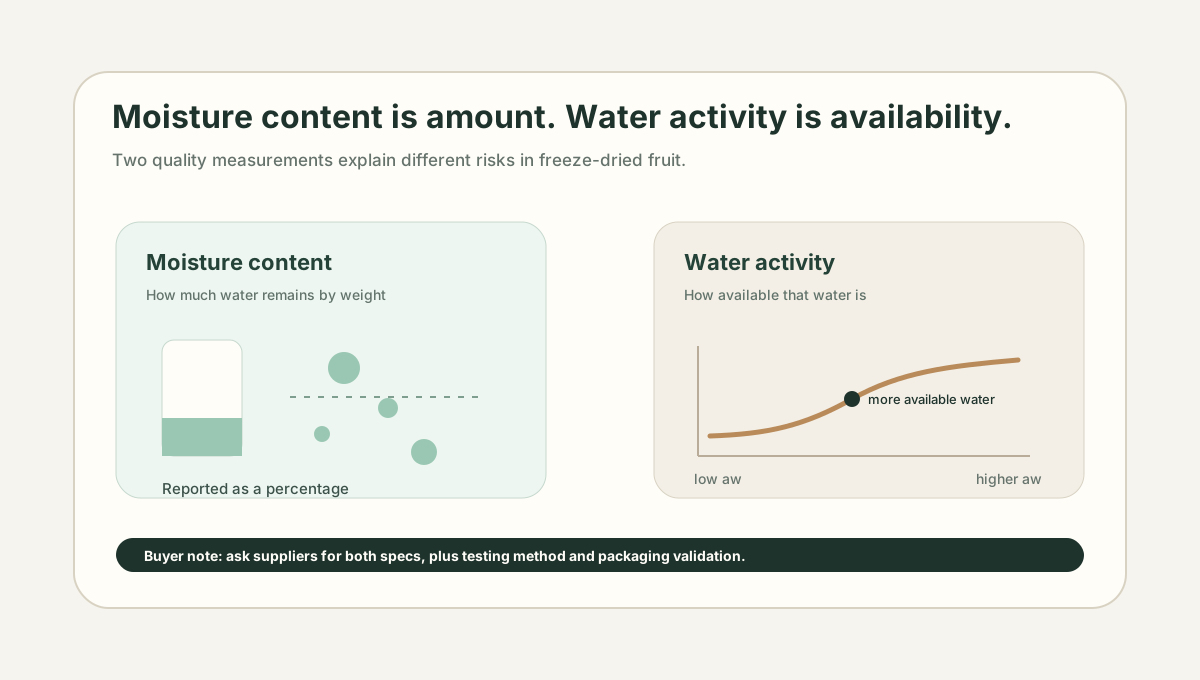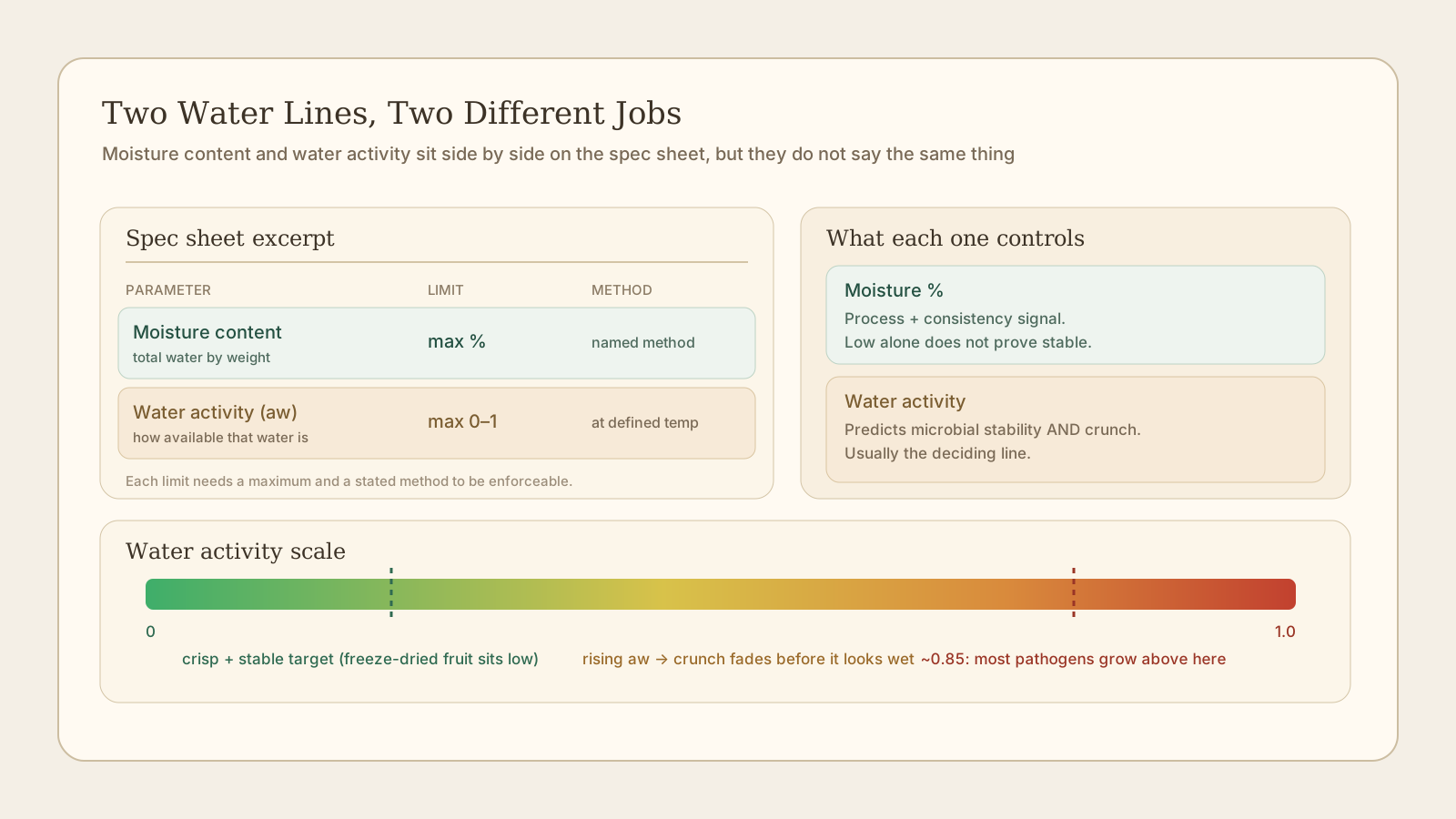
- Moisture content measures how much water is in the fruit; water activity measures how available that water is for spoilage and texture change, so a spec sheet usually lists both.
- Water activity is the better predictor of microbial stability and crunch, which is why a low moisture figure alone does not guarantee a stable, crisp product.
- A good limit is written as a maximum with a clear test method, and the most useful spec ties the number to where and how it is measured.
- Buyers should confirm the limits match the intended use and packaging, then check lot certificates against the spec rather than assuming the printed target was met.
Most freeze-dried fruit spec sheets carry two lines about water: a moisture content limit and a water activity limit. They look similar, sit near each other, and are easy to skim past as if they say the same thing. They do not. One tells you how much water is in the fruit, the other tells you how much that water can do. Reading them as interchangeable is a quiet way to accept a lot that looks fine on paper and fails in the bag.
The direct answer
Read the two lines as a pair. Moisture content is the total water in the product, usually a percent by weight. Water activity is a value from 0 to 1 that describes how available that water is for microbial growth and chemical change.
For freeze-dried fruit, water activity is usually the more important predictor of both stability and texture, while moisture content is a useful process and consistency check. A lot is in good shape when both limits are met, each is written as a clear maximum, and each names how it was measured. A low moisture figure on its own is not proof the lot is stable or crisp.
Why moisture content is not the whole story
Moisture content answers a simple question: how much water is in this fruit? It is valuable for process control and batch-to-batch consistency, and a moisture figure that drifts upward is a useful early warning that something in drying or handling has changed.
But total water is not the same as available water. Some of the water in fruit is bound to sugars and other components and is not free to support spoilage or move into the structure in ways that soften it. That is why two lots can post a similar moisture percent and still behave differently. The percent tells you the quantity, not the behavior.
So moisture content earns its place on the spec sheet as a consistency and process signal. It just should not be the only line you trust for stability.
What water activity actually controls
Water activity measures the availability of water rather than the amount. Both FDA and USDA frame it in terms of the water that is free to support microbial growth and chemical reactions, often described through equilibrium relative humidity.
That availability is what links the number to real outcomes. Microbial stability tracks water activity more closely than moisture percent, which is why regulators describe water activity thresholds, around 0.85 and below, as the point where most pathogenic bacteria stop growing. Freeze-dried fruit normally targets well below that for safety margin.
Water activity also tracks texture. Crunch survives only while the fruit sits in a low range; as water activity climbs, the product passes from crisp to flat to leathery, often before it looks visibly wet. That dual role, safety and texture, is why water activity tends to be the line that decides whether a lot is genuinely acceptable.
How a good limit is written
A number alone is not a spec. The way the limit is written tells you whether you can actually hold a supplier to it.
The most protective form is a maximum. Both moisture and water activity carry rising risk as they climb, so a ceiling, "water activity not to exceed X," "moisture not to exceed Y percent," protects you better than a bare typical value. A target with a clearly stated upper bound is also workable. What to avoid is a single figure with no indication of whether it is a ceiling, an average, or a hopeful aim.
The method matters just as much. Different moisture-determination methods can return different results on the same sample, so a moisture limit without a named method is hard to enforce in a dispute. Water activity readings shift with temperature, so the spec should reference measurement at a defined temperature. A limit you cannot tie to a method is a limit you cannot really defend.
For each water line on the sheet, confirm three things: is it a maximum, what method or measurement condition is named, and does the value fit how the product will be packaged and used? If any of the three is missing, ask before you approve the spec, not after a complaint."
Match the limits to use and packaging
The right numbers depend on what happens to the fruit after it leaves the supplier. A product going into a high-barrier, nitrogen-flushed pouch for whole-piece snacking has different tolerances than one going into a blend, a topping, or a format that will see more handling and exposure.
Tighter water activity buys more crunch margin and more shelf-life headroom, which matters most for premium whole-piece products sold on texture. A product that will be ground, rehydrated, or used as an ingredient may tolerate a slightly different target, but it still needs a stable, defined limit. The point is to confirm the spec's limits fit the intended use rather than accepting generic numbers and hoping they suit your application.
Trust the spec, then verify the lot
A spec sheet states intent. A certificate of analysis states what a given lot actually delivered. The two are not the same, and the gap between them is where problems hide.
Once the spec's moisture and water activity limits are sound, the working habit is to check each lot's certificate against those limits before release, rather than assuming the printed target was met. If certificates routinely sit right at the ceiling, or arrive without the test method noted, that is a signal worth raising. A spec is only as good as the lots that are checked against it.
Bottom line
Moisture content and water activity are two different controls that share space on a spec sheet. Moisture tells you how much water is present and is a good consistency check; water activity tells you how available that water is and is usually the stronger predictor of both safety and crunch. Read each as a clear maximum with a named method, match the limits to how the product will be packaged and used, and verify lot certificates against the spec rather than trusting the printed target. Read together, the two lines tell you whether a lot will hold up. Read as one, they can mislead you.
Frequently Asked Questions
What is the difference between moisture content and water activity on a spec sheet?
Moisture content is the total amount of water in the product, usually shown as a percent by weight. Water activity is a measure from 0 to 1 of how available that water is for microbial growth and chemical change. Two products can share a moisture percent yet have different water activity, because some water is bound and unavailable. That is why both lines appear and why they are not interchangeable.
Which number matters more for freeze-dried fruit?
For stability and texture, water activity is usually the more meaningful number. It tracks both microbial safety and the point where the fruit starts losing crunch. Moisture content is still useful as a process and consistency check, but a low moisture figure alone does not prove the lot is stable.
What water activity is typical for freeze-dried fruit?
Freeze-dried fruit is generally driven to a low water activity well below the thresholds where most spoilage organisms grow. Regulators describe water activity at or below about 0.85 as limiting growth of most pathogenic bacteria, and freeze-dried fruit normally targets considerably lower than that for both safety margin and crispness. Confirm the exact target with the supplier and match it to your use.
Should the spec be a maximum, a target, or a range?
For moisture and water activity, a maximum is the most protective way to write the limit, because the risks rise as the numbers climb. A target or range can be fine if the upper bound is clearly stated. Avoid specs that list a single number with no indication of whether it is a ceiling or just a typical value.
Why does the test method matter on the spec sheet?
Different moisture methods can return different numbers for the same sample, so a moisture limit without a stated method is hard to enforce. Water activity should reference measurement at a defined temperature, since the reading shifts with temperature. A limit is only meaningful when you know how it was measured.
Primary sources & further reading
- Water Activity (aw) in Foods U.S. Food & Drug Administration Referenced for the distinction between moisture content and water activity and for water activity thresholds related to microbial growth.
- Pathogen Modeling Program Online: Water Activity in Food USDA Agricultural Research Service Referenced for the plain-language explanation that water activity reflects available water and is commonly expressed as equilibrium relative humidity.
External links open in a new tab. We do not receive compensation from any organization listed; sources are referenced because they are primary, current, and publicly verifiable.