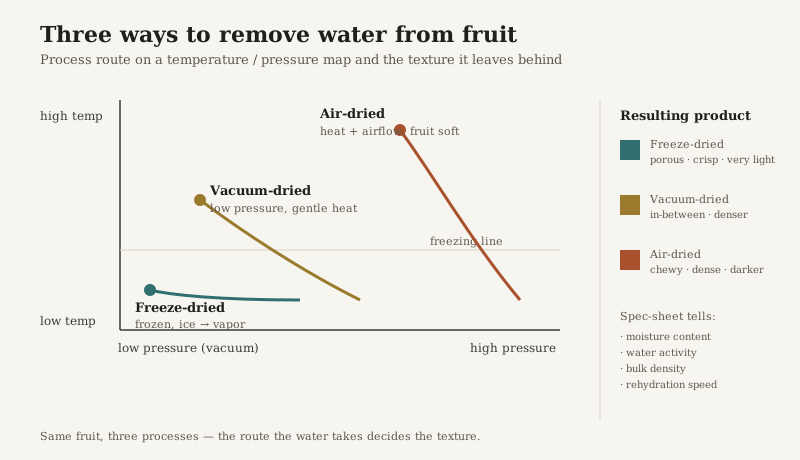
- Freeze-drying does not sterilize fruit; it preserves a low-moisture state that stops microbes from growing, so any organisms present at processing are largely still there, just dormant.
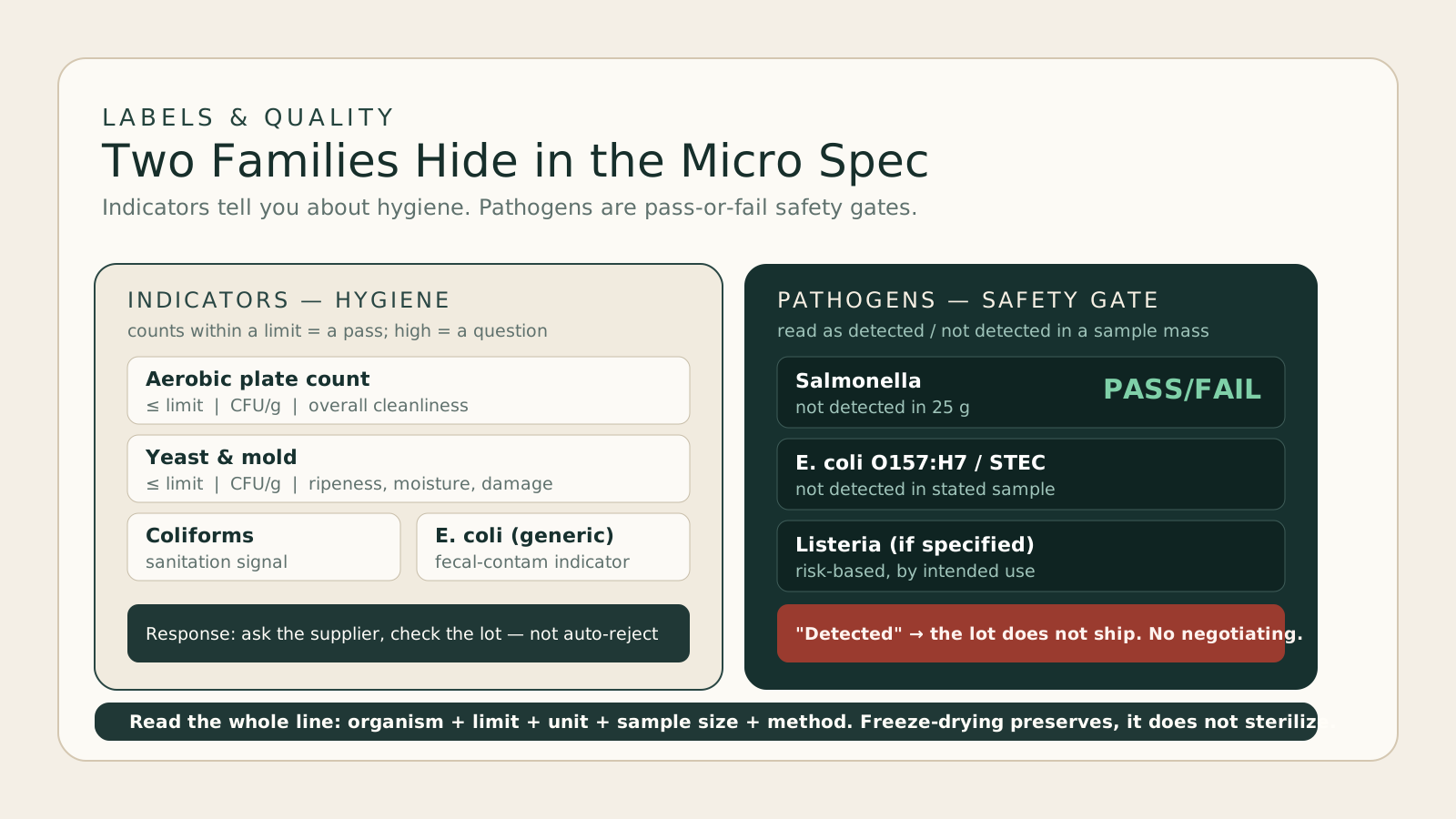
- Indicator tests like aerobic plate count, yeast and mold, and coliforms describe handling and hygiene, not necessarily a safety hazard on their own.
- Pathogen tests like Salmonella and E. coli are pass/fail safety gates and are usually specified as 'not detected' in a stated sample size.
- Numbers only mean something with their units, sample size, and method, so read the whole line, not just the figure.
Open a freeze-dried fruit spec sheet to the microbiological section and you hit a block of abbreviations: APC, Y&M, coliforms, E. coli, Salmonella, sometimes more. Each one has a number, a unit, and a method beside it.
It looks intimidating, but the section is really answering two plain questions. Was this fruit grown, handled, and processed cleanly? And is anything actually dangerous present? Once you can sort each line into one of those buckets, the wall of acronyms becomes readable.
First, what freeze-drying does and does not do
This is the fact that makes the whole section make sense: freeze-drying is a preservation step, not a kill step.
Removing water drops the moisture and water activity low enough that microbes cannot multiply. That is why sealed freeze-dried fruit is microbially stable for a long time. But the organisms that were on the fruit before drying are mostly still there, dormant rather than dead.
So the micro spec is not proof that drying cleaned the fruit. It is a check on the incoming raw material and the handling around it, plus a safety gate for pathogens. That framing matters: a clean spec reflects good fruit and good hygiene upstream, not a magic effect of the dryer.
The two families of tests
Almost every line falls into one of two groups.
Indicator organisms describe hygiene and handling. They are not, by themselves, a declaration that the product is unsafe. They tell you how cleanly the fruit was grown, sorted, and processed, and whether moisture or spoilage crept in.
Pathogen tests are direct safety gates. These are organisms that can make people sick, so the acceptable level is effectively zero, and the result is read as detected or not detected.
Read every line by first asking which family it belongs to. Indicators invite questions; pathogens are pass or fail.
The indicator tests, line by line
Aerobic plate count (APC). Also called total plate count or standard plate count, this estimates total viable aerobic organisms per gram, usually written as CFU/g (colony-forming units per gram). It is the broadest hygiene snapshot. A moderate count is normal for an agricultural product; a count above the spec's limit is a prompt to ask what changed.
Yeast and mold (Y&M). Fruit is sugary and acidic, which favors yeast and mold over many bacteria, so this is often the most informative line for fruit. Elevated counts can point to overripe or damaged raw fruit, or moisture exposure before drying. For some fruits, persistent mold issues also raise the separate question of mycotoxins, which is worth asking about rather than assuming.
Coliforms. A hygiene indicator group. Higher coliform counts suggest sanitation or handling gaps somewhere in the chain. They are not automatically a safety problem, but they are a flag that cleanliness deserves a look.
E. coli (generic). Listed separately from the broader coliform group, generic E. coli is a more specific indicator of fecal contamination and poor hygiene. It is usually specified at a very low or not-detected level. Treat it as a stronger hygiene signal than coliforms.
A breached indicator limit rarely means the fruit is dangerous. It means something in sourcing or handling deserves explanation. The right response is usually a supplier conversation and a look at the lot history, not an automatic rejection.
The pathogen tests
These are the lines you read as gates.
Salmonella. The headline pathogen for low-moisture produce. It is specified by absence in a defined sample mass, typically "not detected in 25 g," sometimes with composited samples for a more demanding test. There is no acceptable count; the only passing result is not detected. Salmonella is durable in dry foods, which is precisely why this test is non-negotiable.
E. coli O157:H7 and other STEC. For some fruits and risk profiles, specs call out specific disease-causing E. coli strains separately from the generic indicator. These are also pass/fail, read as not detected in a stated sample size.
Listeria monocytogenes. Less commonly specified for shelf-stable dried fruit than for ready-to-eat refrigerated foods, but it can appear depending on the buyer's risk assessment and intended use. Again, a presence/absence gate.
If a pathogen line reads "detected," the lot does not ship. There is no negotiating a count down, because the spec is the count.
How to actually read a line
The number alone is meaningless. A complete micro line has four parts, and you need all of them:
- the organism (what is being measured)
- the limit (the maximum count, or "not detected")
- the unit and sample size (CFU/g, and "in 25 g" for pathogens)
- the method (the test protocol used)
"Salmonella: negative" is incomplete. "Salmonella: not detected in 25 g, by an AOAC-recognized method" is a real specification. Likewise, "Yeast and mold: <100" needs its CFU/g unit to mean anything. When a supplier sends a spec with bare numbers, ask for the units, sample sizes, and methods before you accept it.
Putting it together as a buyer
A workable mental routine for the micro section:
First, separate indicators from pathogens. Pathogens are gates; indicators are context.
Second, check pathogens read as not detected in a stated, sensible sample size. This is the safety floor.
Third, compare indicator counts to the spec's own limits, and pay special attention to yeast and mold for fruit. Within limits is a pass.
Fourth, when an indicator is high or trending up across lots, treat it as a question for the supplier about sourcing, sorting, and moisture control, supported by the COA for that lot.
Read that way, the microbiological section stops being a wall of acronyms and becomes what it is meant to be: a short, structured story about how clean the fruit was and whether anything dangerous slipped through.
The takeaway
Freeze-drying locks fruit in a low-moisture state, but it does not sterilize it, so the micro spec is really about the fruit's history and a hard safety gate. Sort each line into indicator or pathogen, read the full line including units and sample size, and respond to indicators with questions and to pathogens with pass-or-fail discipline.
This is sensitive territory, since it touches food safety. If you are setting or releasing against micro specs for a commercial product, work from a documented food-safety plan and qualified laboratory results rather than a reading guide alone.
Frequently Asked Questions
Does freeze-drying kill bacteria?
Not reliably. Freeze-drying removes water so microbes cannot grow, but it is a preservation step, not a kill step. Many organisms survive in a dormant state, which is exactly why the raw fruit's hygiene and any validated pathogen-reduction step still matter.
What is aerobic plate count on a freeze-dried fruit spec?
Aerobic plate count, sometimes called total plate count or standard plate count, estimates the total number of viable aerobic organisms per gram. It is a general indicator of overall hygiene and raw-material quality, not a direct measure of safety.
What do yeast and mold limits tell me?
Yeast and mold counts flag fruit that may have been overripe, damaged, or exposed to moisture before drying. High counts are a quality and handling signal and, for some fruit, a prompt to ask about mycotoxin controls.
Why is Salmonella listed as 'not detected in 25 g'?
Pathogens are specified by presence or absence in a defined sample mass rather than a count, because the acceptable level is effectively zero. 'Not detected in 25 g' means testing on a 25-gram sample found none; larger sample sizes are a more demanding test.
Should a high plate count alarm me?
Not automatically. Indicator counts need context: the fruit type, the spec's own limit, the method, and the lot history. A count within the agreed limit is a pass. Treat trends and limit breaches as questions for the supplier, not instant rejections.
Primary sources & further reading
- Bacteriological Analytical Manual (BAM) U.S. Food and Drug Administration Referenced for standard microbiological test methods and sampling concepts behind indicator and pathogen testing of foods.
- Microorganisms in Foods 2: Sampling for Microbiological Analysis International Commission on Microbiological Specifications for Foods (ICMSF) Referenced for the framework of indicator organisms, pathogen criteria, and the role of sample size in microbiological specifications.
- Water Activity and Microbial Stability National Library of Medicine / Foods Referenced for why low moisture and water activity halt microbial growth without killing organisms already present.
External links open in a new tab. We do not receive compensation from any organization listed; sources are referenced because they are primary, current, and publicly verifiable.