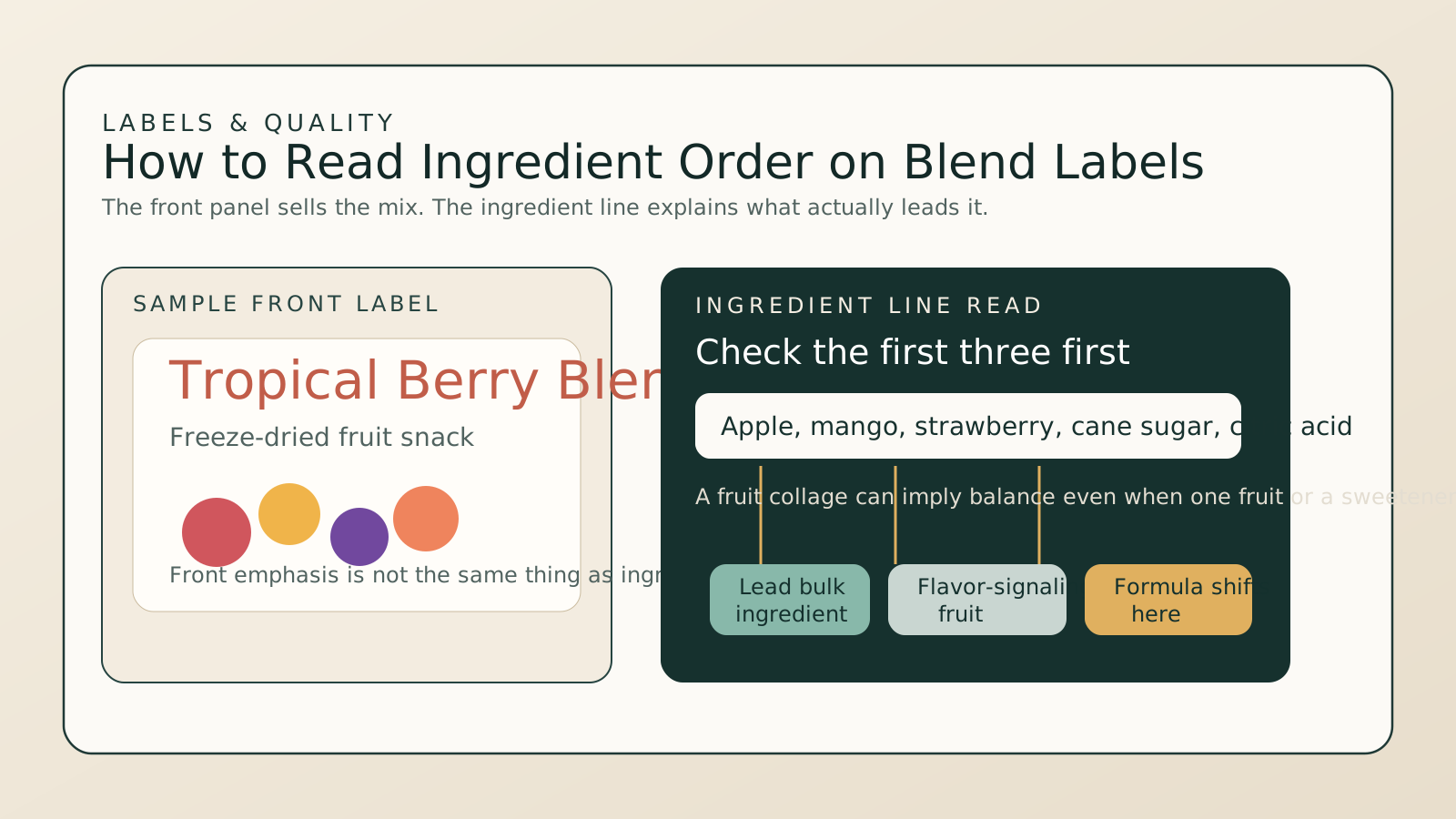
- U.S. ingredient lists are generally ordered by predominance by weight, so the top of the line deserves the closest attention.
- On freeze-dried fruit blends, the first ingredients often reveal whether the product is mostly plain fruit, fruit plus sweeteners, or fruit plus flavor-building extras.
- A bright fruit picture on the front does not guarantee that the named fruit leads the formula.
- For blends, the ingredient line usually tells the commercial truth faster than the marketing copy does.
Freeze-dried fruit blends are one of the easiest places for shoppers and buyers to over-trust the front of the bag.
A package may show five fruits in full color and still be led, by weight, by only one or two of them. It may also be more formulated than the word "fruit" suggests.
The direct answer
To read ingredient order on a freeze-dried fruit blend, start at the top of the ingredient line and ask which components lead by weight, which ones act as sweeteners or support ingredients, and whether the finished product is really a plain mixed-fruit bag or a more constructed snack.
The ingredient list usually tells the truth faster than the front panel.
What ingredient order is meant to tell you
Under U.S. labeling rules, ingredients generally appear in descending order of predominance by weight. That means the first ingredients deserve the most attention.
For freeze-dried fruit blends, this is useful because the bag often combines:
- multiple fruits
- sweeteners
- acids
- flavors
- carriers or anti-caking ingredients
- coatings or inclusions
Once those extras enter the formula, the bag stops being just a fruit assortment and becomes a more specifically formulated product.
The first three ingredients usually tell most of the story
In practice, the first three ingredients often answer the main compositional question.
If the first entries are plainly named fruits, the blend is more likely to be fruit-led. If sugar sources or sweetened fruit pieces appear early, the bag may still contain fruit but be commercially closer to a sweet snack than a plain-fruit mix.
That is why a fast disciplined read looks like this:
- identify the first three ingredients
- check whether they are plain fruits or flavored/sweetened forms
- scan the rest of the line for support ingredients that change the product type
This matters because the front panel can emphasize mango, berry, or tropical imagery without promising that those fruits dominate the formula by weight.
Fruit names are not always equivalent to plain fruit
One of the easiest mistakes is assuming every fruit-sounding ingredient means the same thing.
These are not interchangeable reads:
- freeze-dried strawberries
- sweetened freeze-dried strawberries
- strawberries with apple juice concentrate
- strawberry-flavored fruit pieces
Each version can move the product further away from a plain-fruit blend. The ingredient order helps you see that movement.
FDA's guidance on added sugars is especially useful here because fruit-like ingredients can still function as sweeteners when concentrates or syrups are doing the compositional work.
Why the fruit on the front may not lead the blend
Front-of-pack language and visuals are not always a composition map. A brand may highlight the fruit that:
- gives the blend its flavor identity
- looks best in photography
- carries the strongest consumer recognition
- anchors the product name
That does not mean it is the heaviest ingredient.
In a freeze-dried blend, a highly aromatic berry may define the taste while apple or banana provides more bulk. That is not automatically deceptive, but it is exactly why the ingredient line matters more than the front illustration when you are trying to understand the formula.
Treat the front panel as the sales story and the ingredient list as the composition story. For blends, the composition story is usually the one you need first.
Support ingredients change the commercial meaning of the bag
Some blend labels stay simple. Others add ingredients that materially change what the product is.
Look for:
- sugar
- syrups
- concentrated juice used as sweetener
- natural flavors
- citric acid or ascorbic acid
- starches or carriers
- anti-caking ingredients
- oils or coatings
None of these ingredients is automatically wrong. The important point is that they shift the product from "mixed freeze-dried fruit" toward a more engineered snack or ingredient system.
Ingredient order does not tell you everything
It is still important to know the limits of this tool.
Ingredient order usually does not tell you:
- exact percentages
- how the fruit pieces are distributed visually
- whether one fruit exists mostly as powder while another exists as pieces
- how the blend behaves after the bag is opened
So the ingredient line is the best starting point, not the whole quality review.
For buyers, it should be paired with the specification and the actual sample. For consumers, it should be paired with the Nutrition Facts panel and a look at the real contents of the bag.
A useful comparison habit
When comparing two freeze-dried fruit blends:
- read the product name
- read the first three ingredients
- circle any sugar, syrup, concentrate, flavor, or carrier ingredients
- check the Added Sugars line on Nutrition Facts if relevant
That habit usually separates:
- plain-fruit blends
- sweetened fruit blends
- flavored fruit snacks
- fruit-based ingredient systems
Much faster than marketing language alone can.
Bottom line
Ingredient order on freeze-dried fruit blend labels is one of the fastest ways to understand what is actually leading the bag by weight. It helps reveal whether the product is mostly plain fruit or whether sweeteners and support ingredients are doing more of the work than the front panel suggests.
For blends, read the ingredient list before trusting the fruit collage. That is usually where the real composition becomes visible.
Frequently Asked Questions
Why does ingredient order matter on a freeze-dried fruit blend?
Because the list usually shows ingredients in descending order by weight. That makes the top of the line the fastest clue to what is doing the most compositional work in the bag.
Does the first fruit listed have to be the fruit shown most prominently on the front?
Not necessarily. Front-of-pack imagery and product naming can emphasize a fruit for flavor or marketing reasons, while the ingredient line shows the composition order that actually controls the formula.
Can a fruit blend still be mostly sugar or sweetened inclusions?
Yes. If sugar sources, sweetened fruit pieces, or syrup-type ingredients appear high in the line, the bag may be a more formulated snack than a plain-fruit mix.
Does ingredient order tell me exact percentages?
Usually no. It tells you sequence by predominance by weight, not precise percentages, unless the label separately makes a quantitative claim.
What is the fastest practical read for a blend label?
Check the first three ingredients, then look for sweeteners, flavors, acids, oils, carriers, or anti-caking ingredients that change the product from plain mixed fruit into something more formulated.
Primary sources & further reading
- 21 CFR 101.4 - Food; Designation of Ingredients Electronic Code of Federal Regulations Referenced for the U.S. rule that ingredients generally must be declared by common or usual name in descending order of predominance by weight.
- Guidance for Industry: Food Labeling Guide U.S. Food & Drug Administration Referenced for FDA's ingredient-list and packaged-food label guidance, including practical interpretation questions relevant to mixed-fruit products.
- Added Sugars on the New Nutrition Facts Label U.S. Food & Drug Administration Referenced for FDA's explanation that sugars from syrups and certain juice concentrates can function as added sugars in labeled foods.
External links open in a new tab. We do not receive compensation from any organization listed; sources are referenced because they are primary, current, and publicly verifiable.