- Color and appearance specs are frequently the weakest, most subjective part of a freeze-dried fruit spec sheet, which makes them a common source of accept-or-reject disputes.
- Strong specs anchor color to a physical standard or reference sample and define appearance defects with countable limits rather than adjectives alone.
- Vague phrases like 'characteristic color' or 'typical appearance' are only useful when tied to an agreed reference both sides hold.
- Buyers can tighten these specs by requesting retained reference samples, defect photo guides, and a stated tolerance for natural color variation before approving a supplier.
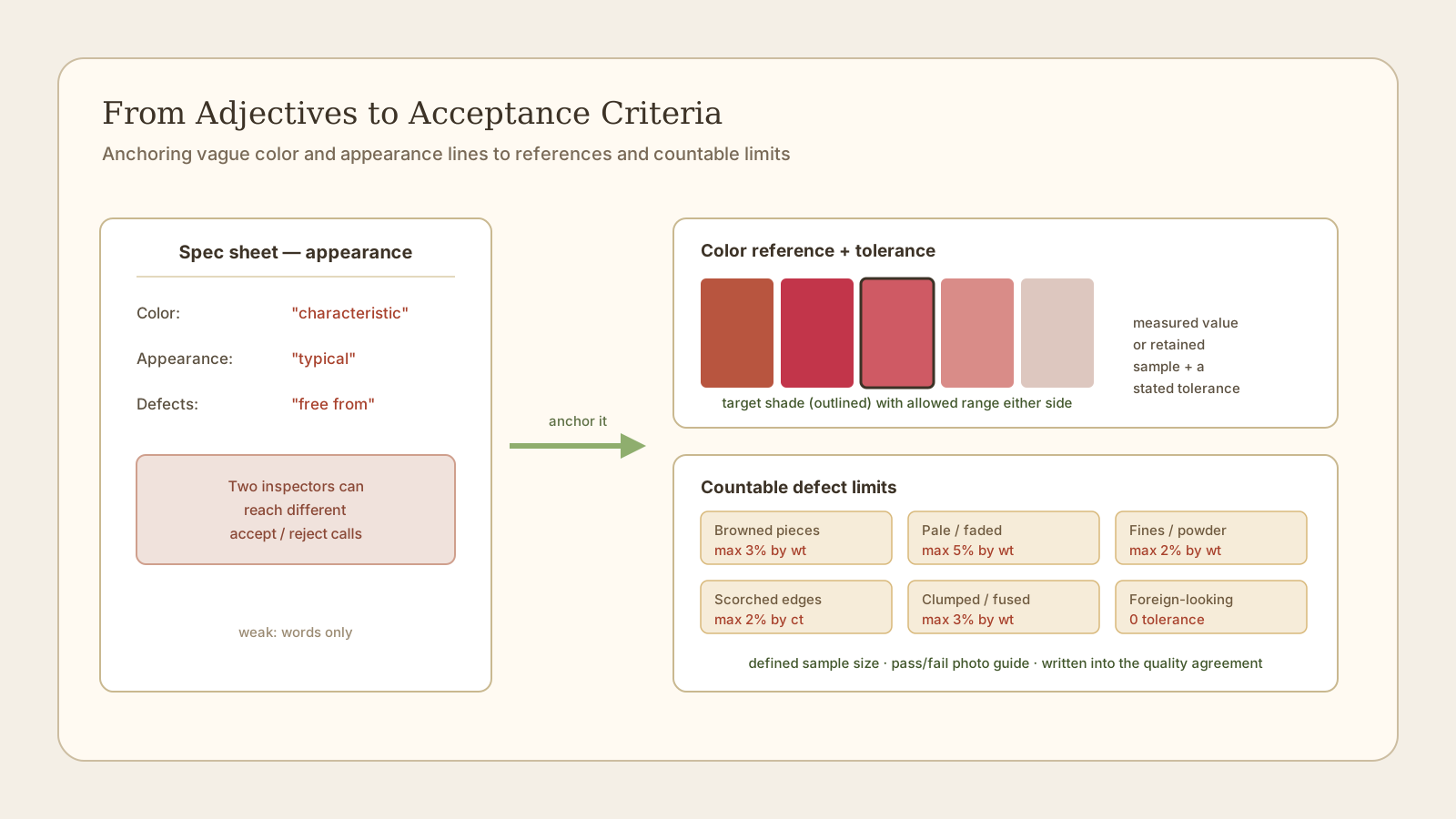
On a freeze-dried fruit spec sheet, the moisture line is easy. It says something like a maximum percentage, measured by a stated method, and there is little room to argue. A few lines down, the color and appearance section often reads completely differently: "characteristic color," "typical appearance," "free from defects." These are adjectives, not limits, and they are frequently where a lot quietly passes or fails depending on who is looking.
That mismatch matters because appearance is a real driver of whether freeze-dried fruit sells. A pale, browned, or clumpy lot can be perfectly safe and within moisture spec yet look wrong on a shelf or in a finished product. Learning to read the appearance section, and to spot when it is too weak to enforce, is one of the more practical buyer skills in this category.
Why these specs are the weak point
Moisture, water activity, and microbiological limits share a useful property: they are single numbers from an instrument. Color and appearance are not. Color is multi-dimensional and partly perceptual, lighting changes how it reads, and natural fruit varies from lot to lot and from season to season. Writing a precise appearance spec takes real effort, so many sheets fall back on familiar adjectives instead.
The result is that the appearance section is often the softest part of the whole document. That softness is not harmless. When a buyer thinks a lot looks off and the supplier thinks it looks fine, the spec sheet is supposed to settle it. If the relevant line just says "characteristic color," it settles nothing.
A spec is only useful if two people reading it independently would reach the same accept-or-reject decision. Numeric specs usually pass that test. Adjective-only color specs usually fail it. The goal of reading these lines well is to find out which kind you are holding.
What the vague words are trying to say
It helps to translate the common phrases honestly.
"Characteristic color" means the color an experienced person expects for that fruit. That is only enforceable if both sides share the same expectation, which is exactly what is in dispute when there is a problem. "Typical appearance" carries the same weakness. "Free from defects" sounds strict but is rarely literally true, since some level of minor variation always exists, so without a stated tolerance it is unenforceable in the other direction.
None of these phrases are useless. They become useful the moment they are tied to a physical anchor: an approved reference sample, a color card, or a measured value with a tolerance. The skill is recognizing that the words alone are a placeholder, and looking for the anchor that gives them meaning.
Anchoring color to a standard
A strong spec sheet handles color in one of two ways, and the better ones use both.
The first is a reference sample. The supplier and buyer agree on a retained physical sample that represents acceptable color, and incoming lots are compared against it under a defined lighting condition. This is simple, cheap, and surprisingly effective, because it replaces an argument about words with a side-by-side comparison.
The second is measurement. Color can be measured instrumentally and expressed as coordinate values with a numeric tolerance, which removes most of the subjectivity. Not every supplier measures color for every SKU, but for products where color is central to the sale, it is reasonable to ask whether color is measured or only eyeballed, and whether there is a stated tolerance for how far a lot can drift.
Because fruit pigments are naturally variable and sensitive to light, heat, and oxygen, a sensible spec also allows a defined range rather than a single target. A spec that demands one exact shade with no tolerance is either ignoring reality or setting the buyer up to reject normal lots inconsistently.
Making appearance defects countable
Appearance is more than color. It covers the defects that make a lot look poor even when the base color is fine. A strong spec lists them individually with countable limits rather than hiding them under "free from defects."
The defects worth defining for freeze-dried fruit usually include browned or darkened pieces, pale or faded pieces, scorched or overdried edges, clumping or fused pieces, excessive fines and powder, off-shapes and fragments, and any foreign-looking material. For each, the spec should say what counts as that defect and set a limit, such as a maximum percentage by weight or a maximum count in a defined sample size. That structure lets an inspector reach a number, and a number is what makes the spec enforceable.
This is the same logic as a defect scorecard, and the two documents work well together.
How to tighten a weak appearance spec
If the appearance section on a spec sheet is mostly adjectives, a buyer does not have to accept it as is. Before approving a supplier, ask to anchor it.
Request a retained reference sample that both sides keep and that defines acceptable color and appearance. Ask for a photographic defect guide showing pass and fail examples, which is far clearer than written definitions alone. Write a tolerance for natural color variation so normal lots are not rejected on a bad-light day. Then fold those references into the quality agreement, so a future disagreement is resolved by holding the lot next to the standard rather than by trading opinions.
The cost of doing this is a little time up front. The payoff is that appearance stops being the line where lots fail unpredictably and becomes one more thing both sides can actually measure against.
Bottom line
Color and appearance are often the weakest, most subjective part of a freeze-dried fruit spec sheet, and that weakness shows up exactly when a lot is borderline. Adjectives like "characteristic color" and "free from defects" mean little until they are tied to a physical reference, a measured tolerance, or countable defect limits.
Read the appearance section asking one question: could two people apply this independently and agree? If not, anchor it with reference samples, defect photo guides, and stated tolerances before you approve the supplier, so appearance becomes a spec you can hold a lot to rather than an argument waiting to happen.
Frequently Asked Questions
Why are color and appearance specs so vague compared with moisture?
Moisture and water activity are single measurable numbers from an instrument, so they are easy to write as a limit. Color and appearance are multi-dimensional and partly perceptual, and natural fruit varies from lot to lot. Writing them precisely takes more work: a reference standard, a defined viewing condition, and countable defect categories. Many spec sheets skip that work and fall back on adjectives, which is why these lines are often the weakest.
What does 'characteristic color' actually mean on a spec?
On its own, very little. It means the color a knowledgeable person would expect for that fruit, which is only enforceable if both sides share the same expectation. It becomes meaningful when tied to a physical reference: an approved retained sample, a color card, or a measured color value with a tolerance. Without that anchor, 'characteristic' is an opinion, and two reasonable people can disagree.
Can fruit color be measured objectively?
Yes. Color can be measured instrumentally and expressed as coordinate values with a tolerance, which removes much of the subjectivity. Not every supplier does this for every SKU, but for color-critical products it is worth asking whether color is measured or only judged by eye, and whether a numeric tolerance exists.
What appearance defects should the spec list?
Common ones for freeze-dried fruit include browning or darkened pieces, pale or faded pieces, scorched or overdried edges, clumping, excessive fines or powder, off-shapes, and foreign-looking material. A good spec gives each a definition and a countable limit, such as a maximum percentage by weight or count in a defined sample, rather than lumping them under 'free from defects.'
How can a buyer make a weak appearance spec enforceable?
Tie it to physical evidence. Agree on a retained reference sample that defines acceptable color and appearance, ask for a photographic defect guide that shows pass and fail examples, and write tolerances for natural variation. Then make those references part of the quality agreement so a later dispute is settled by comparison rather than argument.
Primary sources & further reading
- United States Standards for Grades (general principles of grading and quality factors) USDA Agricultural Marketing Service Referenced for the general framework of defining quality factors, including color and appearance defects, with reference standards and tolerances.
- Water Activity (aw) in Foods U.S. Food & Drug Administration Referenced for the distinction between objectively measurable attributes and quality attributes such as color and appearance.
- Factors affecting the stability of anthocyanins and strategies for improving their stability: A review Food Chemistry: X / ScienceDirect Referenced for the natural variability and instability of fruit pigments that makes color tolerances necessary.
External links open in a new tab. We do not receive compensation from any organization listed; sources are referenced because they are primary, current, and publicly verifiable.