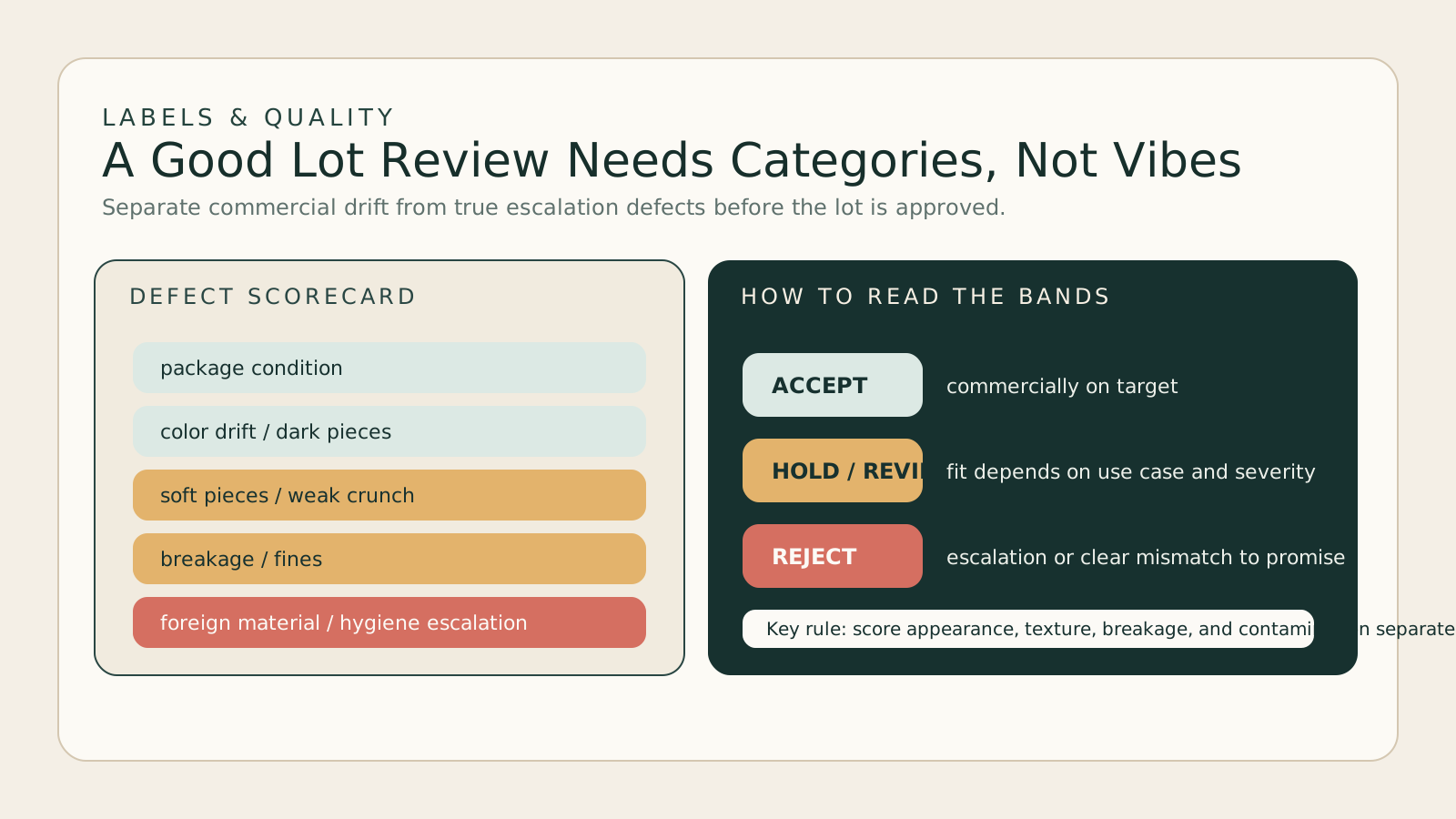
- A defect scorecard works best when it separates appearance, texture, breakage, contamination, and packaging faults into distinct review lines.
- The same lot can be acceptable for powder, topping, or bakery use and still fail for a premium whole-piece snack pouch.
- A good scorecard defines what counts as minor drift versus rejection-level defects before the buyer opens the sample.
- Lab results and visual checks should support each other; neither one is enough when the commercial promise is crisp, visible fruit.
The defect scorecard exists for one reason: freeze-dried fruit can look acceptable until the review gets specific.
The top of the pouch may show bright pieces. The lower layers may hide fines, soft centers, or transit damage. A lab sheet may look clean while the actual lot feels commercially weaker than the approved sample.
The direct answer
Read a freeze-dried fruit defect scorecard by separating the lot into distinct defect lines: package condition, visual appearance, texture, breakage and fines, contamination risk, and use-case fit. Then score each line against the commercial program you are actually approving.
That sequence matters because "good overall" is not a usable quality decision.
1. Start with the package, not the fruit
Many reviews begin too late.
Before opening the product, note the package condition:
- seal distortion
- crushed corners
- punctures
- obvious air loss
- visible condensation or moisture signs
Those are not cosmetic side notes. For freeze-dried fruit, package condition is part of the quality story because weak seals and physical abuse can explain defects that show up later in the sample.
A strong defect scorecard treats pouch condition as its own first line rather than burying it under general comments.
2. Separate appearance defects from texture defects
This is the most common structural mistake in lot review.
Appearance and texture often drift for related reasons, but they should still be scored separately.
Appearance lines may include:
- faded color
- brown or dark pieces
- shape loss
- patchy pigmentation
- visibly uneven piece sizing
Texture lines may include:
- soft centers
- leathery pieces
- sticky pieces
- weak crunch
- abnormal chew
A lot can score well on one set and badly on the other. Mixing them together makes the final disposition harder to defend.
3. Read breakage where the truth usually hides
The bottom of the pouch usually tells the more honest story.
Breakage review should look at:
- whole or target pieces
- acceptable fragments
- fines or powder
- whether the damage appears systemic or incidental
That matters because the top layer often flatters the sample. The bottom fraction is where shipping damage, weak handling, and broad size distribution become obvious.
A practical scorecard should therefore describe:
- where the sample is being assessed
- how much product is being emptied or sifted for review
- what breakage threshold is still acceptable for the use case
Without that, one reviewer may call a lot premium while another reviews the same pouch and sees a reject.
4. Treat contamination as a separate escalation line
Some defects are commercial disappointments. Others are escalation events.
Foreign material, off-odor that suggests contamination, packaging debris, or obvious hygiene concerns should not be scored on the same emotional scale as a few darker fruit pieces.
They belong in a separate line because the response is different:
- hold the lot
- investigate immediately
- document traceability
- decide whether the issue is quality-only or safety-relevant
That distinction makes the scorecard more useful. It stops high-severity defects from being averaged down by otherwise good fruit.
5. Match the scorecard to the actual use case
The same defect does not carry the same weight in every program.
A premium retail snack pouch is judged on visible integrity. A yogurt topping pouch is judged more on spoonability and flavor distribution. A bakery or ingredient program may tolerate more fragments if performance in the mixer is still strong.
So the scorecard should ask one question before scoring begins:
What is this fruit supposed to do?
That answer changes tolerance for:
- breakage
- fines
- piece-to-piece size variation
- shape loss
- mild color drift
This is why a one-size-fits-all scorecard often fails. It ignores the commercial promise behind the lot.
6. Do not let the lab sheet overrule the lot in isolation
Moisture and water-activity numbers matter. So do microbiological and packaging checks where applicable.
But the lot still has to behave like the product the customer expects.
A scorecard is most useful when it sits beside the technical file, not underneath it. That means a lot can:
- pass lab numbers but fail on commercial appearance
- pass visual appearance but show weak package condition
- look attractive while still carrying too many soft pieces
The scorecard exists to capture the part of quality that the lab cannot fully describe on its own.
A practical review format
A simple defect scorecard often works best with three bands:
- acceptable
- conditional / hold for review
- reject
And six core categories:
- package condition
- appearance
- texture
- breakage / fines
- contamination / foreign material
- use-case fit
The exact wording matters less than the discipline of keeping the categories distinct.
End with a real disposition, not a vague impression
The final line should never be only "looks okay" or "close to sample."
It should be something concrete:
- accept
- accept with note
- hold pending clarification
- reject
That disposition should reference the defects that drove it. Otherwise the review is too easy to reinterpret later when a complaint appears.
If a defect scorecard cannot explain why a lot passed or failed in one or two sentences, the categories are probably still too vague.
Bottom line
A freeze-dried fruit defect scorecard is valuable because it breaks quality into specific, reviewable lines instead of letting the lot live or die on a general impression. Package condition, appearance, texture, breakage, contamination risk, and use-case fit should each get their own judgment.
That is how buyers turn a received lot into a defensible decision instead of a memory of whether the fruit looked promising at first glance.
Frequently Asked Questions
What is a freeze-dried fruit defect scorecard?
Why is a defect scorecard useful if I already have a spec sheet?
Because a spec sheet defines the target product, while a defect scorecard helps you judge whether the actual delivered lot still matches that target. It turns a real sample or shipment into a pass, hold, or reject decision.
Should every application use the same scorecard?
No. The category headings can stay similar, but the defect tolerance should change by use case. A premium snack pouch needs a tighter standard than a topping blend or an ingredient application.
What is the most common mistake when scoring defects?
Mixing unlike problems together. A lot can have strong color but weak texture, or low moisture but too much breakage. When categories blur, the approval decision gets sloppy.
Can a lot pass the lab numbers and still fail the scorecard?
Yes. A lot can hit moisture or water-activity targets and still disappoint on visible color, soft pockets, aroma, or pouch damage. Commercial quality is broader than one lab line.