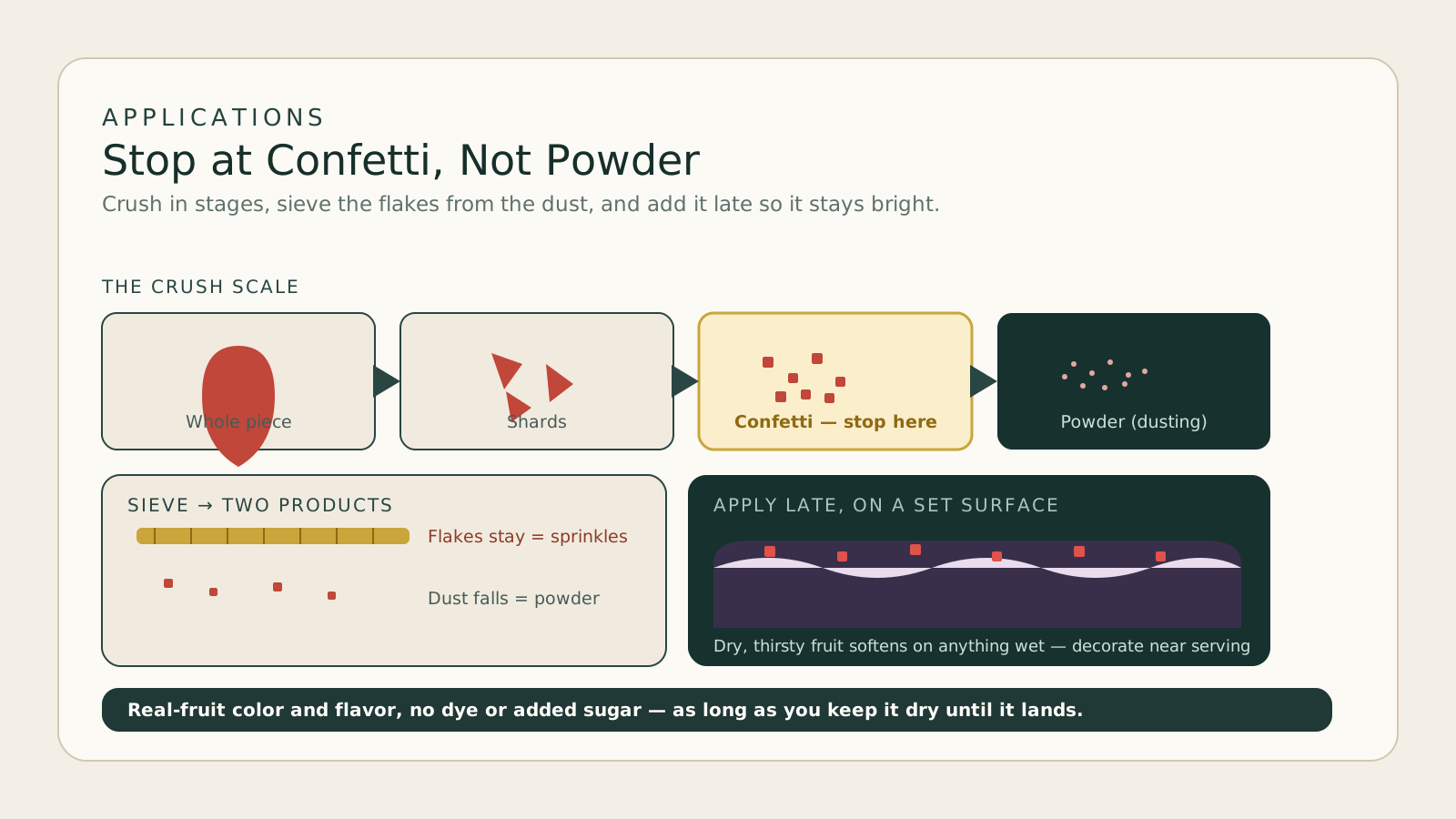
- Crush freeze-dried fruit in stages and stop at a coarse, flake-like size — confetti — rather than grinding all the way to powder, which loses the visual pop.
- A resealable bag and light pressure give you the most control; a food processor pulsed briefly works for larger batches but overshoots to powder quickly.
- Sieve the crush to separate confetti from fines: the flakes become sprinkles, and the powder is still useful for dusting or tinting.
- Apply to dry or just-set surfaces and add it late, because freeze-dried fruit pulls moisture fast and will soften and bleed color on anything wet.
Conventional sprinkles are mostly sugar, wax, and color. Freeze-dried fruit, crushed to the right size, gives you the same decorative scatter with real fruit flavor and natural color — no dye, no coating, nothing added. The catch is that "the right size" is a narrow target. Crush too little and you have chunks; crush too much and you have powder. The useful middle is fruit confetti, and hitting it consistently is mostly about technique.
The direct answer
Take whole freeze-dried fruit and reduce it in stages until you have small, flake-like pieces — roughly confetti or coarse-salt sized — then stop. Sieve out the fine powder so your sprinkles stay bright and distinct. Apply them late, onto dry or set surfaces, because freeze-dried fruit reabsorbs moisture quickly and will soften and bleed if it sits on anything wet.
That is the whole method. The rest is detail that keeps the color, the crunch, and the visual effect intact.
Choosing the fruit
Almost any freeze-dried fruit crushes into confetti, but some are more decorative than others. Strawberries and raspberries give a strong red-pink and are the classic choice. Blueberries read deep purple-blue. Mango and pineapple bring warm yellows. Dragon fruit gives an unusual magenta. Because there is no dye involved, the color you get is the fruit's own — which means it is a little softer and more natural-looking than neon candy sprinkles, and that is usually the appeal.
Thin, brittle fruits (berries, thin mango slices) fracture into clean flakes. Denser or chewier pieces can crush unevenly, so they take a bit more sorting.
Crushing without overshooting
The single most common mistake is going straight to powder. Freeze-dried fruit is so brittle that it collapses fast, so control matters more than force.
The bag method (most control). Put the fruit in a resealable bag, press out the air, and seal it. Crush gently with your fingers first to break the big pieces, then use a rolling pin or the flat bottom of a measuring cup with light, rocking pressure. Check often. Because the bag contains everything, you can stop the instant it looks right.
The food processor method (for volume). For larger batches, a few short pulses work — but "few" and "short" are literal. A processor goes from flakes to dust in a couple of seconds. Pulse two or three times, look, and pulse again only if needed. Expect to sieve afterward; the processor almost always makes some powder.
Your eye adapts as you crush, so the pieces always look bigger than they are. A good rule: stop when it looks slightly coarser than you think you want. Then sieve. What falls through is powder; what stays behind is your sprinkle — and it will be closer to right than if you had chased the perfect size in the bag.
Sieve to separate confetti from powder
A crush is never one size — it is a spread from shards down to dust. A single pass through a mesh sieve or fine strainer splits that spread into two useful products:
- What stays in the sieve is your confetti: distinct flakes that read as flecks of color on a finished surface.
- What falls through is fine powder. Do not throw it out. It is ideal for dusting the top of a cake, rimming a glass, tinting frosting or sugar, or stirring into yogurt.
So a single crush gives you both a decorating sprinkle and a coloring/dusting powder, with no waste.
Applying it so it stays bright
This is where good confetti gets ruined. Freeze-dried fruit is about as dry as food gets, which means it aggressively pulls moisture from whatever it touches — frosting, whipped cream, fresh fruit, even humid air. As it takes on water it softens, loses crunch, and its color bleeds into the surface below.
The fixes are all about timing and surface:
- Add it last. Decorate as close to serving as you can, not hours ahead.
- Choose dry or set surfaces. Sprinkles hold best on set frosting, buttercream, chocolate that has firmed, or the dry top of a cookie. On wet glaze or fresh cream they will start to dissolve.
- Press lightly, don't fold in. Keep the flakes on the surface where they stay crisp, rather than mixing them into a moist batter or cream where they will disappear.
- Serve reasonably soon. These are a finishing touch, not a make-ahead one.
Used this way, fruit confetti stays vivid and crunchy right up to the plate.
Storing what you make
Crushed fruit has far more exposed surface than whole pieces, so it reabsorbs moisture faster. Store your sprinkles and powder in an airtight container with the air pressed out, ideally with a small desiccant packet, somewhere cool and dry. Sealed well, they keep their color and snap for a long time; left open in a humid kitchen, they will go dull and soft within a day.
The takeaway
Freeze-dried fruit sprinkles are just fruit crushed to confetti size and kept dry. Crush in stages and stop early, sieve the flakes from the powder so both stay useful, and apply late onto dry surfaces so moisture does not soften or bleed them. Done right, you get a real-fruit decoration with true color and flavor and nothing added — a genuinely better sprinkle, as long as you respect how thirsty the fruit is.
Frequently Asked Questions
What size should the pieces be for sprinkles?
Aim for small flakes roughly the size of confetti or coarse sea salt — big enough to read as distinct flecks of color, small enough to scatter evenly. If it starts looking like dust, you have gone too far; that is powder, which is great for dusting but disappears as a sprinkle.
What is the easiest way to crush it?
Put the fruit in a resealable bag, press the air out, and crush with your fingers, a rolling pin, or the flat of a measuring cup. Bag crushing gives the most control and contains the mess. A food processor works for big batches but pulverizes to powder in seconds, so pulse briefly and sieve.
Why does my fruit confetti go dull or sticky on the cake?
Moisture. Freeze-dried fruit is extremely dry and pulls water from frosting, fruit, or humid air, which softens the flakes and bleeds their color. Add it as late as possible, onto surfaces that are dry or already set, and serve fairly soon after decorating.
Can I store the sprinkles I make?
Yes, in an airtight container with the air pressed out, ideally with a desiccant, kept somewhere cool and dry. Crushed fruit has even more exposed surface than whole pieces, so it reabsorbs moisture faster — seal it tightly and it keeps its color and crunch for a good while.
Primary sources & further reading
- Water Activity (aw) in Foods U.S. Food and Drug Administration Referenced for why very dry, low-water-activity fruit rapidly draws moisture from its surroundings, which explains softening and color bleed after decorating.
- Food Labeling & Nutrition U.S. Food and Drug Administration Referenced generally for reading ingredient and added-sugar information when comparing fruit sprinkles to conventional sugar-and-dye sprinkles.
External links open in a new tab. We do not receive compensation from any organization listed; sources are referenced because they are primary, current, and publicly verifiable.