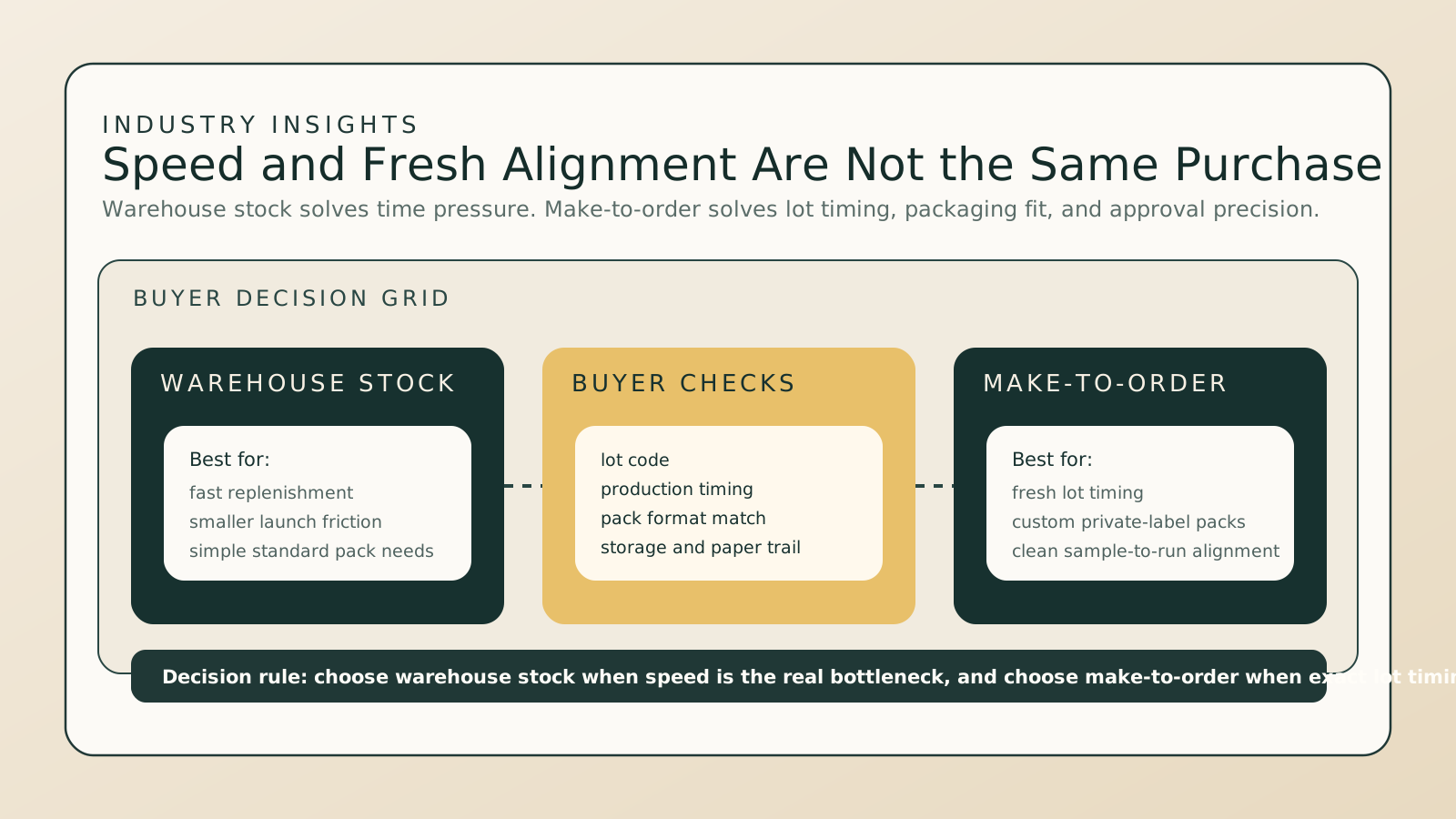
- Warehouse stock is strongest when speed, lower MOQ pressure, and near-term replenishment matter most.
- Make-to-order is strongest when the buyer needs fresher lot timing, exact packaging, or tighter alignment between the approved sample and the shipped production run.
- The right comparison is built around lot age, lot identity, storage history, pack format, and documentation, not only lead time.
- Imported warehouse stock can still carry importer, FSVP, or traceability questions that should be settled before the purchase order, not after.
Fast-ship inventory sounds attractive because it removes one kind of risk immediately: waiting.
But in freeze-dried fruit, removing waiting can add a different kind of risk if the buyer does not understand which lot is being shipped and what condition it is actually in.
The direct answer
Warehouse stock and make-to-order freeze-dried fruit should be compared as two different operating tools.
Warehouse stock usually wins when the buyer needs speed, lower commitment friction, or near-term supply continuity. Make-to-order usually wins when the buyer needs tighter lot timing, a precise packaging setup, or a cleaner link between approval, production, and shipment.
The mistake is treating the choice as only a lead-time question.
What warehouse stock should mean
In a useful commercial conversation, warehouse stock should mean:
- a real existing lot
- already produced
- already packed in the offered format
- physically stored somewhere identifiable
- available for shipment now or very soon
That is different from:
- "we usually have this fruit"
- "we can repack quickly"
- "we can schedule production fast"
Those may still be workable answers. They are not the same answer.
If the supplier cannot identify the actual lot, the discussion is still theoretical.
Why the lot matters more than the slogan
Freeze-dried fruit is shelf-stable, but it is not timeless. The buyer still needs to know:
- what lot is being sold
- how old it is
- where it has been stored
- whether the current packaging is the final sale format
- whether the available lot matches the approved specification
This is where lot codes become more valuable than a sales promise. They anchor the inventory to a real production history.
When warehouse stock is usually the better tool
Warehouse stock tends to make sense when the program values speed more than perfect customization.
Common situations include:
- filling a short-term stock gap
- testing a fruit before building a larger annual plan
- buying a simpler spec with standard packaging
- covering a promotion or customer win that arrived faster than expected
- reducing MOQ pressure on a smaller launch
The best warehouse-stock buys usually happen when the buyer asks disciplined questions early and the supplier can answer them cleanly.
The worst warehouse-stock buys happen when everyone assumes "available now" means "close enough to the ideal lot."
When make-to-order earns the extra wait
Make-to-order usually wins when the product needs to match the program very closely.
That often includes:
- private-label packaging
- exact fill weights or pouch structures
- a fresh sample-to-production approval path
- tighter whole-piece appearance requirements
- a specific customer or retailer spec
In those cases the buyer is paying for more than fruit. The buyer is paying for alignment between the approved product, the finished lot, and the shipped format.
That alignment is hard to guarantee if the supplier is trying to fit the order onto leftover or generic stock.
Imported stock can still carry paperwork risk
Warehouse stock can feel administratively easier, especially when it is already in a U.S. warehouse. Sometimes it is.
But buyers should not assume that "already landed" makes the documentation conversation disappear. Depending on the commercial structure, the team may still need clarity on:
- importer ownership of the lot
- FSVP responsibility where relevant
- lot traceability
- relabeling or repacking history
- whether the warehouse lot is identical to the originally approved imported item
This matters most when the stock is being sold as a convenient substitute for a fresh direct-import run. Convenience is helpful only when the paper trail stays clear.
The real commercial tradeoff
The most useful comparison is not:
- fast versus slow
It is closer to:
- speed versus exact lot control
- immediate availability versus fresher production timing
- lower commitment friction versus tighter customization
- inventory convenience versus a cleaner approval sequence
That framing usually produces better buying decisions because it matches what the business is actually trading away.
Questions worth settling before the PO
Before choosing warehouse stock or make-to-order, buyers should settle a short list:
- What exact lot is shipping?
- How old is it in production and coding terms?
- Does it match the approved sample and specification exactly?
- Is the current packaging final, repacked, or temporary?
- What problem are we solving: speed, cost, customization, or continuity?
If the team cannot answer those questions, it is not really comparing two supply models. It is comparing one defined option against one vague one.
Bottom line
Warehouse stock and make-to-order freeze-dried fruit are both useful. They simply solve different problems.
Warehouse stock is strongest when time matters most and the lot still fits the job. Make-to-order is strongest when the buyer needs tighter control over lot timing, packaging, and approval integrity.
Frequently Asked Questions
What counts as warehouse stock in freeze-dried fruit buying?
It should mean a real finished lot already packed and physically available for shipment, not only a promise that the supplier can run the product quickly.
Is warehouse stock always older or worse?
No. A current lot held well can be a strong option. The key questions are lot age, package condition, storage history, and whether the stock still matches the specification you are buying.
When is make-to-order usually the better choice?
Usually when the program needs a specific pack format, fresher production timing, a controlled approval path, or a tighter match between the sample, the lot code, and the finished shipment.
Why does lot identity matter so much here?
Because freeze-dried fruit quality is lot-dependent. Lot identity lets the buyer connect the shipment to storage history, date coding, traceability, and the exact production run being approved.
What should buyers ask before choosing warehouse stock?
Ask for the lot code, production date or date code logic, pack format, current storage location, package photos or condition notes where relevant, and whether the available lot is the same product spec as the approved sample.
Primary sources & further reading
- Food Product Dating USDA Food Safety and Inspection Service Referenced for the distinction between quality dating and an automatic safety deadline, which matters when evaluating older warehouse lots.
- Traceability Lot Code U.S. Food & Drug Administration Referenced for the role of lot identification in connecting a shipment to its product history.
- FSMA Final Rule on Foreign Supplier Verification Programs (FSVP) for Importers of Food for Humans and Animals U.S. Food & Drug Administration Referenced for importer verification responsibilities that can still matter when the buyer is taking available stock rather than waiting for a fresh production run.
- FRUITS, FREEZE DRIED (A-A-20365) U.S. Department of Agriculture Agricultural Marketing Service Referenced for the commercial-spec mindset around identity, defects, net content, and packaged condition. The warehouse-versus-make-to-order comparison in this article is editorial inference from those commercial controls.
External links open in a new tab. We do not receive compensation from any organization listed; sources are referenced because they are primary, current, and publicly verifiable.