- Thermocouple readings are only as useful as the piece, tray position, and insertion depth behind them.
- A probe placed in a thin edge piece can make a batch look finished before thicker or colder areas are actually ready.
- Fruit loads are harder to represent than uniform pharmaceutical vials because piece size, sugar level, contact area, and tray loading all vary.
- Strong endpoint practice combines probe data with pressure, product history, and post-dry verification instead of trusting one number alone.
A thermocouple can make a freeze-dried fruit run look orderly. The trap is assuming that the sensor's neat line on the chart represents the whole tray with the same honesty.
The direct answer
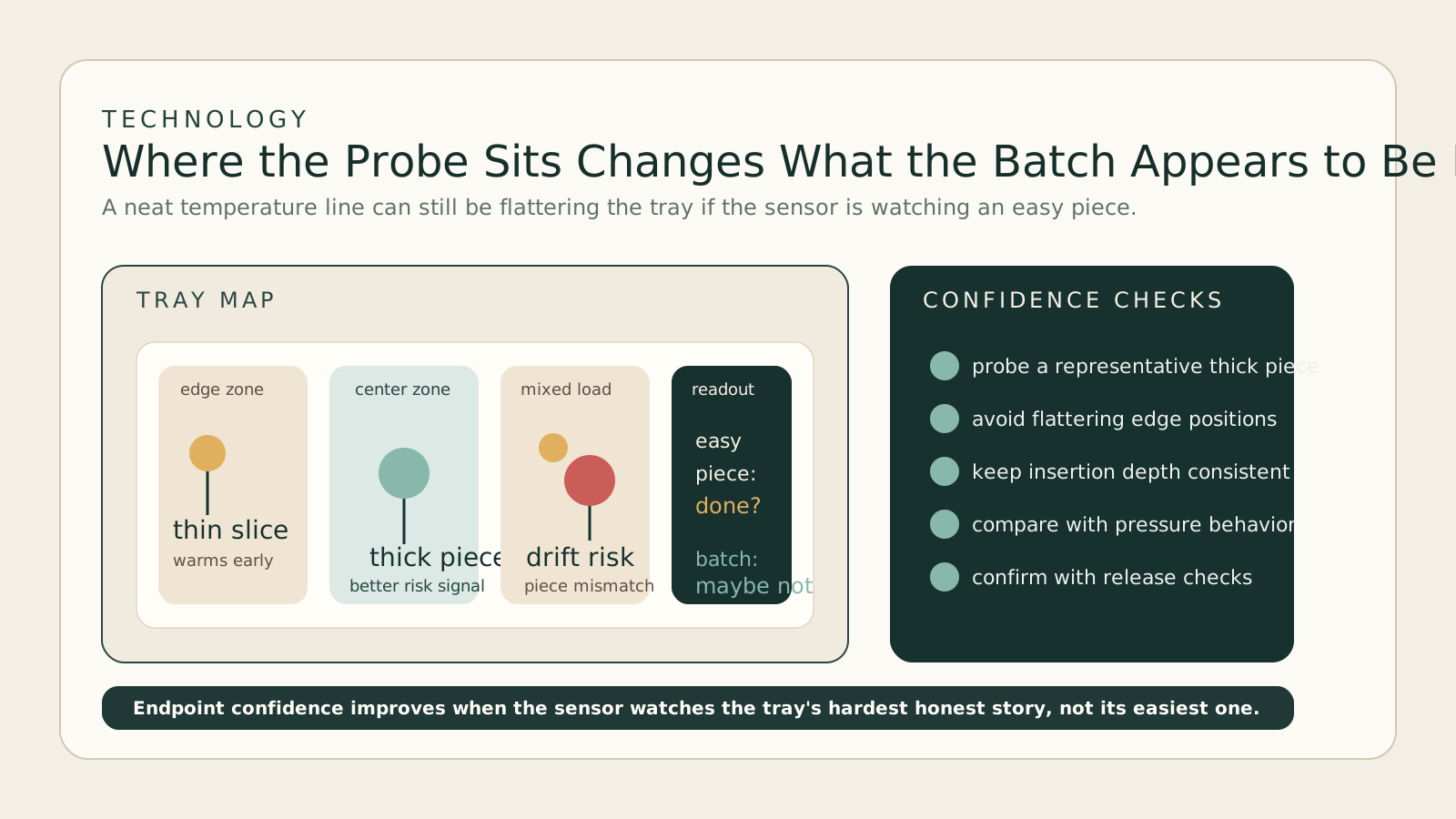
Thermocouple placement changes endpoint confidence because the probe reports only the local temperature of the specific fruit piece and tray position where it sits. If that location dries earlier than the rest of the load, the reading can suggest that primary drying is nearly finished even while slower pieces still hold extra ice or bound moisture.
In practice, a good probe location improves confidence. It does not eliminate the need for other endpoint evidence.
Why the same batch can show two different thermal stories
Freeze-dried fruit loads are rarely uniform enough to behave like a grid of identical units.
Within one tray, operators may see differences in:
- piece thickness
- surface area
- sugar concentration
- contact with the tray
- pile height or local loading density
- edge versus center exposure
Those differences change how quickly heat reaches the fruit and how easily vapor escapes during drying. A thermocouple inserted into a thin strawberry slice near the tray edge is not telling the same story as one pushed into a thicker mango cube in a denser center zone.
That is why probe placement is not a housekeeping detail. It is part of the measurement itself.
The easy-piece problem
The most common interpretation error is giving a probe an unusually easy job.
If the sensor sits in:
- a thin piece
- a broken fragment
- an exposed corner position
- a tray zone with lower load depth
the product temperature there may rise faster and approach the shelf temperature sooner. That can look like healthy endpoint progress. It may only mean the probe was watching the fastest part of the tray.
For freeze-dried fruit, that matters because the commercial failure is often not total batch collapse. It is softer centers, mixed texture, or a lot that looks crisp at the top and drifts after packing.
Why fruit makes probe strategy harder than vial work
Much of the best published thermocouple guidance comes from pharmaceutical lyophilization. The instrumentation logic is still useful for fruit, but fruit adds messier geometry.
That means a fruit team has to think beyond "place a sensor in the product."
The better question is:
Which piece is most likely to represent the slowest acceptable drying path for this tray design and cut program?
That answer may differ by fruit and format:
- apple slices may behave differently from mango cubes
- berry halves may behave differently from powder-bound crumble
- a lightly loaded tray may not represent a production tray at commercial fill depth
The fruit-specific implication here is an editorial inference from the cited lyophilization literature plus the site's current tray-loading and fruit-drying coverage. The underlying heat-transfer logic is stable even though the published examples often use vials instead of fruit pieces.
What a good thermocouple location usually looks like
A better probe location usually sits closer to the risky part of the load rather than the flattering part.
That often means choosing:
- a thicker representative piece
- a denser tray zone rather than the easiest edge
- a consistent insertion depth
- the same relative position from run to run
The goal is not to force every probe into the single worst-looking piece. The goal is to avoid a probe setup that systematically overstates how finished the tray is.
Consistency matters as much as the first placement choice. If the team changes piece type, insertion depth, or tray zone every run, the trend line loses comparability.
What the probe can and cannot prove
A thermocouple is valuable because it shows temperature movement through the cycle and helps the team avoid blind clock-based drying. But the signal still has limits.
It cannot prove by itself:
- that every piece on the tray is dry enough
- that the slowest zone has completed primary drying
- that post-pack texture will hold
- that release moisture or water activity will land where the spec needs it
That is why strong programs pair thermocouple data with pressure behavior, known cycle history, and release checks. One signal can guide the endpoint conversation. It should not close it alone.
A practical operating habit
The cleanest operating habit is to document probe logic as part of the cycle file:
- which fruit format is probed
- which tray zone is chosen
- how the sensor is inserted
- what other endpoint checks are required
- what post-dry result confirms that the placement is still trustworthy
That converts a temperature trace from tribal knowledge into repeatable process control.
Bottom line
Thermocouple placement changes freeze-dried fruit endpoint confidence because the sensor only tells the truth about its own location. If that location is easier to dry than the rest of the tray, the batch can look finished too early.
The smart use of thermocouples is not just to place them in the fruit. It is to place them in fruit that tells the batch's hardest honest story.
Frequently Asked Questions
Why does thermocouple placement matter in freeze-dried fruit?
Because the sensor only reports the temperature of the place where it sits. If it is inserted into an easy-to-dry piece or a warmer tray position, the reading can make the whole batch look farther along than it really is.
What is the most misleading probe location?
Usually a thin, exposed piece near a tray edge or in a low-load area. That location often warms faster and dries earlier than thicker pieces or denser center zones.
Can one thermocouple represent an entire fruit tray?
Not reliably in many fruit programs. Variation in piece thickness, sugar concentration, cut geometry, and tray loading means one probe is often only a directional signal unless it is paired with other checks.
Why is fruit harder to monitor than uniform vials?
Fruit is not geometrically uniform. One tray can contain pieces with different thickness, porosity, and surface contact, so the thermal story changes more across the load.
What should operators pair with thermocouple readings?
Typically pressure-based monitoring, process history, visual observations where appropriate, and release checks such as moisture or water activity rather than probe temperature alone.
Primary sources & further reading
- Recommended Best Practices for Process Monitoring Instrumentation in Pharmaceutical Freeze Drying—2017 AAPS PharmSciTech Referenced for best-practice instrumentation guidance on temperature measurement limits, probe behavior, and the need to interpret sensor signals in process context.
- Practical Advice on Scientific Design of Freeze-Drying Process: 2023 Update PubMed Central / Pharmaceutical Research Referenced for current lyophilization process-design guidance emphasizing that product temperature must be interpreted alongside chamber conditions and product-specific operating windows.
- Heat Flux Analysis and Assessment of Drying Kinetics during Lyophilization of Fruits in a Pilot-Scale Freeze Dryer PubMed Central / Foods Referenced for fruit-specific pilot-scale observations showing that temperature behavior and drying progression vary across real fruit loads rather than moving as one perfectly uniform mass.
External links open in a new tab. We do not receive compensation from any organization listed; sources are referenced because they are primary, current, and publicly verifiable.