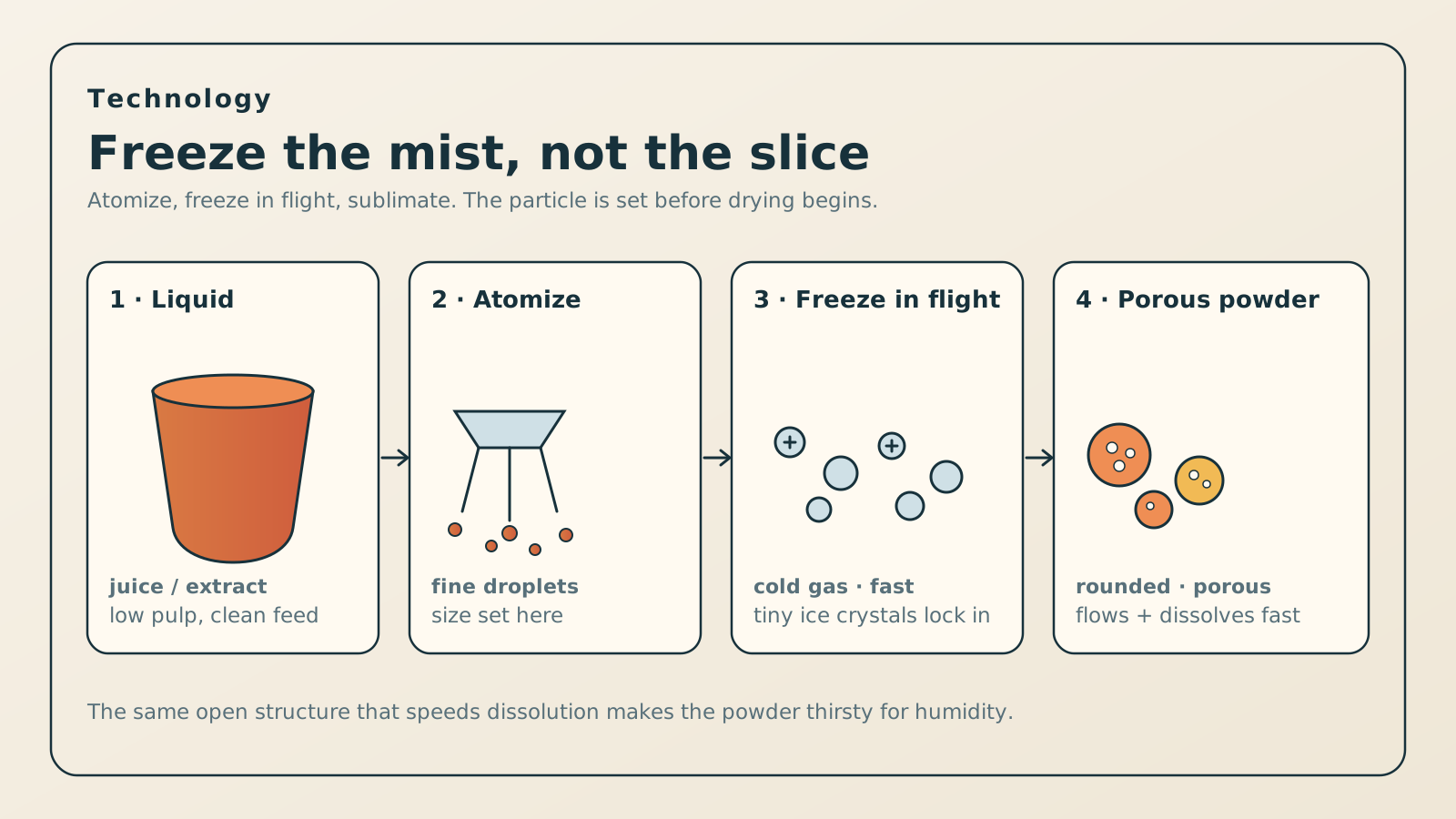
- Spray freeze-drying freezes atomized droplets in flight, so particle size is largely set before drying rather than by grinding afterward.
- The fast freeze produces small, rounded, highly porous particles that dissolve quickly and flow more evenly than milled flake.
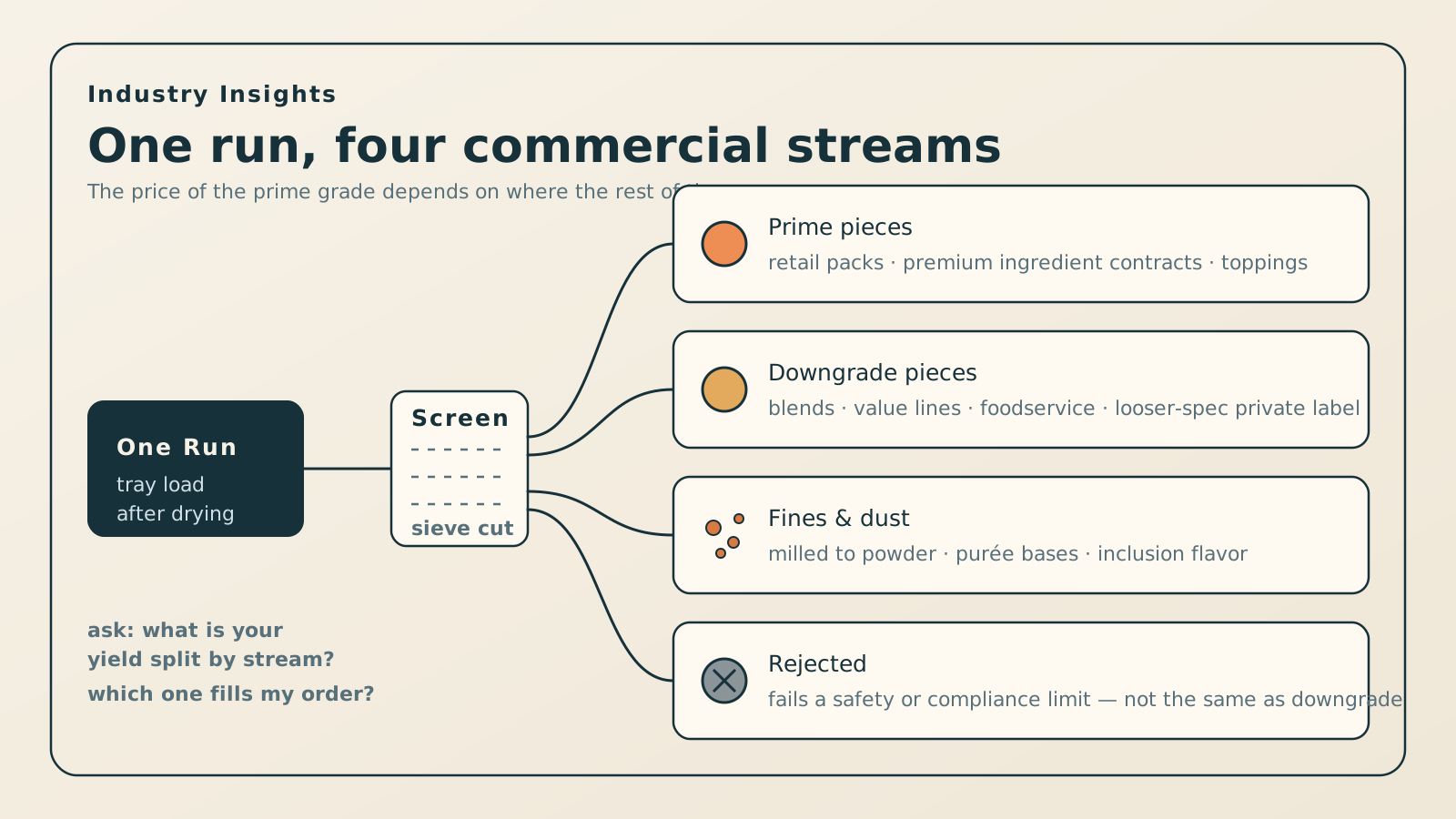
- It suits juices, extracts, and low-solids fruit liquids better than pulpy purées, and it competes with foam-mat drying and post-dry milling rather than replacing slicing.
- Buyers should ask about particle size distribution, bulk density, any carriers used, and moisture and water activity targets, because an open powder picks up humidity fast.
A lot of fruit powder is made the obvious way: freeze-dry a slice or a foamed sheet, then grind it. Spray freeze-drying takes a different route. Instead of grinding a solid, it freezes the fruit as a fine mist and dries the frozen droplets directly. The particle you end up with was, in a sense, decided before the drying even started.
That difference is small to describe but large in its effects. It governs how the powder flows, how fast it dissolves, how much fine dust it throws off, and how quickly it picks up humidity once a bag is opened.
The direct answer
Spray freeze-drying atomizes a fruit liquid into tiny droplets, freezes those droplets almost instantly in a cold environment, and then removes the ice by sublimation under vacuum. Because each particle forms from a single frozen droplet, particle size is set during atomization rather than by milling afterward.
The fast freeze gives little time for large ice crystals to grow, so the dried particle is small, rounded, and shot through with fine pores. That structure is what makes the powder dissolve quickly and flow evenly, and it is also why the powder is thirsty for moisture and needs careful packaging.
Why freeze a mist instead of grinding a flake
Grinding a freeze-dried flake works, but it produces fragments of whatever shape the fracture happens to make. The result is a mix of larger pieces and uncontrolled fines, with a particle size distribution that depends on how hard and how long you mill. Fines cake faster and can behave unpredictably in a blend.
Spray freeze-drying sidesteps that by building the particle at the droplet stage. Control the atomizer and you largely control the particle. The output is closer to uniform spheres than to angular shards, which is part of why these powders tend to flow and reconstitute more consistently.
How the in-flight freeze shapes the particle
The defining step is freezing the droplet before it can warm, settle, or coalesce. Operators do this by spraying into a very cold gas, over the surface of a cryogenic liquid, or directly into a chilled chamber. The droplet becomes a frozen bead within a fraction of a second.
That speed matters because freezing rate controls ice crystal size, and ice crystal size controls the pore structure left behind after sublimation. A fast freeze locks in many tiny ice crystals, so the finished particle is finely porous rather than coarsely honeycombed. Fine pores give a large internal surface area, which speeds both drying and later dissolution.
A spray freeze-dried particle is mostly empty space arranged as connected pores. When it hits liquid, water wicks in through that network almost immediately, so the particle collapses and dissolves faster than a denser milled fragment of the same fruit.
Where it fits among the other methods
Spray freeze-drying is not a replacement for slicing whole fruit, and it is not always the best route to a powder either. It sits alongside two neighbors:
- Foam-mat freeze-drying handles pulpy purées by whipping in air, freezing a sheet, and milling. It tolerates pulp that would clog an atomizer.
- Dry-and-mill takes ordinary freeze-dried slices or flake and grinds them, which is simpler and cheaper but gives less control over particle shape.
Spray freeze-drying earns its place when the feed is a clean liquid, when fast dissolution or even flow matters, and when a tightly controlled particle is worth the extra cost and cycle time.
The feed is the limiting factor
The method lives or dies on atomization. A thin juice or a clarified extract sprays into a clean, even mist. A thick, fibrous purée does not: pulp and fiber clog nozzles, produce ragged droplets, and defeat the whole point of building a uniform particle.
High-sugar liquids add a second wrinkle. Sugars are sticky and hygroscopic, and a concentrated fruit syrup can produce particles that clump or resist flowing freely. To manage this, some operators add a food-grade carrier that raises the effective glass transition behavior of the solids and helps the powder stay free-flowing. That is a legitimate tool, but it changes the label and dilutes the fruit loading, so it should be disclosed and understood.
What buyers should check
Treat a spray freeze-dried powder as its own specification rather than assuming it behaves like milled flake. The questions that matter most:
- Particle size distribution: ask for the target range and how tightly it is held, since this drives flow, dissolution, and dustiness.
- Bulk density: these powders are light and airy, which affects fill weight, packaging volume, and freight.
- Carriers and added ingredients: any carrier or flow aid should be on the label, and the stated fruit content should account for it.
- Moisture and water activity: an open, high-surface-area powder absorbs humidity quickly, so the stability target and the packaging that protects it are not optional.
A spray freeze-dried fruit powder that is uniform, free-flowing, honestly labeled, and held at the right water activity can be excellent for drinks, dairy, and bakery inclusions. The fine structure that makes it dissolve so well is the same structure that makes humidity control essential.
Bottom line
Spray freeze-drying freezes fruit as a mist and dries the frozen droplets, so the particle is built during atomization instead of carved out by grinding. The result is a small, rounded, finely porous powder that flows and dissolves cleanly. It suits juices and extracts more than pulpy purées, competes with foam-mat drying and post-dry milling rather than with slicing, and demands attention to particle size, carriers, and water activity because an open powder takes on moisture fast.
Frequently Asked Questions
What is spray freeze-drying?
It is a method that atomizes a fruit liquid into fine droplets, freezes those droplets very quickly (often by spraying into a cold gas or over a cryogenic liquid), and then freeze-dries the frozen beads. The particle size is set during atomization rather than by grinding the dried product.
How is it different from regular spray drying?
Conventional spray drying removes water with hot air, which can damage heat-sensitive color and aroma. Spray freeze-drying freezes the droplets first and removes water by sublimation under vacuum, so the fruit never sees high heat. The trade-off is a slower, more energy-intensive cycle.
How is it different from milling freeze-dried flake into powder?
Milling starts from a dried sheet or slice and breaks it into irregular fragments and fines. Spray freeze-drying builds rounded, uniform particles directly, which tend to flow and dissolve more predictably and generate fewer uncontrolled fines.
Which fruits suit spray freeze-drying?
Juices, clarified extracts, and low-pulp liquids work best because they atomize cleanly. High-pulp purées can clog atomizers and are usually better handled by foam-mat drying or by drying and milling.
Does the powder need a carrier?
High-sugar fruit liquids are sticky and hygroscopic, so a food-grade carrier is sometimes added to improve flow and stability. Any carrier should appear on the label, and a buyer should know whether the stated fruit loading reflects added carrier.
Primary sources & further reading
- Water Activity (aw) in Foods U.S. Food & Drug Administration Referenced for water activity as the stability target a fine, hygroscopic powder still has to meet and hold.
- Spray Freeze Drying: A Review on Process, Applications and Recent Advances PubMed / peer-reviewed review Referenced for the general description of atomization, in-flight freezing, and the porous particle structure that results.
- Freeze-Drying of Plant-Based Foods Foods / PubMed Referenced for background on porous structure and sublimation behavior in freeze-dried plant products.
External links open in a new tab. We do not receive compensation from any organization listed; sources are referenced because they are primary, current, and publicly verifiable.