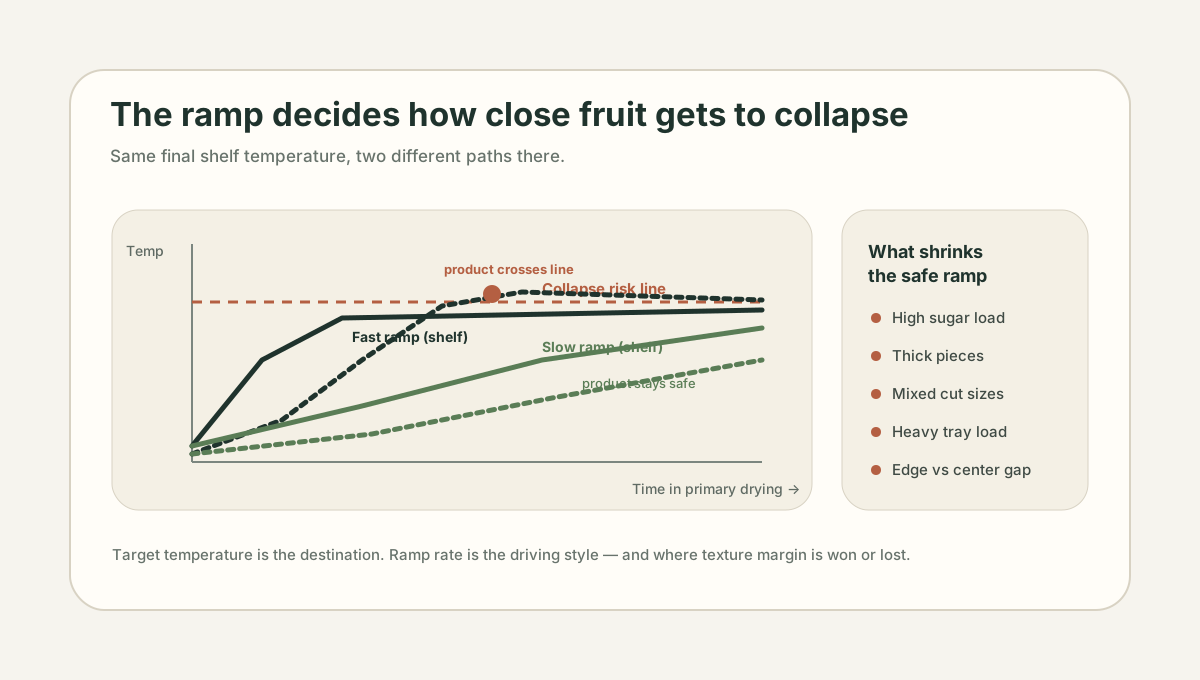
- Ramp rate is the speed of the shelf-temperature change between setpoints, and it controls how fast heat reaches the fruit, not just the final temperature it reaches.
- A ramp that is too aggressive can push product temperature toward collapse before enough ice has left; a ramp that is too slow wastes capacity without improving quality.
- Mixed piece sizes, high sugar, and full tray loads all shrink the safe ramp window, so a recipe proven on one fruit should not be copied blindly to another.
- Buyers can ask whether a processor controls and records ramp rates and product temperature, not just the final shelf setpoint and total cycle time.
Most conversations about a freeze-drying recipe stop at two numbers: the shelf temperature and the total cycle time. Those numbers matter, but they hide a third variable that often decides whether a fruit lot comes out light and crisp or soft and uneven. That variable is the ramp rate, the speed at which the shelves move from one temperature to the next.
Ramp rate is easy to overlook because it does not appear as a single headline figure. It lives in the slope of the temperature curve. Yet that slope controls how fast energy actually reaches frozen fruit, and timing is everything when the goal is to remove ice before the structure has a chance to soften.
The direct answer
Shelf-temperature ramp rate shapes freeze-dried fruit drying by controlling how quickly heat is delivered to the product, which in turn controls how fast product temperature rises toward the structural limit where collapse risk begins. A well-chosen ramp keeps the fruit climbing toward an efficient drying temperature without overshooting the safe zone before enough ice has sublimated.
In other words, the final shelf temperature tells you the destination. The ramp rate tells you how aggressively the cycle drives there, and that approach is where quality margin is won or lost.
Why the path matters, not just the endpoint
Freeze-drying removes water from frozen fruit by sublimation: ice turns directly to vapor under low pressure, supplied with carefully controlled heat. FDA's lyophilization guidance frames the process as freezing, then vacuum, then heat for sublimation, with an emphasis on validated, repeatable cycles.
The fruit does not jump instantly to whatever number the shelf displays. It responds over time as heat conducts in and as ice leaves. That lag is exactly why ramp rate is its own control variable:
- A fast ramp front-loads heat, so product temperature can rise quickly.
- A slow ramp meters heat in gradually, giving sublimation time to keep pace.
Two cycles can share an identical final shelf setpoint and still produce different textures because one delivered the heat in a rush and the other delivered it patiently.
The collapse line sets the speed limit
The key constraint during primary drying is the collapse temperature. Reviews of plant-based freeze-drying describe primary drying as a stage where product temperature is generally held below the collapse zone so the porous structure survives. That porous architecture is what gives freeze-dried fruit its clean snap.
Ramp rate interacts directly with that limit. If the shelves heat too fast, product temperature can climb toward or past the collapse line while a meaningful amount of ice is still present. The fruit can lose some of its internal structure even though the cycle "reached temperature" on schedule. The damage rarely looks dramatic; it shows up as denser, chewier, or partly shrunken pieces.
A cycle sheet that lists only the final shelf temperature and total run time is not enough to judge a process. The slope between setpoints, and the product temperature during that climb, are where structural risk actually lives.
Why too slow is also a problem
It would be convenient if "slower is always safer" were true, but a ramp that is needlessly gentle has real costs. The cycle ties up an expensive chamber for longer, lowers throughput, and increases the energy spent per batch without improving the bite. Past a certain point, extra caution buys nothing in quality and only raises cost per kilogram.
The goal is not the slowest possible ramp. It is the ramp that keeps product temperature in the safe structural zone while still moving the cycle along efficiently. That window is specific to the product, not universal.
What shrinks the safe ramp window
Several real-world factors narrow the range of ramps a fruit can tolerate:
- Sugar load. High-sugar fruits soften at lower temperatures, so their structural margin is thinner and their tolerable ramp is gentler.
- Piece thickness. Thicker pieces conduct heat inward more slowly, so a surface that is heating fast can sit far above a still-frozen core, widening internal temperature gaps.
- Cut uniformity. Mixed sizes dry at different speeds, so a ramp safe for the small pieces can over-drive the large ones, or a ramp safe for the large pieces wastes time on the small ones.
- Tray load and fill depth. A heavily loaded chamber has more ice to remove and more thermal mass, which changes how the same ramp plays out across the batch.
This is why a ramp profile proven on thin apple slices should not be copied to thick mango chunks or ripe berries without revalidation.
Edge effects make ramp discipline visible
Even within a single tray load, position changes how the ramp is experienced. Edge and corner pieces typically receive more radiant heat from chamber walls and surroundings, so they climb faster than center pieces during the same ramp. A ramp that keeps the coldest center pieces safe might push the warmest edge pieces toward collapse, or a ramp tuned for the edges can leave the centers lagging.
Good processes treat the ramp as something to validate across the whole load, using product-temperature monitoring at representative positions rather than trusting a single probe or the shelf reading alone.
How this shows up for buyers
Buyers do not set ramp rates, but they live with the consequences in the form of texture consistency from lot to lot. A few questions separate processors who control the ramp from those who only chase a final number:
- Do you record the full shelf-temperature profile, including ramps, for each cycle?
- Do you monitor product temperature during primary drying, not just the shelf setpoint?
- Are ramp profiles validated per fruit and per cut format, or reused across products?
- How do you confirm the product stayed below its structural limit during the climb?
Processors who can answer these are managing the variable that quietly drives consistency. Processors who can only quote a peak temperature and a total run time are leaving texture partly to chance.
The practical takeaway
Shelf temperature is the destination, but ramp rate is the driving style, and driving style is where freeze-dried fruit batches succeed or drift. The right ramp keeps product temperature inside the safe structural zone while still moving briskly enough to use chamber capacity well. The wrong ramp either risks collapse by rushing the climb or wastes time and energy by crawling. Because sugar, thickness, cut uniformity, and load all change the safe window, the only reliable ramp is one that has been validated for the specific fruit and format, then recorded and held consistent batch after batch.
Frequently Asked Questions
What is shelf-temperature ramp rate in freeze-drying?
It is how quickly the shelf temperature changes from one setpoint to the next, usually expressed in degrees per minute or per hour. It describes the path between temperatures, not the temperature itself, and that path affects how fast heat reaches the fruit.
Why does ramp rate matter if the final temperature is the same?
Because the fruit responds over time. A fast ramp delivers heat sooner, which can push product temperature up before enough ice has sublimated. Two cycles can share a final shelf setpoint and still produce different texture because they got there differently.
Does a faster ramp always dry fruit faster?
Not reliably. A faster ramp can shorten a cycle when the product has margin, but if it pushes product temperature toward the collapse zone it can cause structural loss or force a slow, cautious recovery that erases the time saved.
Which fruits need gentler ramps?
High-sugar, soft, thick, or unevenly cut fruits generally have less structural margin, so they often need more conservative ramps. Uniform, thinner, lower-sugar formats can usually tolerate a quicker climb.
What should buyers ask about ramp control?
Ask whether the processor records the full shelf-temperature profile and product temperature over the cycle, whether ramps are validated per fruit and format, and how they confirm the product stayed below its structural limit during primary drying.
Primary sources & further reading
- Lyophilization of Parenteral (7/93) U.S. Food & Drug Administration Referenced for the basic description of freeze-drying as freezing plus controlled heat and vacuum-driven sublimation, and the importance of validated, repeatable cycles.
- Freeze-Drying of Plant-Based Foods Foods / PubMed Central Referenced for the relationship between shelf temperature, product temperature, and collapse temperature during primary drying.
External links open in a new tab. We do not receive compensation from any organization listed; sources are referenced because they are primary, current, and publicly verifiable.