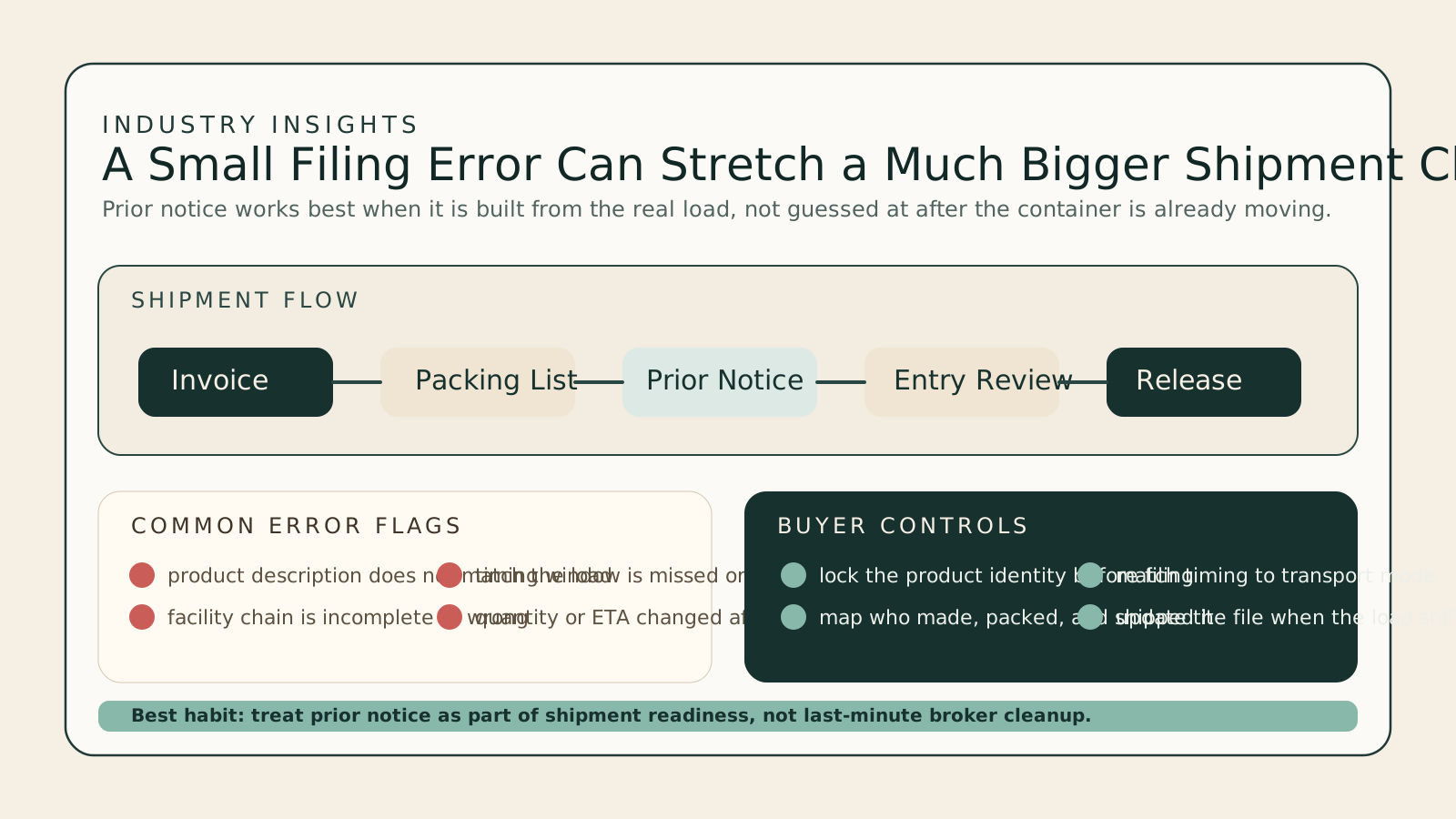
- Prior notice is mandatory for imported food shipments, but timely filing does not guarantee smooth release if the underlying data are weak.
- The most common delay drivers are mismatched product identity, facility information, quantity details, and arrival timing rather than dramatic enforcement events.
- Buyers should treat prior notice as part of the shipment file built from the commercial invoice, packing list, facility chain, and broker instructions.
- A preventable prior-notice error is different from a customs exam, but both can stretch the real warehouse-available lead time.
Imported freeze-dried fruit often gets quoted as if the shipping clock runs from factory release to warehouse receipt in one smooth line.
The border does not work that way. One of the quieter places the line breaks is prior notice.
The direct answer
Prior-notice mistakes delay freeze-dried fruit shipments because FDA requires advance filing for imported food, and the filing has to match the real shipment closely enough to support import review. When the product identity, facility information, quantity, or timing data are late or inconsistent, the load can lose time before it is actually available to the buyer.
That does not mean every delay becomes a dramatic enforcement event. Many are simpler and more preventable than that.
Start with the actual commercial load
The filing problem often begins before anyone opens the prior-notice screen.
If the commercial file is loose, prior notice becomes loose too.
Typical upstream drift looks like this:
- the invoice says freeze-dried mango slices while the packing file says mixed tropical fruit
- the quantity changed after palletization but the data file did not
- the wrong facility appears because the team blurred manufacturer, packer, and ship-from site
- the ETA moved but the filing logic stayed frozen
None of those errors is exotic. They are ordinary coordination failures. They still create import friction.
Prior notice is not pre-approval
A common mental shortcut is to treat prior notice as an approval stamp. FDA's own import guidance points the other direction.
Prior notice is required, but imported foods are still reviewed at import for applicable requirements. That is why a shipment can have a prior-notice filing on record and still face questions, review, or delay later in the entry process.
For buyers, that distinction matters because the right operating question is not:
Did we file something?
It is:
Did we file a complete and credible version of the shipment that is actually arriving?
Facility mismatches are a common self-inflicted problem
Freeze-dried fruit supply chains often involve more than one site:
- one place may freeze-dry the fruit
- another may repack it
- another may consolidate the export load
That makes facility accuracy unusually important.
If the entry file treats those roles casually, the prior-notice record can stop matching the physical chain behind the shipment. The problem is not only legal neatness. It is operational clarity. When the shipment file gets questioned, weak site mapping slows answers.
This is one reason role-mapping and import-role articles on the site matter together. The cleaner the facility chain is before shipment, the cleaner the prior-notice file usually becomes.
Timing is not just an administrative detail
FDA's prior-notice guidance sets different filing timelines depending on transport mode. That means the team should not talk about prior notice as if it were one generic deadline.
The practical mistake is leaving the filing to the last possible minute while the ETA, routing, or transport assumptions are still moving.
That increases the chance of:
- rushed data entry
- stale arrival information
- inconsistent carrier details
- rework between supplier, broker, and importer
For a buyer, the useful habit is to treat prior-notice timing as part of shipment planning, not as a final-hour customs form.
Small data drifts create real entry friction
Some problems sound too small to matter until they do.
For example:
- a quantity revision after the original file was built
- a changed arrival window
- a different product description than the broker expected
- an outdated facility identifier in the shipping instructions
Each one makes the shipment harder to read at the point where accuracy matters most.
Freeze-dried fruit programs are especially exposed because the category often mixes:
- several fruits
- several pack sizes
- bulk and retail formats
- several facilities in one commercial chain
The more moving parts, the less room there is for loose filing habits.
Prior notice is part of real lead time, not paperwork afterthought
One of the site's recurring themes is that quoted lead time and usable lead time are different numbers.
Prior notice belongs in that gap.
A supplier may still be telling the truth when it says the fruit was ready on time. The buyer may still be short on stock because the import file was not ready, not aligned, or not updated fast enough. That is why strong teams build prior notice into the shipment readiness checklist alongside:
- final commercial invoice
- packing list
- facility chain
- broker instructions
- ETA confirmation
The goal is not bureaucratic perfection. It is inventory predictability.
What buyers should ask before the shipment moves
Before a freeze-dried fruit load departs, buyers should be able to answer:
- What exact product description will appear across the shipment file?
- Which facility made, packed, and shipped the product?
- Who is submitting prior notice?
- What transport mode controls the filing window?
- What is the update path if quantity or ETA changes?
Those questions prevent a large share of the avoidable delay risk.
Bottom line
Prior-notice mistakes delay freeze-dried fruit shipments because FDA requires the filing, and the filing only helps when it accurately reflects the food that is actually arriving.
Treat prior notice as part of the shipment build, not as last-minute broker cleanup. That is how a required filing becomes a lead-time control tool instead of a preventable delay source.
Frequently Asked Questions
What is prior notice for imported freeze-dried fruit?
It is the advance notice FDA requires before food is imported or offered for import into the United States. The filing gives FDA shipment information before arrival so the entry can be screened.
Does filing prior notice on time guarantee clearance?
No. Timely filing is required, but FDA still reviews imported foods for applicable requirements at import. A shipment can still face additional review or delay if the data are weak or other issues appear.
What kind of mistakes cause prior-notice delays most often?
Usually identity and paperwork mismatches: wrong product description, bad facility details, late submission, quantity drift, or arrival information that no longer matches the shipment.
Can a customs broker file prior notice?
Yes. FDA guidance explains that brokers and other knowledgeable parties may submit prior notice. That does not remove the need for the buyer and supplier to give the broker complete and accurate information.
Is a prior-notice delay the same as a customs exam?
No. A prior-notice problem is an information or filing problem. A customs exam is a separate enforcement or screening event. Both can add time, but they are not the same failure mode.
Primary sources & further reading
- Guidance for Industry: What You Need to Know About Prior Notice of Imported Food Shipments U.S. Food & Drug Administration Referenced for FDA's prior-notice timing requirements, who may submit prior notice, and the practical filing expectations that apply before arrival.
- Importing Human Foods U.S. Food & Drug Administration Referenced for FDA's explanation that imported foods are reviewed at import and that accurate compliance information helps reduce the chance of additional entry friction.
- Frequently Asked Questions & Answers Regarding CBP Procedures under the Bioterrorism Act (BTA) U.S. Customs and Border Protection Referenced for CBP's explanation that food imports remain subject to prior-notice enforcement procedures at U.S. ports of entry.
External links open in a new tab. We do not receive compensation from any organization listed; sources are referenced because they are primary, current, and publicly verifiable.