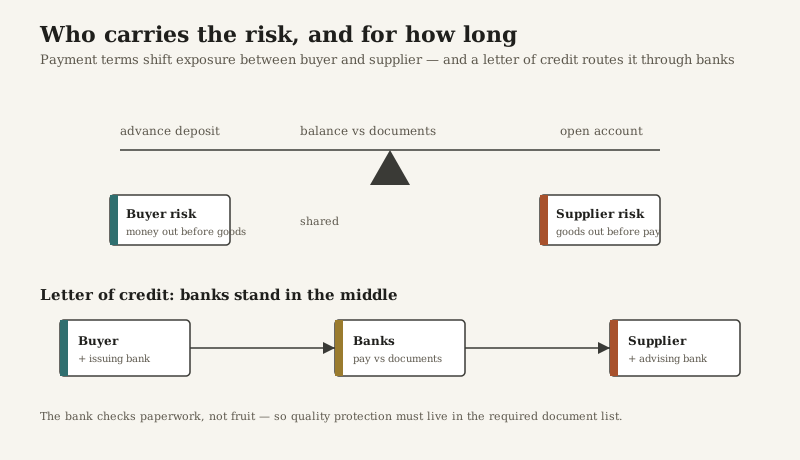
- Payment terms allocate risk: a deposit protects the supplier, open account protects the buyer, and a letter of credit shifts trust to banks for a fee.
- Terms have a price. Suppliers price longer payment windows and unsecured exposure into the quote, so better cash terms for the buyer can mean a higher unit cost.
- Letters of credit reduce counterparty risk on first orders or large shipments, but only pay against documents, so the document list is where quality and delivery protections live.
- For repeat, trusted suppliers, simpler terms like a deposit plus balance against shipping documents usually beat the cost and friction of a full letter of credit.
In freeze-dried fruit sourcing, attention usually goes to the unit price, the fruit grade, and the lead time. Payment terms get treated as paperwork to settle at the end. That is a mistake. Payment terms decide who is exposed to risk, for how long, and at whose cost, and that allocation quietly changes the real price of the deal.
This article explains the common payment structures, what each one does to risk and cash, and when a letter of credit earns its fees versus when it just adds friction.
The direct answer
Every payment term answers one question: who is out of pocket and at risk while the other side performs?
When a buyer pays a large deposit up front, the buyer carries the risk that the goods never arrive or arrive off-spec. When a supplier ships on open account and waits to be paid, the supplier carries the risk that the buyer pays late or not at all. A letter of credit takes that bilateral trust problem and routes it through banks, which charge a fee to stand in the middle.
There is no free position. Whoever carries less risk usually pays for the privilege, either in the unit price or in fees, so payment terms and price have to be negotiated together.
The spectrum from advance payment to open account
Most freeze-dried fruit deals sit somewhere on a spectrum.
At one end is advance payment, where the buyer pays before shipment, sometimes the full amount, more often a deposit with the balance due later. This is supplier-friendly: the supplier has cash in hand and little exposure. Buyers accept it for new suppliers, scarce fruit, or custom runs, but they take on the risk that performance falls short after their money is committed.
A common middle ground is a deposit plus balance against documents: the buyer pays, say, part up front to trigger production, and the rest when the supplier presents shipping documents proving the goods are on the way. This splits exposure and is widely used between parties with some track record.
At the other end is open account, where the supplier ships and invoices, and the buyer pays a set number of days after delivery, such as net-30 or net-60. This is buyer-friendly: the buyer inspects, sells, or uses the product before paying. Suppliers extend it only to trusted, established customers because it is effectively short-term financing they are providing.
When a buyer asks for net-60 open account, they are asking the supplier to fund the order for two months. That financing is rarely free. It shows up as a firmer price, a smaller discount, or a reluctance to hold inventory. Treat generous terms as a cost the supplier will recover somewhere.
Where the letter of credit fits
A documentary letter of credit is a bank's promise to pay the supplier once the supplier presents documents that conform exactly to the agreed conditions. It is most valuable when trust is thin and stakes are high: a first order with an overseas supplier, a large shipment, or a market where chasing a defaulting counterparty across borders would be impractical.
The mechanism is what makes it powerful and what makes it tricky. The bank does not inspect the fruit. It checks paperwork. If the documents match, the bank pays; if a document is missing or inconsistent, payment can stall even when the goods are fine. That cuts both ways: the supplier gains confidence that conforming shipment leads to payment, and the buyer gains leverage by deciding which documents are required before money is released.
The cost is real: issuance fees, amendment fees if terms change, and administrative discipline on both sides. For small or routine orders between partners who trust each other, that overhead usually outweighs the protection.
Making the document list do the quality work
Because a letter of credit pays against documents rather than quality, the document list is where a buyer builds protection. Requiring a certificate of analysis, a pre-shipment inspection report, or a third-party inspection certificate as conditions of payment ties the bank's release to evidence the buyer actually cares about.
Without that, a buyer can find the bank has correctly paid against a clean bill of lading and commercial invoice while the fruit underdelivers on moisture, breakage, or color. The letter of credit was never designed to judge the product; the contract and the document list have to carry the quality terms, and the payment instrument simply enforces that the agreed paperwork exists.
This is why payment terms and the quality agreement should be drafted together. A strong specification with weak payment conditions, or strong payment conditions with a vague specification, leaves a gap.
Reading payment terms into landed cost
A disciplined buyer compares the total cost of a deal, not just the headline unit price.
That total includes the unit price, bank and transaction fees, the financing cost of any cash tied up in deposits, and the expected cost of disputes given the risk position. A quote that looks cheap with a large non-refundable deposit can be more expensive in working-capital terms than a slightly higher quote on balance-against-documents terms. Conversely, pushing hard for long open-account terms can win a cash-flow battle while losing on price.
The practical move is to negotiate price and terms as a single package, and to let the relationship maturity guide the structure: more security on early orders, simpler terms as a track record builds.
What buyers should ask before agreeing terms
Useful questions sharpen the negotiation:
- What deposit, if any, triggers production, and is it refundable if the supplier fails to perform?
- Is the balance due before shipment, against documents, or after delivery, and what does that do to the price?
- If a letter of credit is used, exactly which documents must be presented, and do they include quality evidence?
- Who absorbs bank fees, and how are amendments handled if delivery dates slip?
- How do the proposed terms change once we are an established, repeat account?
Those questions turn payment terms from end-of-deal paperwork into a deliberate part of sourcing strategy.
Bottom line
Payment terms are not administrative leftovers; they are a risk-allocation tool that moves real money. Advance payment protects suppliers, open account protects buyers, and a letter of credit shifts the trust problem to banks for a fee while paying only against documents.
The strongest position is to negotiate price and terms together, match the structure to how much the two sides actually trust each other, and make sure the quality protections live in the contract and document list rather than being assumed. Done well, payment terms lower the true cost and risk of a freeze-dried fruit deal instead of quietly raising it.
Frequently Asked Questions
What are common payment terms for freeze-dried fruit orders?
Common arrangements include an advance deposit with the balance due before or against shipping documents, payment against documents through a bank, open-account terms where the buyer pays a set number of days after delivery, and documentary letters of credit. The right choice depends on how much the two sides trust each other, the order size, and the cash position on each side.
What is a letter of credit and when is it worth using?
A letter of credit is a bank's commitment to pay the supplier once the supplier presents documents that match the agreed terms. It is most useful on first orders, large shipments, or cross-border deals where neither side wants to extend unsecured trust. The trade-off is bank fees and administrative work, plus the discipline of getting every document exactly right.
Why would a supplier charge more for better payment terms?
Longer payment windows and unsecured exposure tie up the supplier's cash and add risk that the buyer pays late or not at all. Suppliers price that cost and risk into the quote. A buyer asking for net-60 open account is effectively asking for short-term financing, and the supplier recovers that somewhere, usually in the unit price.
How do payment terms affect landed cost?
Beyond the unit price, payment terms add bank fees, financing cost on tied-up cash, and risk of disputes. A cheaper unit price with a large upfront deposit may cost more in working capital than a slightly higher price on better terms. Buyers should compare the total cost of the deal, not just the per-kilogram number.
What protects a buyer if the goods arrive off-spec under a letter of credit?
A letter of credit pays against documents, not against quality, so protection comes from requiring the right documents, such as a certificate of analysis, inspection report, or third-party inspection certificate, as conditions of payment. If quality assurance is not written into the document list and contract, the bank can still release payment on conforming paperwork even when the product disappoints.