- Nonenzymatic browning is chemistry between sugars and amino groups, not the enzyme browning you see in fresh-cut fruit.
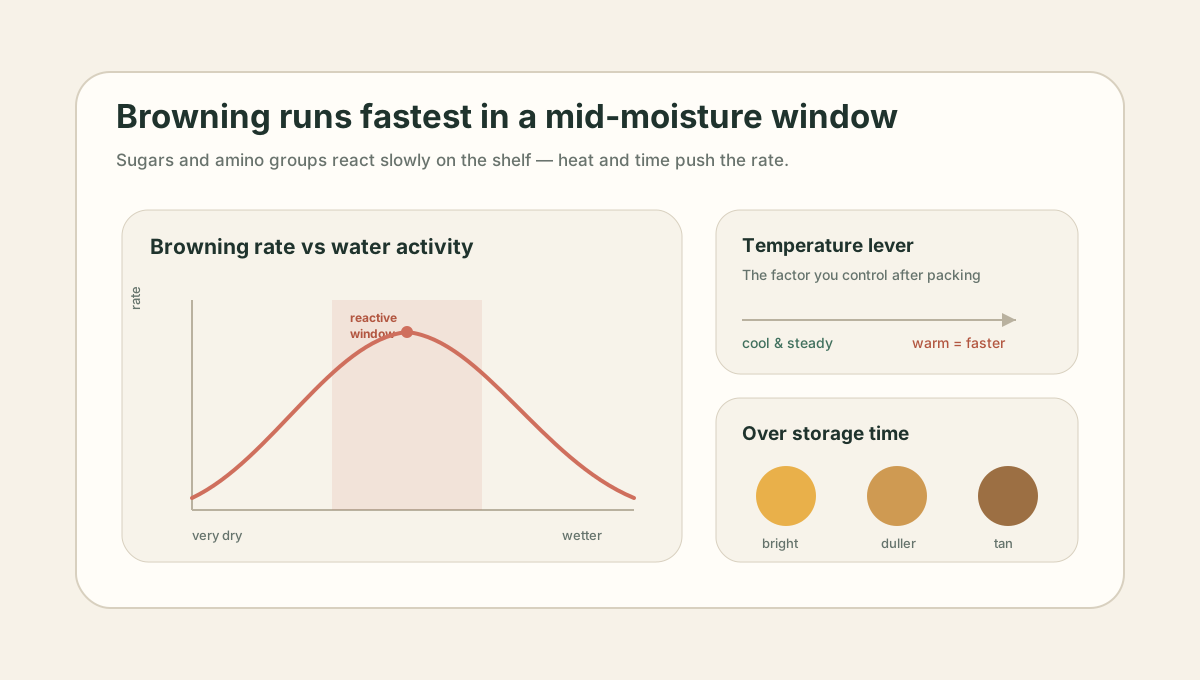
- It runs fastest in a mid-range water activity window, so both too-wet and bone-dry extremes behave differently than people expect.
- Temperature is the biggest lever a buyer or operator actually controls after packing.
Open two bags from the same production lot a year apart and the difference can be obvious: the fresh one is bright, the aged one looks tan and a little muted. The seal held. The pieces still snap. Nothing got wet. Yet the color drifted.
That drift is usually nonenzymatic browning, a slow chemistry that runs inside dry, sugary food even in good packaging. It is worth understanding because it is one of the few quality changes that happens on a stable shelf, and because the levers that slow it are not always the ones people reach for first.
The direct answer
Nonenzymatic browning in freeze-dried fruit is a set of reactions — chiefly Maillard reactions between reducing sugars and amino groups, plus caramelization-type sugar reactions — that produce brown pigments and new aroma compounds over time. It does not require the enzymes responsible for fresh-cut browning, and it can proceed slowly even at the low moisture levels typical of freeze-dried fruit.
The rate depends mostly on three things: how much water is present (water activity), temperature, and time. Of those, temperature is usually the factor a buyer or operator can most directly manage after the product is packed.
Two different browning stories
It helps to separate the two kinds of browning that get lumped together.
Enzymatic browning is what you see on a bruised apple or a cut avocado. Enzymes in the fruit react with oxygen and phenolic compounds, and the surface darkens within minutes. This is largely a fresh-fruit and pre-drying concern. Once fruit is freeze-dried, those enzymes are far less active in the dry state.
Nonenzymatic browning is chemistry that needs no enzymes. Reducing sugars react with amino acids and proteins, kicking off a cascade that eventually forms brown melanoidin pigments and a range of aroma molecules. This is the reaction behind toast crust and roasted coffee — normally desirable there, usually unwanted in a fruit meant to look and taste fresh.
A lot can pass every moisture and microbial spec at release and still drift in color over its shelf life. If a specification only checks the fruit at packing, it may not capture how the product will look when it actually reaches the shelf or the customer.
The water activity window
The most counterintuitive part is how browning responds to moisture.
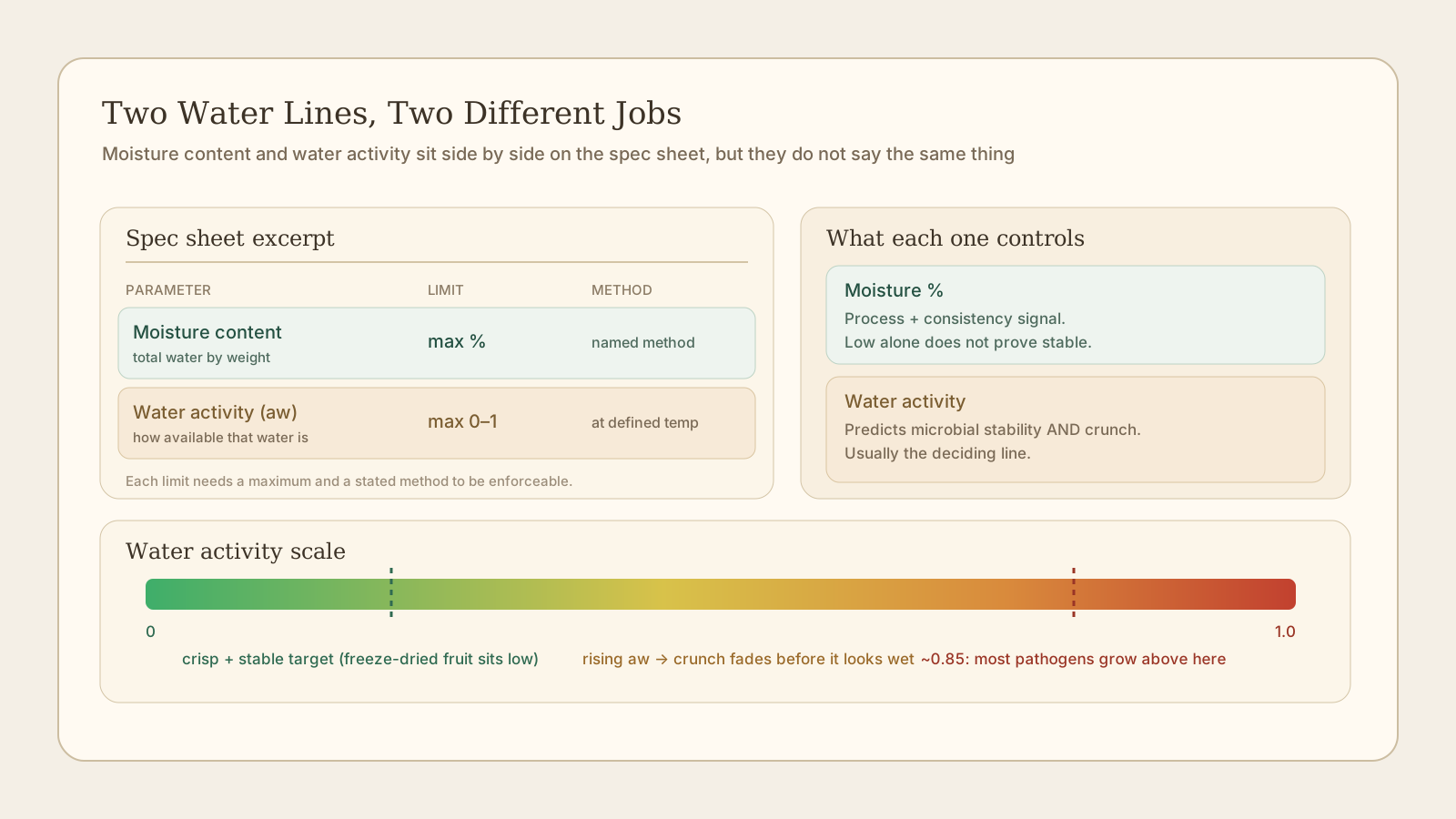
You might expect drier to always mean more stable. For microbial safety and for crunch, drier generally is safer. But nonenzymatic browning does not follow a straight line with water activity. It tends to run fastest in a middle range and slower at both the very dry and the wetter extremes.
The rough logic: at extremely low water activity, the reactants can barely move, so the reaction is slow. As a little water is added, molecules become mobile enough to find each other and the rate climbs. Push water activity higher still and the reactants get diluted, which can pull the rate back down — though by then you have other problems like stickiness and softening.
For freeze-dried fruit, the practical reading is that the target is not merely "as dry as possible for browning." A product sitting near the reactive middle of the moisture range can brown faster than one held very low, which is another reason tight, verified water activity control matters.
Temperature is the lever you actually hold
After a lot is packed, most of its chemistry is locked in except for the part that responds to storage conditions. Temperature is the dominant one.
Nonenzymatic browning speeds up substantially as temperature rises. A pallet that spends a summer in a hot warehouse or a shipping container on a dock will brown far faster than the same product in a cool, stable room. This is why aged retail samples from warm climates so often look duller than the reference sample the buyer approved.
The takeaway is not a specific number — that depends on the fruit, sugar profile, and packaging — but a direction. Cooler and steadier beats warm and fluctuating, and the effect compounds over the months a product typically sits in the supply chain.
Fruit chemistry sets the baseline
Some fruits are simply more prone to visible browning.
Higher reducing-sugar content gives the reaction more fuel. Fruits with more free amino compounds react more readily. And light-colored fruits show the change most plainly: a banana, apple, pear, or peach slice reveals a shift toward tan far more obviously than a dark berry or a pomegranate aril, even when the chemistry is proceeding at a similar pace underneath.
That is why color specs are most useful when set per fruit and per format, compared against a retained reference sample rather than a generic idea of "bright."
Oxygen, light, and the parallel reactions
Nonenzymatic browning is the headline, but it rarely runs alone. Oxidation of pigments and oils can dull color and shift aroma in parallel, and light exposure accelerates fading in clear packaging. These are separate mechanisms, but they stack visually with browning to make an aged product look tired.
This is where packaging earns its place. A good barrier film holds water activity steady, keeps oxygen out, and blocks light — limiting the parallel reactions and keeping the moisture level away from the reactive window. Packaging does not stop the internal Maillard chemistry, but it removes the accelerators that would otherwise pile on.
What this means in practice
For operators, the practical controls are the familiar ones read through a browning lens: hit and verify a low, consistent water activity; protect the product with an appropriate barrier and, where justified, oxygen and light protection; and — most of all — control storage temperature through warehousing and transit.
For buyers, the useful move is to judge color against a retained reference near the end of shelf life, not just at release, and to ask suppliers how their shelf-life testing accounts for realistic storage temperatures rather than ideal lab conditions. A product that looks perfect on day one but tan by month nine has a browning story that a release-only spec will miss.
Browning on a sealed shelf is not a mystery or a defect that appeared from nowhere. It is slow, predictable chemistry — and once you know it runs fastest in a specific moisture window and speeds up with heat, most of the surprise goes away.
Frequently Asked Questions
Is storage browning the same as the browning on a cut apple?
No. A cut apple browns because of enzymes reacting with oxygen at the surface within minutes. Freeze-dried storage browning is nonenzymatic: sugars and amino groups react slowly over weeks or months, and it does not need oxygen at the cut surface to begin. The two look similar but have different causes and different levers.
Does browning mean the fruit is unsafe?
Not by itself. Nonenzymatic browning is primarily a color, aroma, and flavor change, not a spoilage signal. Freeze-dried fruit held at low water activity is not a microbial growth environment. Browning matters mostly for appearance and sensory quality, which is still a real reason buyers reject lots.
Why would a well-sealed bag still darken?
Because the reaction uses sugars and amino compounds already inside the fruit. A perfect seal stops new moisture and oxygen from entering, but it does not stop chemistry that only needs the fruit's own components, some residual water, and time at warm temperatures.
Which fruits brown the most?
Higher-sugar, higher-amino fruits and juice-rich pieces tend to brown faster, and light-colored fruits show it more obviously. A pale banana or apple slice reveals a shift to tan far more clearly than a dark berry, even when the underlying reaction rate is similar.
Can packaging slow it down?
Packaging helps by holding water activity steady and blocking light and oxygen, which limits parallel oxidation reactions. But the single most effective storage lever is temperature. Cooler, stable storage slows nonenzymatic browning far more than any incremental packaging upgrade.