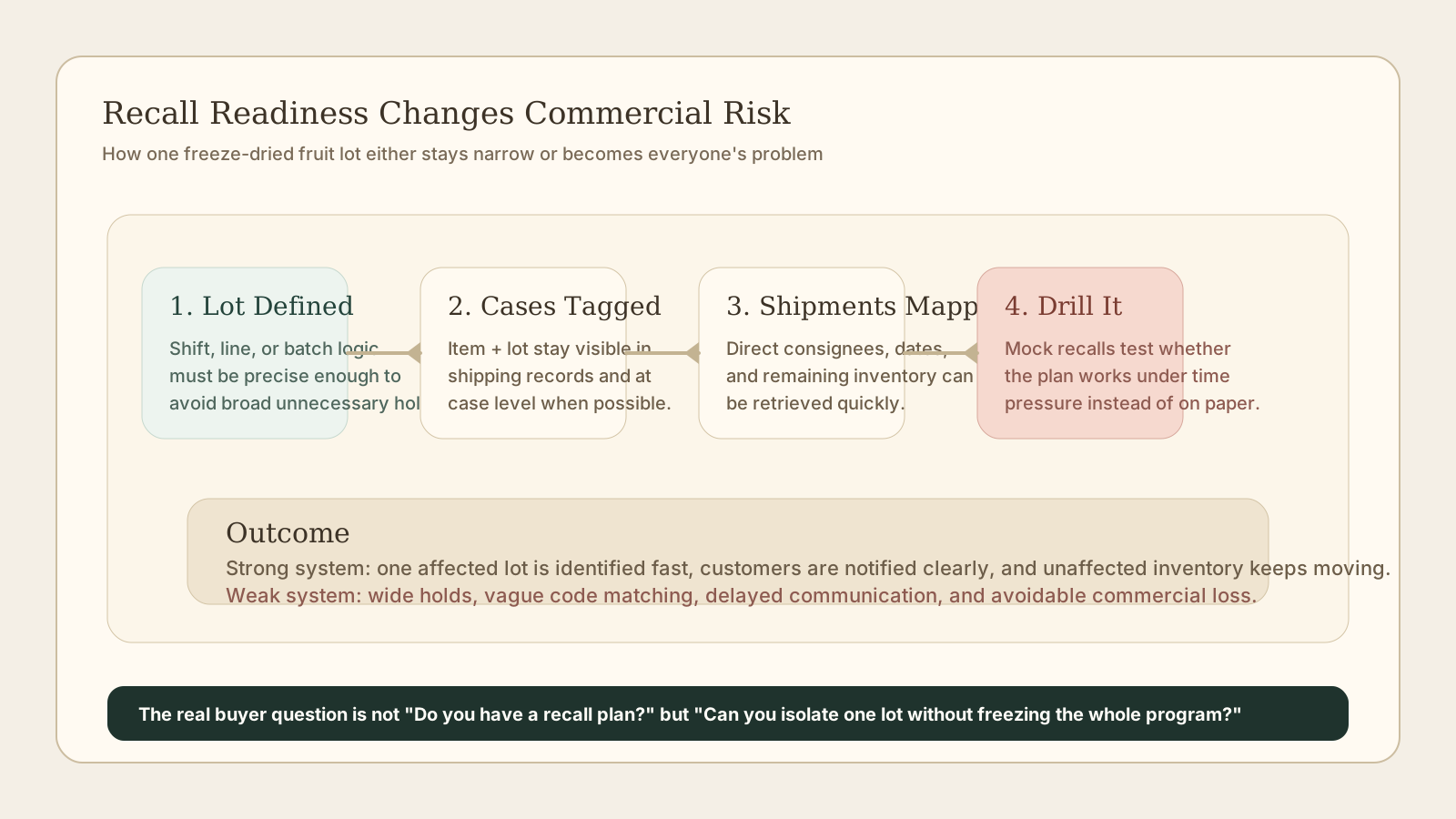
- A supplier's recall readiness is a practical buying risk signal, not a niche compliance detail.
- Lot-code discipline and consignee records determine whether a problem stays narrow or turns into a broad commercial shutdown.
- Mock recalls are a useful verification tool because they test whether the written plan and traceability data actually work under time pressure.
- Buyers should ask how lots are defined, how cases are identified, and how fast the supplier can trace affected product forward and backward.
Buyers often evaluate freeze-dried fruit suppliers on fruit quality, certifications, MOQ, and price. Those are all real filters. But they do not answer a harder operational question: what happens if something goes wrong after the product ships?
That is where recall readiness becomes a useful buying signal.
The direct answer
Mock recall readiness changes freeze-dried fruit supplier risk because it tests whether the supplier can quickly isolate an affected lot, identify where it went, and communicate clearly enough to stop the problem from spreading.
In practice, that capability decides whether an issue becomes:
- one contained lot
- one broad warehouse hold
- one retailer panic
- or one expensive all-channel scramble
Why this matters in freeze-dried fruit specifically
Freeze-dried fruit is not usually a one-SKU, one-format category. The same processor may run:
- whole fruit snack pouches
- ingredient bulk bags
- private-label retail packs
- foodservice cases
- multi-fruit blends with shared components
That complexity raises the cost of vague traceability. A weak lot system can force a company to hold or pull far more product than necessary simply because it cannot separate the affected product cleanly from the unaffected product.
For a buyer, that is not abstract regulatory language. It is inventory risk, fill-rate risk, and customer-trust risk.
What FDA expects, and what buyers should infer from it
FDA states that facilities subject to the Preventive Controls for Human Foods rule are required to establish and implement a written recall plan unless an exemption applies. FDA also emphasizes direct consignee notification, public notification when appropriate, effectiveness verification, and product disposition procedures.
That does not mean every company in the freeze-dried fruit chain operates under identical obligations. But it does create a clear commercial benchmark: a serious supplier should be able to explain how affected product would be identified and contained.
The buyer-friendly inference is straightforward. If a supplier cannot describe recall mechanics clearly before there is a problem, it is unlikely to become more organized after a problem appears.
Why lot definition is more important than a nice-looking code
A clean-looking lot code is not enough. The real question is what the code represents.
Ask:
- Does one lot cover one line, one shift, one day, or several days?
- Is the lot tied to a distinct raw-material intake or blend event?
- Does the same lot stay visible through repacking or channel-specific formats?
- Can the supplier map finished cases back to production records quickly?
The tighter and more coherent the lot logic, the more targeted a hold or recall can be. Loose lot logic makes everything more expensive because too much product must be treated as suspect.
Why mock recalls are useful even when rules do not say the words
A mock recall is not magic, and it is not a substitute for preventive controls. It is simply a stress test.
The exercise asks a plain question: if lot X becomes a problem at 10:00 a.m., can the company show by noon:
- what the lot was
- what raw material and packaging were involved
- which customers received it
- which inventory remains in-house
- who owns each next action
That is why mock recalls are commercially valuable. They test the speed and completeness of the records, not just their theoretical existence.
What strong recall readiness looks like
A strong supplier usually has these traits:
- written ownership of recall actions
- lot-code logic that operations staff can explain without improvising
- case-level or shipment-level records that travel with the product
- consignee records that are current and searchable
- a way to separate held product physically and digitally
- periodic verification that the system works under time pressure
GS1-style case identification can help here because it gives trading partners a more consistent way to carry item and lot data through the chain. But the system still depends on disciplined internal records.
What weak recall readiness looks like
Weak systems often reveal themselves early.
Warning signs include:
- the supplier can explain the product spec but not the lot structure
- shipment records depend on one person's spreadsheet
- repacked cases lose visible lot identity
- downstream customers receive inconsistent code formats
- the supplier answers traceability questions with "we have that somewhere"
None of those issues guarantee a future recall failure. But they do tell a buyer that the response window may be slower and broader than it should be.
A mock recall is best read as a verification tool, not as proof that a supplier is risk-free. The value is that it exposes whether the traceability and communication system actually functions.
Questions buyers should ask during approval
Useful approval questions include:
- How do you define a production lot?
- When is a new lot code assigned?
- Does lot identity stay visible at case level?
- How quickly can you trace one affected lot forward to all customers?
- How quickly can you trace one customer complaint back to production?
- Do you run mock recalls or similar traceability exercises?
These are not hostile questions. They are practical questions from a buyer who wants the commercial system to be as disciplined as the fruit quality system.
Bottom line
Mock recall readiness changes freeze-dried fruit supplier risk because it reveals whether a supplier can contain a problem precisely instead of freezing large parts of the business by uncertainty.
For buyers, that makes recall readiness a real sourcing criterion. Strong fruit quality matters. So does the ability to find one bad lot without losing ten good ones.
Frequently Asked Questions
What is a mock recall in simple terms?
It is a practice exercise where a company tests whether it can identify an affected lot, find where it went, and document what action would be taken without waiting for a real emergency.
Why does recall readiness matter for freeze-dried fruit buyers?
Because the category often moves through multiple lots, pack formats, and channels. If a problem appears, the supplier's ability to isolate the affected product quickly protects inventory, customer relationships, and working capital.
Are all food facilities required to have a written recall plan?
Not every firm in the chain is under the same requirement, but FDA states that registered facilities subject to 21 CFR Part 117 generally need a written recall plan unless an exemption applies. FDA also encourages other firms in the chain to consider written recall plans as a best practice.
What should buyers ask about lot coding?
Ask how the lot is defined, when a new lot is created, whether lot information stays visible at case level, and how quickly the supplier can identify where a lot was shipped.
Does a barcode system guarantee good recall performance?
No. It helps only if the underlying lot logic, records, and internal response process are disciplined. A barcode can carry good data or bad data.
Primary sources & further reading
- FDA Calls on Food Industry Leaders to Strengthen Recall Compliance and Ensure Recall Effectiveness U.S. Food & Drug Administration Referenced for FDA's summary of recall-plan expectations under 21 CFR Part 117 and its emphasis on direct consignee notification, effectiveness checks, and product identification by lot or code.
- Traceability Lot Code U.S. Food & Drug Administration Referenced for FDA's description of traceability lot codes as a core linkage for tracing food through the supply chain and back to the source.
- Implementation Roadmap for GS1-128 Barcodes on Retail Grocery Cases GS1 US Referenced for case-level traceability language around GTINs plus batch or lot information in supply-chain communications.
External links open in a new tab. We do not receive compensation from any organization listed; sources are referenced because they are primary, current, and publicly verifiable.