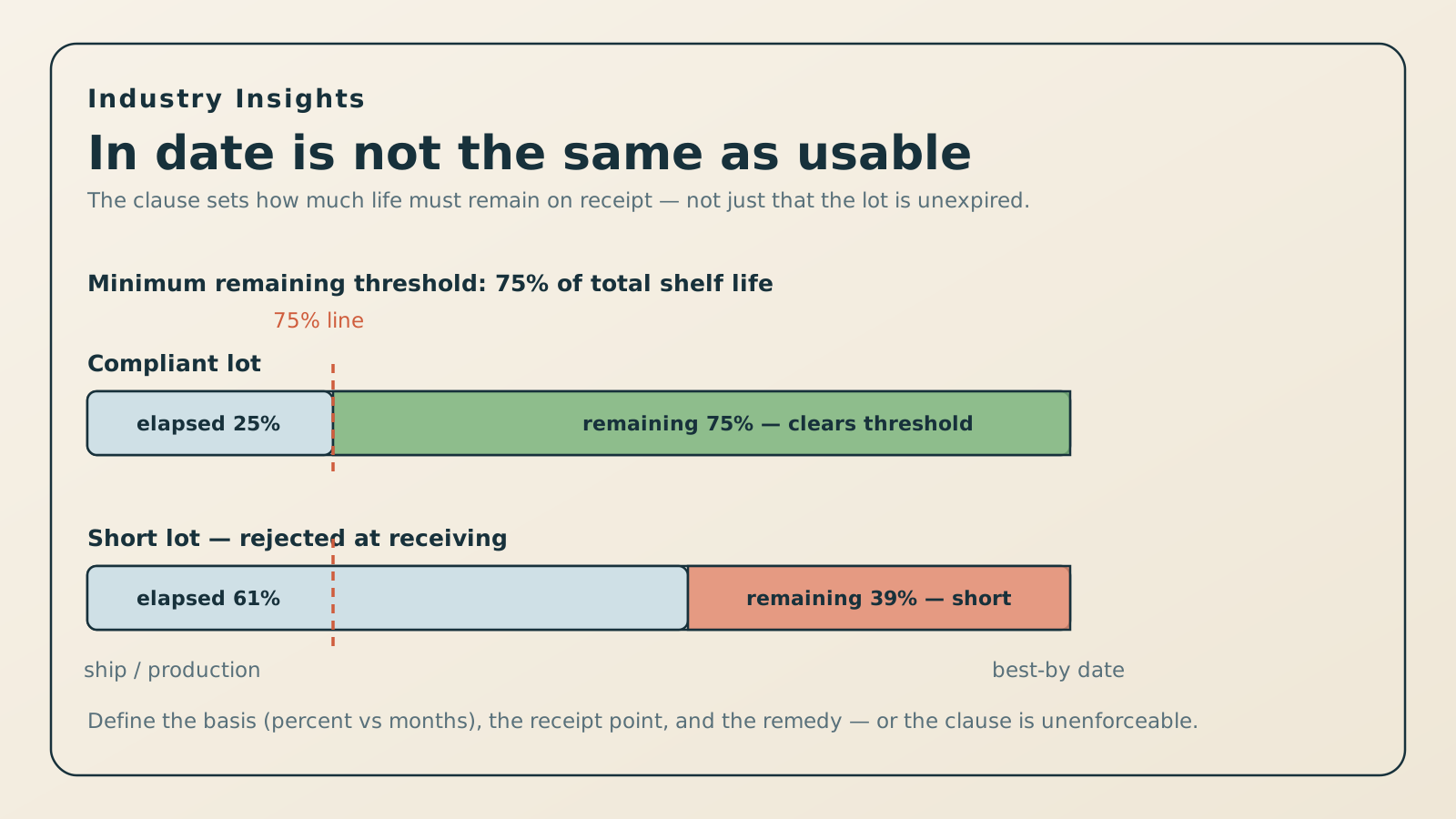
- A minimum remaining shelf-life clause states the share of total shelf life that must remain on receipt, often expressed as a percentage or a fixed number of months.
- Without it, a supplier can ship older stock that is still technically in date but useless for a retailer, distributor, or co-packer with their own downstream dating rules.
- The right threshold depends on the buyer's channel: retail and distribution usually need more remaining life than an ingredient user who consumes the lot quickly.
- The clause only works if it names the measurement basis, the receipt point, and the remedy when a lot falls short.
When a freeze-dried fruit lot gets refused at receiving, the reason is usually not that it expired. It is that it arrived too close to expiring. The pouches are technically in date, but there is not enough life left for the buyer to do anything useful with them.
The tool that prevents this is a minimum remaining shelf-life clause. It is a small piece of the purchase terms, and it decides who absorbs the cost of aged stock.
The direct answer
A minimum remaining shelf-life clause states how much of a product's total shelf life must still be left when the buyer receives it. It is commonly written as a percentage of total life, such as "at least 75 percent remaining on receipt," or as a fixed period, such as "at least 18 months before the best-by date."
Its job is to stop a supplier from clearing older inventory onto a buyer who then cannot move it through their own channel before it ages out.
Why "in date" is not good enough
Shelf life is a quality window, not a safety switch. A best-by date signals when the product is expected to start drifting from its intended quality, and most buyers build their own rules on top of it. A pouch that is perfectly fine to eat can still be commercially dead for a given channel.
Consider where the lot is headed:
- A retailer may refuse anything with less than a set number of months left, because it needs time on shelf.
- A distributor may need the date to survive their warehouse hold plus their customers' expectations.
- A co-packer or ingredient user needs the life to outlast their own production schedule and the finished product's shelf life.
In each case, the usable date the buyer needs is well before the printed best-by date. The clause closes the gap between "technically in date" and "actually usable."
Percentage versus fixed-month terms
Both forms are common, and they behave differently.
A percentage of total shelf life scales with the product. If a product has a 24-month life and the term is 75 percent remaining, the lot must arrive with at least 18 months left. Change the product to a 36-month life and the same percentage gives 27 months. This is convenient when a buyer purchases many products with different total lives under one master agreement.
A fixed number of months is simpler to verify and leaves no arithmetic to dispute. "At least 18 months before best-by" is unambiguous. The trade-off is that it does not adjust if a product's total shelf life changes.
Percentage terms are easier to apply across a broad catalog; fixed-month terms are easier to enforce on a single line. Many buyers use a percentage in the master terms and convert it to a fixed-month figure on each purchase order so receiving can check it without doing math.
Setting the right threshold for your channel
There is no universal number. The right threshold follows how long the lot will sit before it is consumed or sold.
A rough way to think about it:
- Fast ingredient use: a co-packer who will run the lot within weeks can accept less remaining life, because the date only needs to survive a short hold and the finished product's own life.
- Distribution: more remaining life is needed to cover warehouse time plus the customer's own requirements.
- Retail: usually the most demanding, because the product has to clear receiving, sit on shelf, and still look fresh to a shopper.
Asking for far more remaining life than a channel needs is not free. It pushes the supplier toward fresher lots, which can mean longer lead times or higher cost. The goal is enough margin to move the product comfortably, not the maximum number you can negotiate.
What the clause has to specify to actually work
A remaining-life clause that just names a number invites disputes. To be enforceable, it should also pin down:
- The measurement basis: percentage of total life, or fixed months before best-by, stated explicitly.
- The reference date: how shelf life is established and where the best-by date comes from.
- The receipt point: is remaining life measured at the buyer's dock, at the port, or at ship date? A long ocean transit can eat months between ship and receipt.
- The remedy: what happens if a lot is short. Rejection, discount, replacement, or acceptance by exception should be defined in advance.
The receipt point matters more than buyers often expect for imported freeze-dried fruit. If the clause is silent, a supplier may argue the date was fine when the container left origin, while the buyer measures at their own dock weeks later.
How it connects to the rest of the agreement
This clause does not stand alone. It assumes the stated shelf life is real, which means it depends on actual stability data behind the best-by date. It also pairs naturally with lot traceability and COA review, because remaining-life checks happen at the same receiving step where lot codes and certificates are verified.
A buyer who has a strong quality agreement but no remaining-life term still has a blind spot: they can receive a lot that meets every spec and is fully in date, yet is unusable for their channel. The clause fills exactly that gap.
Bottom line
A minimum remaining shelf-life clause is one of the cheapest forms of protection a freeze-dried fruit buyer can write. It converts a vague expectation about freshness into a checkable requirement at receiving, and it moves the cost of aged stock back onto the party who controls inventory rotation. To work, it needs a clear basis, a defined receipt point, and a stated remedy, with a threshold matched to how fast the buyer's channel actually turns the product.
Frequently Asked Questions
What is a minimum remaining shelf-life clause?
It is a purchase term stating how much usable shelf life must be left when a lot is received. It is commonly written as a percentage of total shelf life, such as 75 percent remaining, or as a fixed period, such as at least 18 months before the best-by date.
Why does it matter if the product is still in date?
Because downstream buyers and retailers have their own dating rules. A pouch with only a few months left may be rejected by a retailer, unsellable through a distributor, or unusable for a co-packer who needs the date to survive their own production and shelf time.
How is the threshold usually expressed?
Two common forms are a percentage of total shelf life remaining on receipt, or a fixed number of months remaining before the best-by date. Percentage terms adjust automatically to the product's total life; fixed-month terms are simpler to check.
What happens if a lot arrives short?
That depends on the remedy written into the clause. Options include rejection, a negotiated discount, replacement, or acceptance by exception. If no remedy is defined, disputes get messy, which is why the clause should spell it out.
Does this replace shelf-life testing?
No. The stated shelf life still has to be supported by real stability data. The clause governs how much of that established life must remain on arrival; it does not set or validate the life itself.
Primary sources & further reading
- Shelf Life of Food Products: From Open Labeling to Real-Time Measurements Comprehensive Reviews in Food Science and Food Safety / PubMed Referenced for background on how shelf life is defined and why date labeling is tied to quality over time rather than a single moment of failure.
- Food Product Dating USDA Food Safety and Inspection Service Referenced for the explanation that best-by and similar dates indicate quality rather than a hard safety cutoff, which is why remaining-life terms are commercial decisions.
External links open in a new tab. We do not receive compensation from any organization listed; sources are referenced because they are primary, current, and publicly verifiable.