- Mulberries are usually grouped by color and species: black, white, red, Pakistan, and Himalayan types are the names buyers hear most often.
- Fresh mulberries are fragile, which is why processed forms can reveal fruit that many consumers rarely see fresh.
- Color changes everything: dark mulberries read rich and berry-like, while white mulberries can feel honeyed, mild, and chewy.
- Freeze-dried mulberries need careful handling because breakage, staining, and seed texture are common quality points.
Mulberries are familiar in some regions and almost invisible in others. Their variety story is really a story about color, softness, staining, and how quickly ripe fruit disappears after harvest.
So how many types of mulberries are there? The useful answer depends on how you count: by cultivar, by species, by regional market name, by commercial grade, or by processing behavior. For consumers, the question is usually about flavor. For buyers and processors, the question is about repeatability.
This guide treats mulberry variety as a practical map: what names matter, what differences change the eating experience, and what those differences mean for freeze-dried fruit, powders, toppings, and ingredient sourcing.
Quick answer: how many mulberry varieties are there?
There is no single clean number that works across every country and market. A better way to think about it is by commercial layers.
| Layer | What it means |
|---|---|
| Common groups | Black mulberry, white mulberry, red mulberry, Pakistan mulberry, Himalayan mulberry |
| Main differences | Color, sweetness, acidity, berry intensity, fruit length, and softness |
| Commercial issue | Extremely fragile fresh fruit limits broad supermarket visibility |
| Freeze-dried relevance | Strong for premium berry blends, powders, yogurt toppings, and specialty snacks |
The most important point is that variety is not trivia. It changes flavor, texture, cost, yield, and how confidently a brand can describe what is inside the package.
Why mulberry variety is complicated
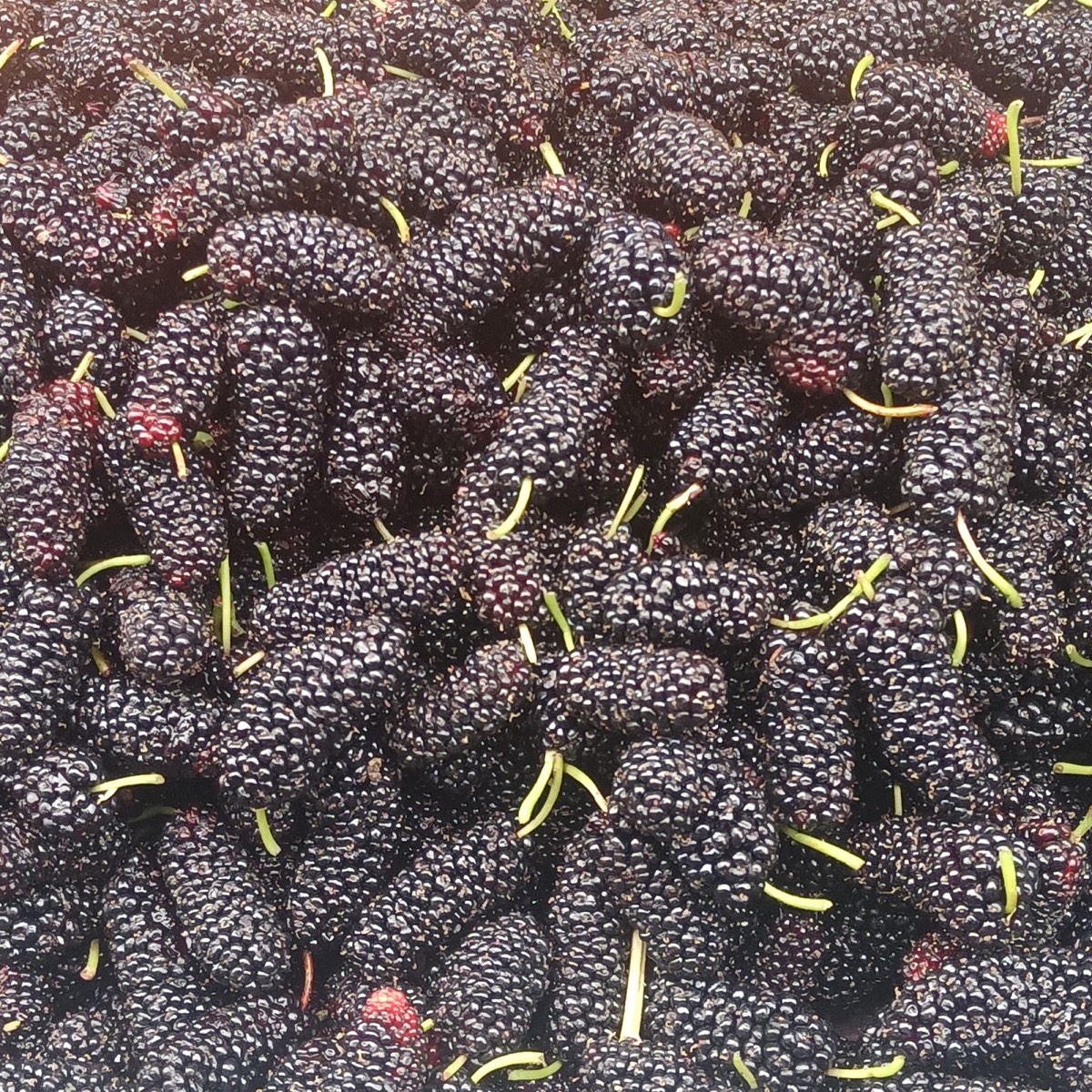
Mulberry variety is complicated because common names overlap with species names, color descriptions, and regional selections. A white mulberry can be eaten fresh, dried, or used in traditional food contexts. A black mulberry can be intensely staining and aromatic. Long Pakistan-type mulberries look almost like stretched berries from a different category.
That is why variety guides can be more useful than simple lists. A list may tell you names. A good sourcing guide tells you which differences actually change the product.
Types and market groups to know
Black mulberries
Often the most intense in flavor, with dark juice, winey sweetness, and strong staining power. They can make a blend look rich but may create color transfer issues.
White mulberries
Usually milder and honey-sweet, especially in dried form. They can read more like a chewy natural sweet than a sharp berry.
Red mulberries
Associated strongly with North America, with fruit that can range from red to dark purple when ripe. Flavor often sits between sweet and tart.
Pakistan and Himalayan mulberries
Long-fruited types that can be dramatic in appearance and very sweet when ripe. They are interesting for specialty positioning but harder to standardize.
What this means for freeze-dried fruit
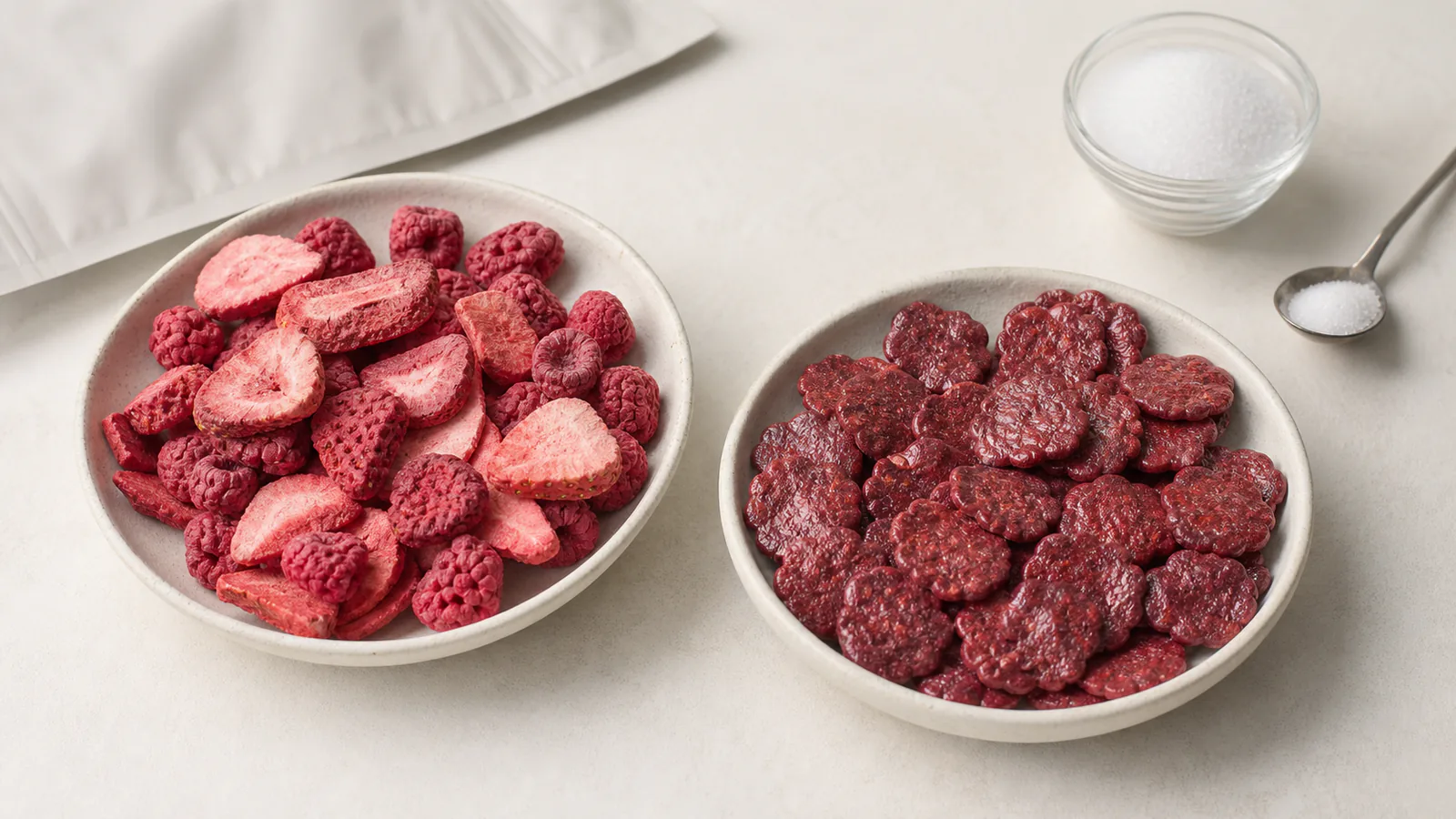
In freeze-drying, mulberry variety affects color retention, piece shape, seed perception, and powdering. Dark fruit can create beautiful contrast in cereal, chocolate, and yogurt applications, while lighter fruit can feel more delicate and honeyed. Whole-fruit formats are attractive but must be packed with breakage in mind.
For freeze-dried fruit, variety affects more than flavor. It can change cut yield, drying time, breakage, color stability, aroma retention, and whether the final product feels like a premium snack or a generic ingredient.
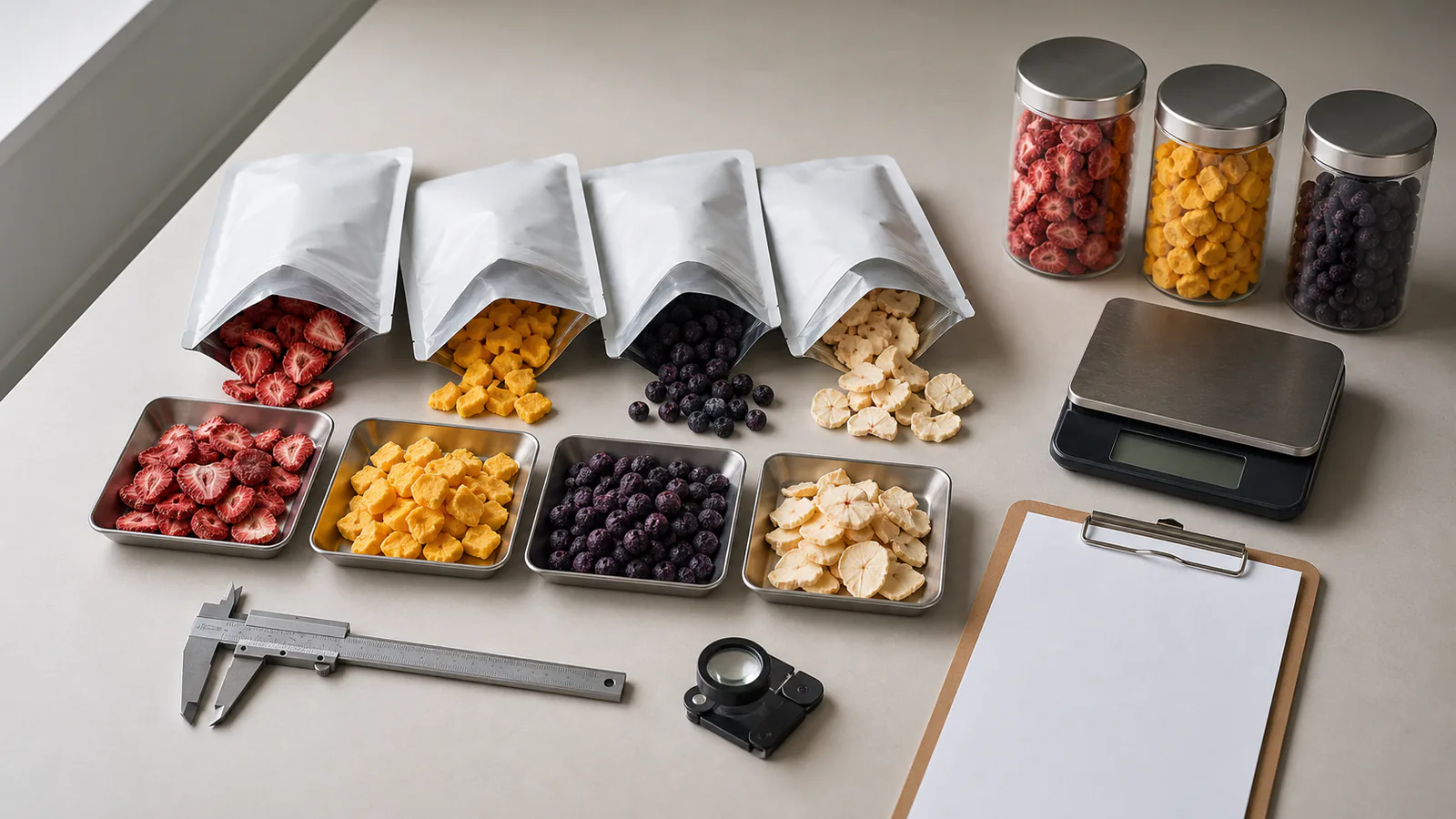
A practical buyer should evaluate:
- raw fruit identity and origin
- ripeness at processing
- seed, pit, peel, or membrane management
- piece format and size tolerance
- sweetness and acidity range
- color after drying
- breakage and powder percentage
- whether the product will be eaten directly or used as an ingredient
Why labels often hide the variety
Retail labels often say mulberries without naming species because supply may be built around color, origin, organic status, or dried format rather than cultivar. A serious buyer should ask whether the fruit is black, white, red, or long-fruited, and whether the sample represents the production lot or a cleaner hand-selected grade.
There is also a commercial reason for broad labels: flexibility. A brand that prints a specific variety name has to keep that promise across seasons. A brand that prints only the fruit name can adjust sourcing more easily. Neither choice is automatically wrong, but the level of detail should match the price and positioning.
Ask what the fruit really is, where it comes from, whether the lot is single-origin or blended, how the edible portion is prepared, and which quality traits are guaranteed in writing. Variety only helps if it survives into the finished product.
How mulberry compares
A quick reference for how mulberry sits alongside the freeze-drying personalities of its closest siblings.
| Fruit | Brix | Fiber | Aroma | Color stability | Breakage risk | Typical format |
|---|---|---|---|---|---|---|
| Mulberrythis report | 9–15° | Low | Moderate | Strong | Medium | Whole · broken · powder |
| Strawberry | 7–12° | Low | Strong | Moderate | Medium | Slices · whole · powder |
| Blueberry | 10–15° | Low | Moderate | Strong | Low | Whole · halves · powder |
| Raspberry | 8–12° | Low | Strong | Moderate | High | Whole · broken · powder |
| Blackberry | 8–13° | Medium | Strong | Moderate | High | Whole · broken · powder |
| Cranberry | 6–9° | Medium | Sharp | Strong | Low | Slices · pieces · powder |
| Gooseberry | 8–12° | Medium | Moderate | Moderate | Medium | Halves · powder |
Values are typical industry ranges. Variety, origin, harvest window, and process all shift them.
Conclusion
Mulberry is a small fruit with a surprisingly large identity problem. The more specific the label becomes, the more useful it is for flavor, color, and application planning.
For consumers, variety explains why two products with the same fruit name can taste surprisingly different. For the freeze-dried fruit industry, it explains something even more important: a fruit name is not a finished specification. It is the start of one.
Frequently Asked Questions
How many types of mulberries are there?
Mulberries are usually grouped by color and species: black mulberry, white mulberry, red mulberry, and longer-fruited types like Pakistan and Himalayan mulberry are the names buyers hear most often. Variety counts depend on whether you count species, regional selections, or named cultivars.
What's the difference between black, white, and red mulberries?
Black mulberries are the most intense in flavor, with dark juice, winey sweetness, and strong staining power. White mulberries are usually milder and honey-sweet, especially in dried form. Red mulberries are associated with North America, with fruit ranging from red to dark purple when ripe — flavor sits between sweet and tart.
What are Pakistan and Himalayan mulberries?
Pakistan and Himalayan mulberries are long-fruited types that can look almost like stretched berries from a different category. They can be dramatic in appearance and very sweet when ripe, prized for specialty positioning. They are harder to standardize commercially than the more common black, white, and red mulberries.
Why don't most stores sell fresh mulberries?
Mulberries are extremely fragile fresh. The fruit doesn't survive long-distance shipping the way grapes or blueberries do, and shelf life is short even in good conditions. That's why most mulberries reach consumers as dried, frozen, or freeze-dried product rather than fresh.
Which mulberry variety is best for freeze-drying?
Color and softness drive the choice. Dark fruit (black mulberry) creates beautiful contrast in cereal, chocolate, and yogurt applications, but color transfer and staining can be issues. Lighter fruit (white mulberry) feels more delicate and honeyed. Whole-fruit formats are attractive but must be packed with breakage in mind.
Do freeze-dried mulberries stain other ingredients in a blend?
Dark mulberries carry strong anthocyanin pigments that can transfer color to adjacent ingredients in a mix — visible in granola where mulberry tinges oat clusters purple. Whole-piece formats minimize transfer; powder and broken pieces should be paired with ingredients where the color tint is welcome rather than a defect.
What should buyers ask freeze-dried mulberry suppliers?
Ask what the fruit really is (black, white, red, Pakistan, Himalayan), where it comes from, single-origin or blended, ripeness at processing, whole or broken format, target moisture or water activity, added ingredients, and expected breakage and powder percentage after shipping.