- Purple mangosteen is the main commercial fruit, while several related Garcinia fruits are locally important but rarely seen in global trade.
- Mangosteen variety names are less visible than mango or apple names because export supply is usually sold by origin, grade, and season rather than cultivar.
- For freeze-dried mangosteen, edible yield, seed size, segment integrity, and aroma retention matter more than variety romance.
- The category is best understood as a premium tropical discovery fruit, not a standardized commodity.
Mangosteen looks like a single luxury fruit, but behind the purple shell is a wider story of Garcinia species, local selections, and difficult commercial sourcing.
So how many types of mangosteens are there? The useful answer depends on how you count: by cultivar, by species, by regional market name, by commercial grade, or by processing behavior. For consumers, the question is usually about flavor. For buyers and processors, the question is about repeatability.
This guide treats mangosteen variety as a practical map: what names matter, what differences change the eating experience, and what those differences mean for freeze-dried fruit, powders, toppings, and ingredient sourcing.
Quick answer: how many mangosteen varieties are there?
There is no single clean number that works across every country and market. A better way to think about it is by commercial layers.
| Layer | What it means |
|---|---|
| Commercial core | Purple mangosteen, the familiar white-segment fruit sold fresh and processed |
| Wider family | Yellow mangosteen, button mangosteen, achachairu, and other Garcinia relatives |
| Visible cultivar naming | Low in global retail compared with mango, apple, grape, or citrus |
| Freeze-dried relevance | High when buyers can control ripeness, seed removal, and fragile segment handling |
The most important point is that variety is not trivia. It changes flavor, texture, cost, yield, and how confidently a brand can describe what is inside the package.
Why mangosteen variety is complicated
Mangosteen is counted in two different ways. In everyday commerce, most people mean purple mangosteen, Garcinia mangostana. In a botanical or regional food sense, the conversation expands into a broader Garcinia world that includes fruits with sour, sweet, resinous, or tropical-candy notes. That makes the simple question "how many types are there?" more slippery than it sounds.
That is why variety guides can be more useful than simple lists. A list may tell you names. A good sourcing guide tells you which differences actually change the product.
Types and market groups to know
Purple mangosteen
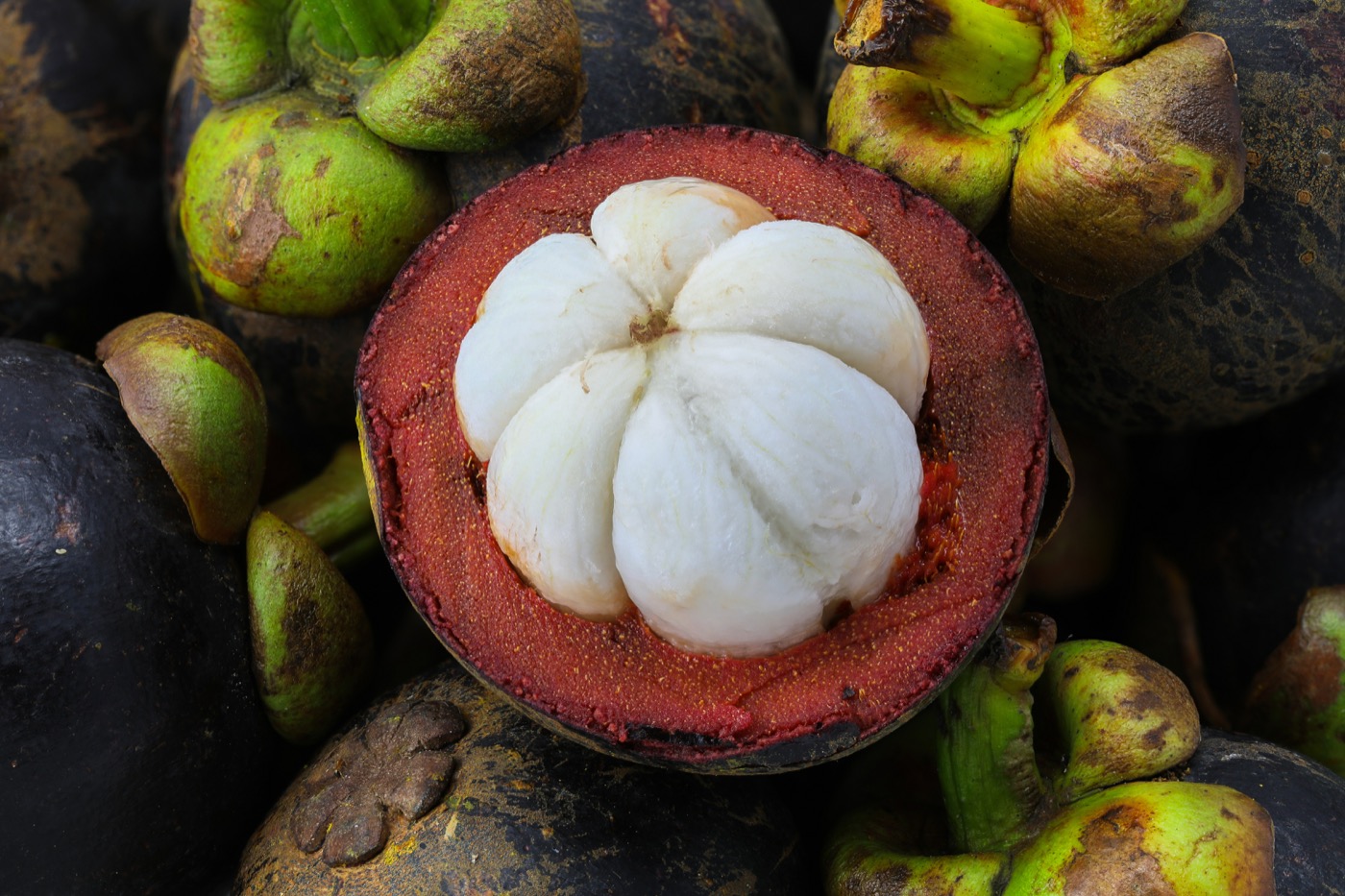
The best-known commercial form, prized for white segmented flesh, sweet acidity, and a delicate floral tropical finish. It dominates export awareness even when local selections differ by origin.
Yellow mangosteen and related sour Garcinia fruits
Often more acidic and less dessert-like. These fruits may be important in local markets, preserves, and culinary uses, but they rarely enter mainstream snack branding.
Achachairu and other specialty Garcinia fruits
A rising curiosity category in specialty fruit circles. They show how broad the mangosteen neighborhood can be, even if they are not substitutes for classic mangosteen.
Origin-based lots
Thailand, Indonesia, Malaysia, Vietnam, and other tropical origins may produce fruit with different size, rind thickness, season, and sweetness, even when the label simply says mangosteen.
What this means for freeze-dried fruit
Freeze-dried mangosteen is challenging because the fruit has low edible yield, delicate segments, and an aroma that can feel expensive only when raw material quality is high. The best lots keep the white segment identity intact. Poor lots become broken, seed-heavy, or quietly sweet without much personality.
For freeze-dried fruit, variety affects more than flavor. It can change cut yield, drying time, breakage, color stability, aroma retention, and whether the final product feels like a premium snack or a generic ingredient.
A practical buyer should evaluate:
- raw fruit identity and origin
- ripeness at processing
- seed, pit, peel, or membrane management
- piece format and size tolerance
- sweetness and acidity range
- color after drying
- breakage and powder percentage
- whether the product will be eaten directly or used as an ingredient
Why labels often hide the variety
Most packages say mangosteen rather than naming a cultivar because the supply chain is already difficult enough: seasonality, rind waste, origin variation, and labor all matter. For buyers, the better questions are origin, edible-yield percentage, seed tolerance, segment size, and whether the product is whole segments, partial segments, pieces, or powder.
There is also a commercial reason for broad labels: flexibility. A brand that prints a specific variety name has to keep that promise across seasons. A brand that prints only the fruit name can adjust sourcing more easily. Neither choice is automatically wrong, but the level of detail should match the price and positioning.
Ask what the fruit really is, where it comes from, whether the lot is single-origin or blended, how the edible portion is prepared, and which quality traits are guaranteed in writing. Variety only helps if it survives into the finished product.
How mangosteen compares
A quick reference for how mangosteen sits alongside the freeze-drying personalities of its closest siblings.
| Fruit | Brix | Fiber | Aroma | Color stability | Breakage risk | Typical format |
|---|---|---|---|---|---|---|
| Mangosteenthis report | 15–20° | Low | Strong | Moderate | Medium | Segments · powder |
| Lychee | 16–20° | Low | Strong | Poor | Medium | Halves · whole · pieces |
| Longan | 15–22° | Low | Moderate | Poor | Medium | Halves · whole |
| Rambutan | 16–21° | Medium | Moderate | Poor | Medium | Halves · pieces |
| Durian | 20–28° | Medium | Very strong | Moderate | Low | Pieces · powder |
| Jackfruit | 15–24° | Medium | Strong | Moderate | Medium | Pieces · slices · powder |
| Jujube | 18–28° | Medium | Moderate | Strong | Low | Halves · slices · powder |
| Soursop | 10–18° | Medium | Strong | Moderate | Medium | Pieces · powder |
| Sapodilla | 14–22° | Medium | Moderate | Moderate | Medium | Pieces · powder |
| Starfruit | 5–11° | Medium | Mild | Moderate | Medium | Slices · powder |
Values are typical industry ranges. Variety, origin, harvest window, and process all shift them.
Conclusion
Mangosteen variety is less about famous named cultivars and more about species boundaries, origin, and handling discipline. That is exactly why it deserves a variety guide: the fruit feels simple at the shelf, but the supply chain behind it is anything but simple.
For consumers, variety explains why two products with the same fruit name can taste surprisingly different. For the freeze-dried fruit industry, it explains something even more important: a fruit name is not a finished specification. It is the start of one.
Frequently Asked Questions
How many types of mangosteens are there?
Purple mangosteen (Garcinia mangostana) is the dominant commercial fruit. Behind it sits a wider Garcinia family including yellow mangosteen, button mangosteen, achachairu, and other related species — locally important but rarely seen in global retail trade. There is no clean cultivar count because export supply is sold mostly by origin and grade rather than named variety.
What's the difference between purple mangosteen and yellow mangosteen?
Purple mangosteen is the familiar dessert fruit — white-segmented flesh, sweet acidity, delicate floral tropical finish. Yellow mangosteen (a related Garcinia species) is more acidic, less dessert-like, and culturally important in some regions for preserves and culinary uses. Despite the shared name, they read as different fruits in eating experience.
Why don't mangosteen packages name cultivars?
Mangosteen cultivar naming is far less developed than for mango or apple because the supply chain is already difficult — seasonality, rind waste, origin variation, and labor all matter. For buyers, more useful questions are origin, edible-yield percentage, seed tolerance, segment size, and whether the product is whole segments, partial segments, pieces, or powder.
Which mangosteen variety is best for freeze-drying?
Variety matters less than handling discipline. The best freeze-dried mangosteen lots keep the white segment identity intact, preserve the delicate aroma, and minimize seed intrusion in snack formats. Poor lots become broken, seed-heavy, or quietly sweet without much personality. Origin and processing care matter more than cultivar branding.
What is achachairu?
Achachairu (Garcinia humilis) is a Bolivian Garcinia relative — smaller than mangosteen, with a similar floral-acidic flavor profile. It is grown commercially in small volumes in Bolivia and Australia, primarily for fresh markets, and is part of the expanding specialty Garcinia category but not a substitute for classic mangosteen in freeze-dried products.
Where is mangosteen grown commercially?
Southeast Asia dominates: Thailand, Indonesia, Malaysia, Philippines, and Vietnam are the major producing countries (mangosteen's native range). Smaller volumes come from India, parts of Latin America, tropical Australia, and Hawaii. Season is short and origin-specific.
What should buyers ask freeze-dried mangosteen suppliers?
Ask origin, harvest window, edible yield, seed-presence tolerance, segment integrity (whole vs broken), raw material state, cut format, target moisture or water activity, expected breakage rate, and whether the supplier can support the volume and seasonal cadence the buyer's product launch needs.