- Color loss in freeze-dried fruit is driven by more than oxygen; light, especially the blue and ultraviolet end, slowly breaks down the pigments that make the fruit look ripe.
- Clear and lightly tinted packaging helps shoppers see the product but offers little protection, so the fruit that sits longest under retail lighting is the most at risk.
- Red and purple fruits that rely on anthocyanins tend to fade faster under light than fruits whose color comes from more stable pigments.
- Buyers can manage the trade-off with film choice, fill rotation, display position, and shelf-life testing that includes a lit condition, not only a dark warehouse condition.
Clear packaging is one of the most effective sales tools a freeze-dried fruit brand has. A window pouch lets a shopper confirm in a second that the pieces are whole, the color looks ripe, and the bag is not secretly full of fines. That instant proof is hard to replicate with copy on an opaque bag.
The catch is that the same window that sells the fruit also lets light reach it. And light, given enough time, quietly works against the very color that made the product look appealing in the first place.
The direct answer
Light fades freeze-dried fruit because pigment molecules absorb light energy, and the higher-energy parts of the spectrum can break the chemical bonds those pigments depend on for their color. Once those bonds break, the pigment can no longer hold its original hue, so reds drift toward brown or tan and bright tones go dull.
Clear and lightly tinted packaging does almost nothing to stop this. It is designed to be seen through, which means it is also easy for light to pass through. So the fruit that sits longest under bright retail lighting or near daylight is the fruit most likely to look faded by the time someone buys it.
This is a separate pathway from oxidation. Oxygen and light can each fade fruit on their own, and they often act together. That is why fade can outrun what the moisture and oxygen control alone would suggest.
Why pigments are the weak point
The colors that make freeze-dried fruit look good are organic molecules, and organic color molecules are fragile in predictable ways. The bonds that let a pigment absorb some wavelengths and reflect others are the same bonds that can be disrupted by absorbed light energy.
The most light-sensitive group in common fruit is the anthocyanins, the pigments behind most red, purple, and blue fruit color. Strawberries, raspberries, blueberries, cherries, and similar fruit lean heavily on them. Research on anthocyanin stability consistently lists light alongside heat, pH, and oxygen as a primary cause of degradation, and finds that samples held in light lose color far faster than matched samples held in the dark.
Fruits whose appearance depends less on anthocyanins tend to fade more slowly, but few natural fruit colors are truly light-stable over long retail exposure. The practical takeaway is that fade speed is fruit-specific, and the brightest red and purple SKUs are usually the ones to watch.
The part of the spectrum that does the damage
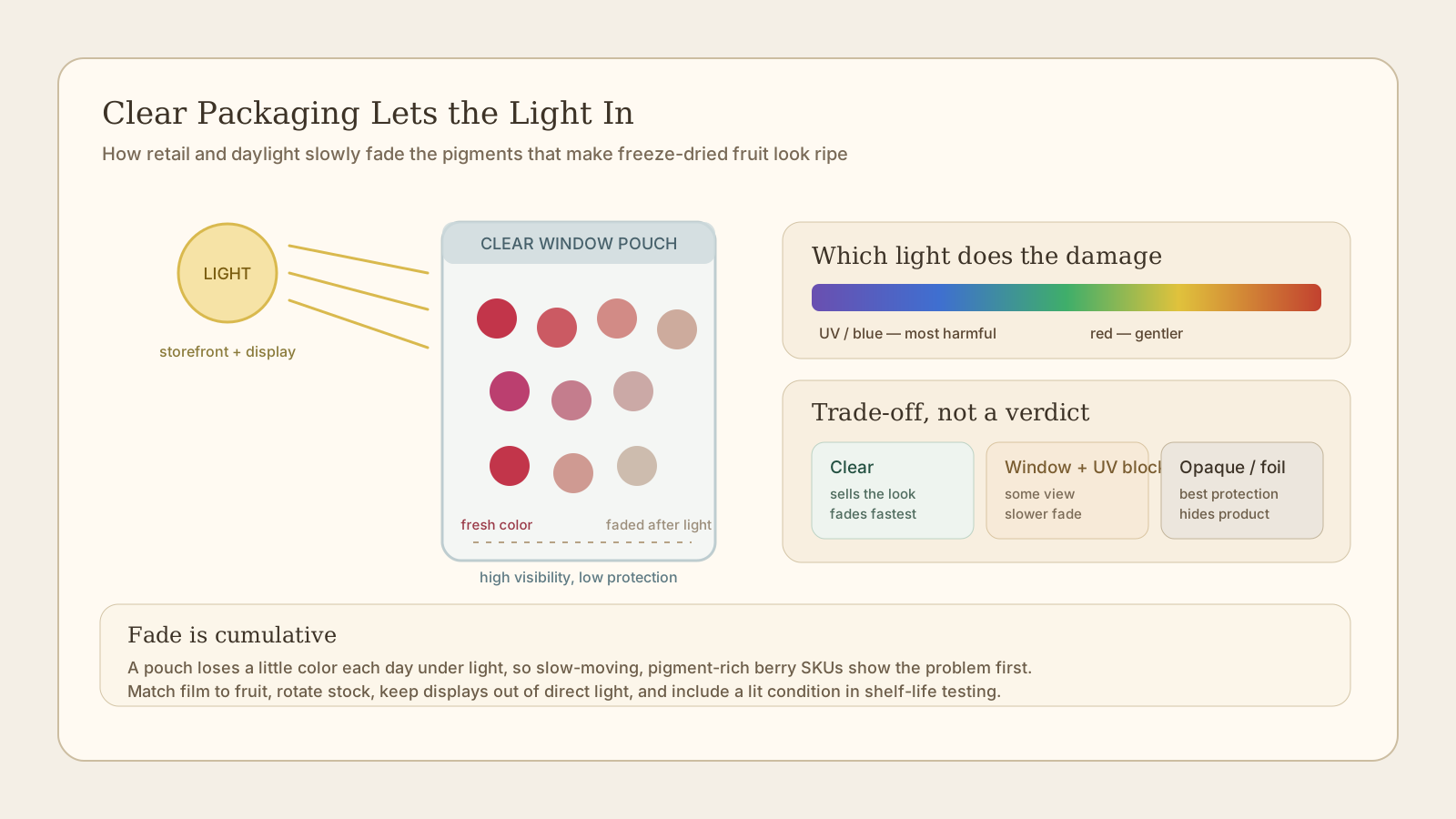
Not all light is equally hard on pigment. The higher the energy of the light, the more capable it is of breaking pigment bonds. Ultraviolet light is the most aggressive, and the blue end of visible light is harder on color than the warmer, lower-energy red end.
That matters because retail environments are full of exactly this kind of light. Daylight through a storefront window carries ultraviolet. Many display fixtures and cooler lights push energy toward the cooler, bluer part of the spectrum. A pouch parked under a bright spotlit display is getting a steady dose of the wavelengths that fade fruit fastest.
It also means the fade is cumulative. A pouch does not fail in an afternoon. It loses a little color each day it sits in the light, which is why slow-moving SKUs and back-of-shelf inventory tend to show the problem first.
Why clear packaging makes the trade-off sharp
Packaging sits on a spectrum from fully clear to fully opaque, and color protection rises as visibility falls.
A fully clear pouch maximizes shelf appeal and minimizes protection. A fully opaque metallized or foil structure protects color and aroma well but hides the product completely. Between them sit windowed pouches, tinted films, and structures with ultraviolet-blocking layers or inks that cut the worst wavelengths while still showing some product.
The reason this trade-off feels sharp for freeze-dried fruit is that the category sells partly on looks. The color is part of the value proposition. So going fully opaque to protect color can undercut the merchandising that drives the first purchase, while staying fully clear can leave the product looking tired before it sells through.
There is no universally correct answer between visibility and protection. The right call depends on the fruit's pigment, how fast the SKU turns, and how harsh the lighting is where it sells. The mistake is treating clear packaging as free, when it carries a real color cost for slow-moving, pigment-rich fruit.
What buyers and brands can actually do
The fade is manageable once it is treated as a known variable rather than a surprise.
Choose the film to match the fruit. A bright, anthocyanin-heavy berry product in a fully clear pouch is the highest-risk combination. For those SKUs, consider a smaller window, an ultraviolet-blocking layer, or a more protective structure, and reserve fully clear packaging for fruit that fades more slowly or sells through quickly.
Manage exposure, not just the bag. Stock rotation, display position away from direct spotlights and storefront daylight, and sensible inventory depth all reduce how long any single pouch sits under damaging light. A good film cannot fully rescue a product that sits for months under a bright display.
Test under light, not only in the dark. A warehouse shelf-life study run in a dark box will miss light-driven fade entirely. Including a lit condition that resembles the real selling environment turns fade from a complaint into a number the team can plan around.
Bottom line
Clear packaging is excellent at selling freeze-dried fruit and poor at protecting its color. Light, especially ultraviolet and the blue end of the spectrum, slowly breaks down the pigments that make the fruit look ripe, and the most pigment-rich red and purple fruits fade fastest.
The fix is not to abandon visibility, but to treat light exposure as a design choice. Match the film to the fruit's sensitivity, control how long pouches sit under harsh lighting, and run shelf-life testing that includes a lit condition. Do that, and the window keeps selling the product without quietly aging it on the shelf.
Frequently Asked Questions
Does light really fade freeze-dried fruit, or is that just oxygen?
Both matter. Oxygen drives oxidation, but light adds a separate pathway. Higher-energy light, especially ultraviolet and the blue end of visible light, can break the chemical bonds that give pigments their color. The two effects often work together, which is why a clear pouch under bright retail light can fade faster than the dryer endpoint alone would predict.
Which freeze-dried fruits fade fastest under light?
Fruits whose color depends heavily on anthocyanins, the red-to-purple pigments in strawberries, raspberries, blueberries, cherries, and similar fruit, are generally the most light-sensitive. Their stability is known to drop sharply with light exposure compared with dark storage.
If color fades, is the fruit unsafe to eat?
Color fade is usually a quality and appearance problem, not a safety problem. A pale pouch can still be within microbiological and moisture limits. The risk is commercial: the product looks older and less appetizing than it is, which affects repeat purchase more than safety.
Why use clear packaging at all if it lets light in?
Visibility sells. Shoppers want to see piece size, color, and that the bag is not full of powder. Clear or windowed packaging answers those questions instantly. The decision is a trade-off between merchandising and protection, not a simple right or wrong.
How can a buyer reduce light-driven fading without going fully opaque?
Options include a smaller window instead of a fully clear pouch, films or inks that block ultraviolet, faster stock rotation, display away from direct spotlights and daylight, and shelf-life testing that includes a lit condition so the fade rate is known rather than assumed.
Primary sources & further reading
- Factors affecting the stability of anthocyanins and strategies for improving their stability: A review Food Chemistry: X / ScienceDirect Referenced for the review's discussion that light, along with pH, temperature, and oxygen, is a major factor in anthocyanin degradation.
- Impact of Conventional and Advanced Techniques on Stability of Natural Food Colourants PubMed Central Referenced for the general point that natural fruit pigments are sensitive to light and that protective packaging and additives can slow color loss.
- Water Activity (aw) in Foods U.S. Food & Drug Administration Referenced for the distinction between safety thresholds and quality attributes such as color and texture in low-moisture foods.
External links open in a new tab. We do not receive compensation from any organization listed; sources are referenced because they are primary, current, and publicly verifiable.