- The importer of record and the FSVP importer may be the same entity, but FDA is clear that they are not automatically the same role.
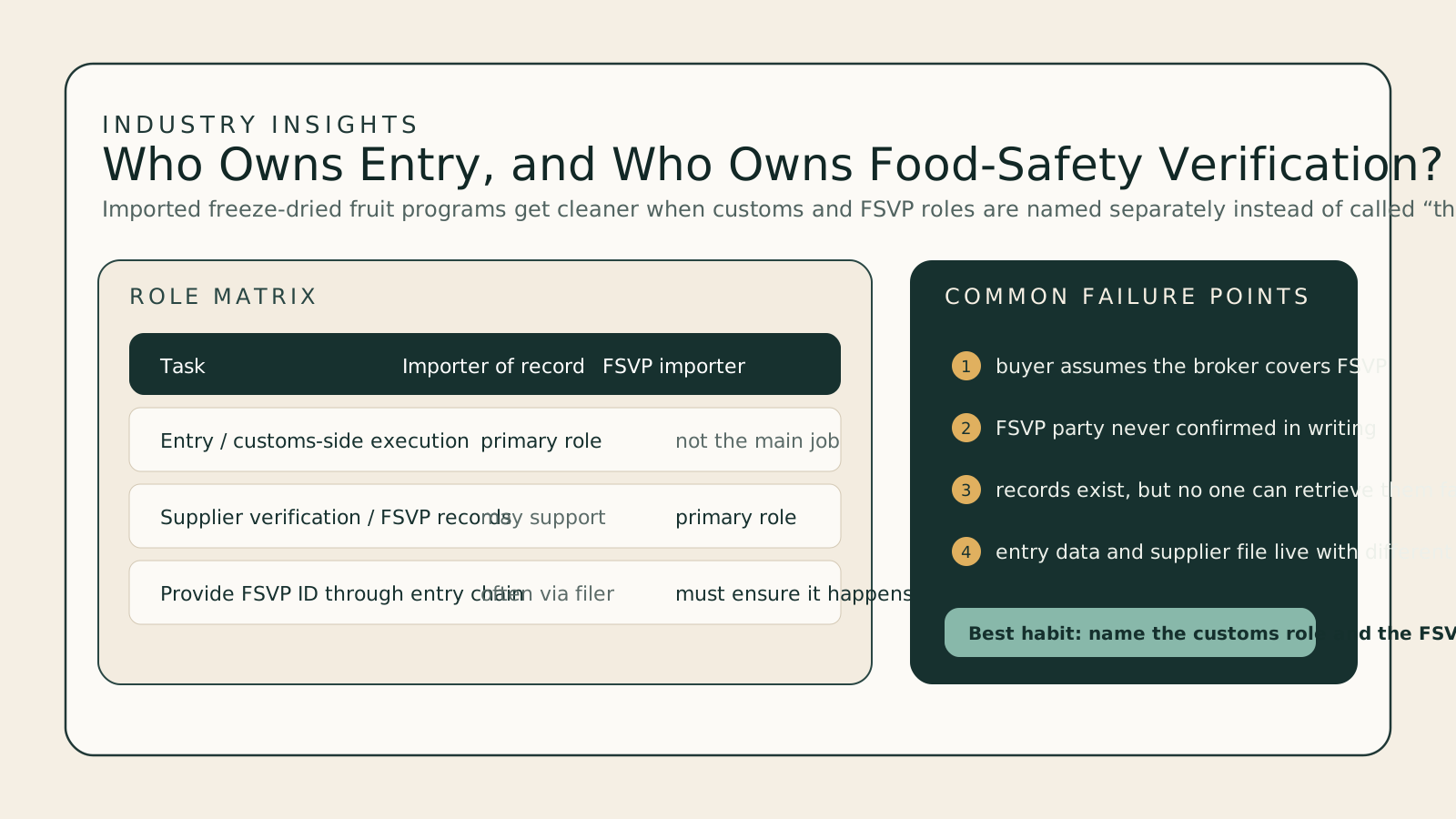
- The importer of record is tied to entry and customs responsibility, while the FSVP importer is responsible for verifying that the food was produced in line with applicable U.S. food-safety requirements.
- When the roles are split, buyers need written clarity on who provides FSVP identification at entry, who keeps verification records, and who answers FDA record requests.
- The biggest commercial mistake is assuming a broker, trader, or distributor is covering both roles without confirming it in writing.
In imported freeze-dried fruit, the first paperwork confusion is often also the most expensive one.
Teams say "the importer" as if it were one person.
It often is not.
The direct answer
The importer of record and the FSVP importer differ because they answer different questions.
The importer of record is the customs-entry role. The FSVP importer is the food-safety verification role under FDA's Foreign Supplier Verification Programs framework.
Those roles can sit with the same entity. FDA is explicit that they do not have to.
For buyers, the practical implication is simple: if imported freeze-dried fruit is moving into the United States, somebody must be clearly identified for:
- entry and customs-side execution
- FSVP ownership
- prior-notice and filer coordination
- records and FDA response
When those responsibilities are blurred, the shipment may still move. The problem appears later, when a hold, document request, or supplier deviation has to be answered quickly.
What the importer of record does
The importer of record is tied to the customs side of the transaction.
That role is the legal entry control point for CBP purposes, typically working directly or through a licensed customs broker. In a freeze-dried fruit transaction, that usually means the importer-of-record side is closest to:
- entry filing
- importer identification
- duty and fee handling
- customs documentation flow
- broker coordination
That does not automatically mean the same party understands the food-safety program behind the fruit.
FDA's FSMA FAQ makes the distinction directly: the importer of record may be the same as the FSVP importer, but it is not necessarily. FDA also notes that the CBP importer of record is not required by CBP to verify that the imported food was produced under applicable U.S. food-safety requirements.
That is the key line many commercial teams miss.
What the FSVP importer does
The FSVP importer is the food-safety owner under FDA's imported-food framework.
FDA defines that importer as the U.S. owner or consignee of the food at the time of entry, or, if there is no such U.S. owner or consignee, a designated U.S. agent or representative of the foreign owner or consignee who has signed to serve in that role.
That role owns the supplier-verification side of the import program, including the logic behind questions such as:
- Has the foreign supplier been properly evaluated?
- Is there an adequate hazard analysis?
- What verification activity supports ongoing approval?
- Are the required records available if FDA asks?
In other words, the FSVP importer is not mainly a freight role or a broker role. It is the party that must be able to show why importing the food is appropriately controlled.
Why freeze-dried fruit buyers get this wrong
Imported freeze-dried fruit commonly moves through layered supply structures:
- foreign manufacturer
- trader or export house
- U.S. importer or distributor
- private-label brand
- customs broker
- warehouse or repacker
That structure makes the word importer dangerously vague.
A brand may think the distributor is handling everything. A distributor may assume the named importer is the FSVP party. A broker may correctly file the entry but have no role in supplier verification. The foreign supplier may believe its U.S. agent is only a communication contact, not the FSVP importer.
Each assumption can sound reasonable until FDA asks for records or a shipment is detained.
Where the handoffs usually fail
The biggest failure points are usually not dramatic legal misunderstandings. They are ordinary operational gaps.
Examples:
- nobody confirmed who is listed as the FSVP importer for each line of the entry
- the commercial buyer assumed the importer of record was also keeping supplier-verification records
- the FSVP importer was named, but the broker or filer did not receive the correct identifying information
- the supplier-approval file existed, but not in a form retrievable fast enough for an FDA request
FDA's FSVP guidance is useful here because it explains that the FSVP importer is responsible for ensuring the identifying information is provided through the entry process, even if another party physically submits the data.
That means "our broker handles it" is not a complete answer.
What to lock down before the first purchase order
Before placing the first order for imported freeze-dried fruit, a buyer should know five things in writing:
- Who is the importer of record?
- Who is the FSVP importer?
- Who is providing the FSVP importer identification to the filer or broker?
- Who holds the supplier-verification records and can produce them quickly?
- Who answers FDA if the agency questions the shipment or requests records?
If those answers point to different parties, that is not automatically a problem.
The problem is leaving the split implicit.
Why prior notice adds another layer of confusion
Prior notice makes the chain look even more unified than it really is, because many kinds of parties can participate in that step. FDA's prior-notice guidance says that manufacturers, exporters, brokers, importers, U.S. agents, and others with the required information may submit it.
That flexibility is operationally useful.
It also means a team can mistake whoever handled prior notice for the party actually carrying the broader compliance burden.
Those are not the same thing.
The smartest buyer habit
The best habit is to stop asking, "Who is the importer?" and start asking:
- Who is the customs-entry party?
- Who is the FSVP party?
- Who will receive and answer FDA questions?
- Who can actually retrieve the records inside one business day?
Those questions sound more cumbersome, but they are much closer to the real operating model.
Bottom line
In freeze-dried fruit buying, the importer of record and the FSVP importer can be the same entity, but they do different jobs. One is the customs-entry control point. The other is the food-safety verification control point.
If the roles are split, the split should be explicit before the shipment moves. That clarity is not paperwork theater. It is what keeps an imported-food program from breaking under the first real test.
Frequently Asked Questions
Is the importer of record always the same as the FSVP importer?
No. FDA states they may be the same person or entity, but they are not necessarily the same. The customs-entry role and the food-safety verification role can sit with different parties.
What does the FSVP importer actually own?
The FSVP importer owns the supplier-verification responsibility for the food: hazard analysis, supplier evaluation, verification activities, records, and response when FDA asks to review the program.
What does the importer of record own?
The importer of record is the customs-side control point tied to the entry process. In practical terms that means the legal entry party for customs purposes, often working through a licensed broker.
Can a customs broker be the same as the FSVP importer?
Only if the commercial arrangement truly places that responsibility there and the necessary identification and verification obligations are intentionally assigned. Buyers should never assume the broker is automatically carrying FSVP.
Why does this matter for freeze-dried fruit?
Because imported freeze-dried fruit often moves through traders, co-packers, repackers, and distributors. If the document chain is vague, FDA compliance questions and commercial quality questions can land on the wrong party at the worst possible moment.
Primary sources & further reading
- Frequently Asked Questions on FSMA U.S. Food & Drug Administration Referenced for FDA's explanation that the FSVP importer is the U.S. owner or consignee, and that the importer of record may be, but is not necessarily, the same person or entity.
- Guidance for Industry: Foreign Supplier Verification Programs for Importers of Food for Humans and Animals U.S. Food & Drug Administration Referenced for FDA's practical examples of who qualifies as the FSVP importer, when a U.S. agent is required, and how FSVP importer identification is provided through the entry process.
- Importing Human Foods U.S. Food & Drug Administration Referenced for FDA's description of prior notice, entry review, and the import-time verification of applicable food requirements.
- Guidance for Industry: What You Need to Know About Prior Notice of Imported Food Shipments U.S. Food & Drug Administration Referenced for FDA's explanation that prior notice may be submitted by brokers, importers, manufacturers, exporters, and other knowledgeable parties, which is one reason role confusion can occur.
External links open in a new tab. We do not receive compensation from any organization listed; sources are referenced because they are primary, current, and publicly verifiable.