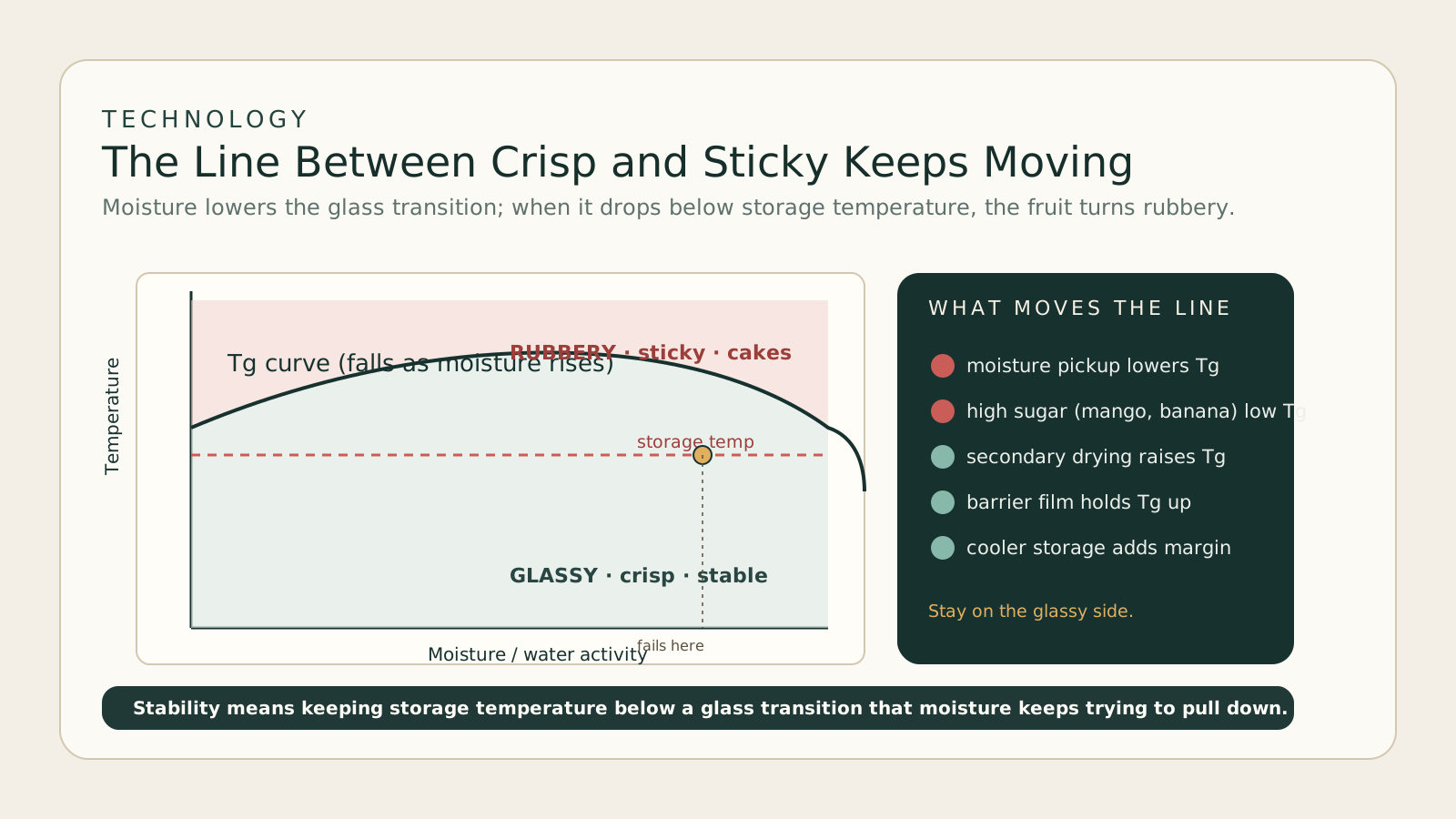
- Glass transition temperature (Tg) is the line between a brittle, crisp glass and a soft, mobile, rubbery state where stickiness and caking begin.
- Water is a strong plasticizer: every bit of moisture the fruit picks up lowers Tg, which is why a pack can fail even before it looks wet.
- High-sugar fruits like mango and banana have naturally low Tg, so they go sticky at conditions that crisp apple or strawberry tolerate.
- Practical stability means keeping storage temperature comfortably below the product's moisture-dependent Tg, which is a packaging and supply-chain job, not just a drying one.
Most explanations of freeze-dried fruit stability stop at water activity. Keep the water activity low, the story goes, and the product stays crisp. That is true as far as it goes, but it leaves a gap. Two packs at the same water activity can behave very differently — one stays glassy and snappy, the other turns tacky on a warm shelf. The variable that explains the difference is glass transition temperature.
The direct answer
Glass transition temperature, written Tg, is the temperature at which the dry, amorphous fruit matrix switches between two physical states. Below Tg the material is a hard, brittle glass: its molecules are effectively frozen in place, diffusion is extremely slow, and the fruit stays crisp and stable. Above Tg the material becomes rubbery: molecular mobility jumps by orders of magnitude, and the matrix can soften, flow, stick to itself, and cake.
A freeze-dried fruit piece is stable when its storage temperature sits comfortably below its Tg. It gets into trouble when storage temperature rises toward Tg, or — more commonly — when Tg falls toward the storage temperature. And the thing that pulls Tg down is moisture.
Why freeze-dried fruit is a glass in the first place
When fruit is frozen and then dried under vacuum, water leaves by sublimation without the sugars getting a chance to crystallize. The result is an amorphous solid: sugars, acids, and cell-wall fragments locked into a disordered, porous, glassy network. That glassy state is exactly what gives good freeze-dried fruit its clean snap.
Amorphous solids do not have a sharp melting point the way crystals do. Instead they soften over a temperature range, and Tg marks the middle of that range. This is why the same chemistry that makes freeze-dried fruit crisp also makes it vulnerable: a glass is only a glass while it stays cold and dry enough.
Water is the plasticizer that moves the line
The most important practical fact about Tg is that it is not fixed. Water is a powerful plasticizer, meaning it lubricates molecular movement and lowers the temperature at which the matrix turns rubbery. As the fruit picks up moisture, its Tg drops.
A pack can cross its glass transition before it ever looks wet. The fruit can still appear dry and intact while its Tg has already dropped below room temperature, putting it in the rubbery state where stickiness and slow caking begin. By the time moisture is visible, the transition happened a while ago.
This is the mechanism behind a familiar complaint: a bag that was perfect at packing turns tacky weeks later. Nothing dramatic happened. The product slowly absorbed moisture — through an imperfect seal, a marginal barrier film, or repeated reopening — and each increment nudged Tg downward until it crossed the warehouse or pantry temperature.
Why high-sugar fruits fail first
Not all fruits build the same glass. The matrix is dominated by whatever makes up most of the dissolved solids, and in ripe fruit that is sugar. Simple sugars differ a lot in their individual glass transitions: fructose and glucose have low Tg values, while larger molecules sit higher.
Fruits like mango, banana, and very ripe pineapple are heavy in fructose and glucose, so their finished glass has a naturally low Tg. They reach the sticky, rubbery state at warmer, wetter conditions than lower-sugar fruits such as apple or strawberry. This is the same chemistry that makes high-sugar fruits harder to freeze-dry in the first place, now showing up on the storage side. A mango piece and an apple piece can share a water activity and still live on opposite sides of their respective transition lines at the same shelf temperature.
Tg versus collapse versus water activity
These three ideas get blurred together, so it helps to separate them.
Collapse temperature is a processing limit. It governs how warm you can run the product during primary drying before the porous structure slumps in the chamber. It is essentially the glass transition of the maximally freeze-concentrated, still-frozen material.
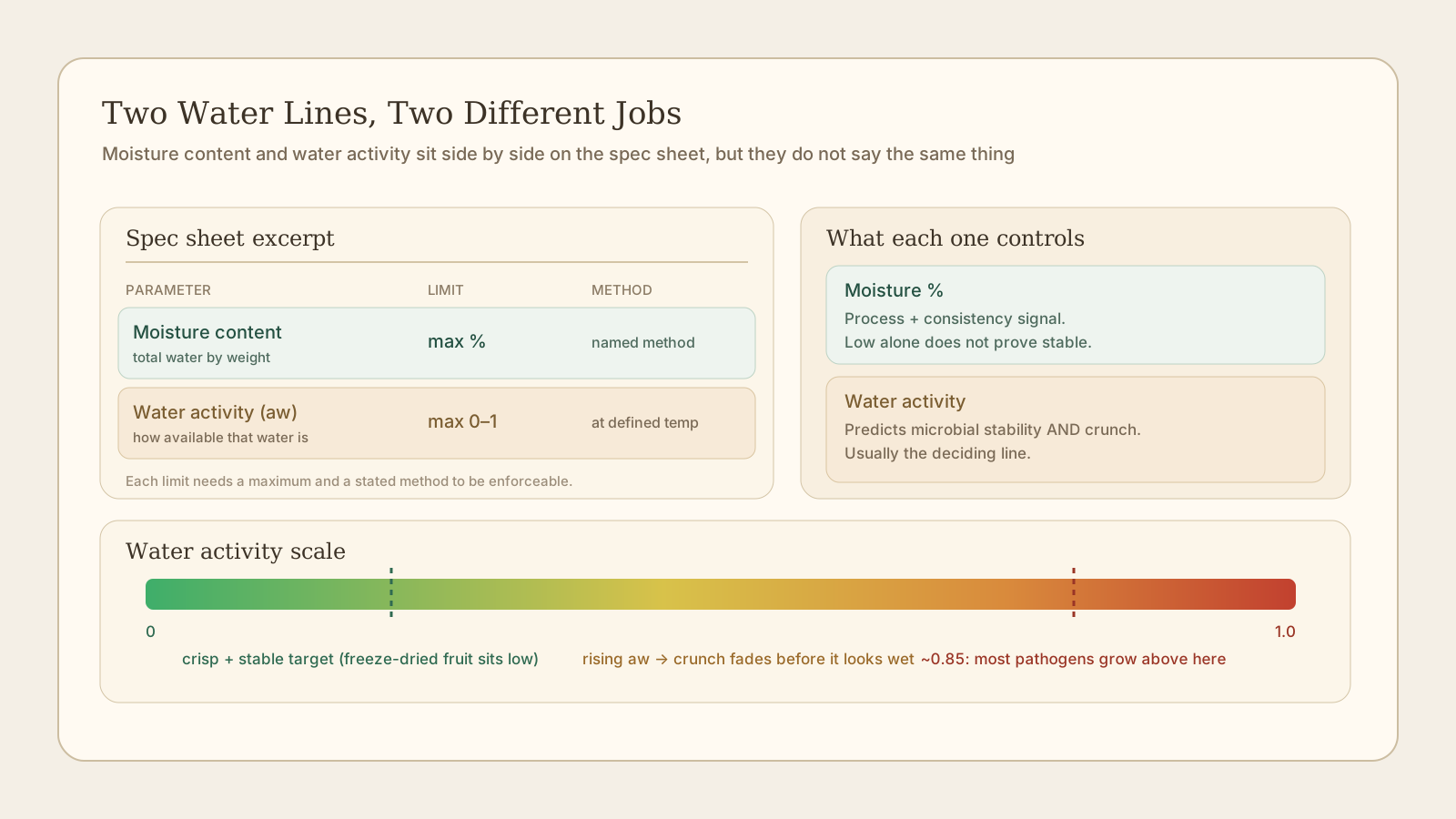
Water activity is a measure of how available the remaining water is — useful for predicting microbial safety and for comparing how "dry" two products are at equilibrium.
Glass transition temperature is the broader physical-state concept that connects them and extends into storage. It is what actually predicts whether the finished, packaged fruit will stay crisp or turn rubbery under a given temperature and moisture. Water activity and Tg move together, which is why low water activity usually means good crunch — but Tg is the variable doing the mechanical work.
What this means for keeping fruit crisp
If stability is a glass-transition problem, then the levers are clear.
The first lever is moisture, driven low in drying and then defended. Secondary drying does the first part by stripping bound water so the starting Tg is as high as possible. Barrier packaging does the second part by keeping ambient moisture from creeping back in and dragging Tg down over time.
The second lever is temperature, which the brand and the supply chain control after the factory. Even a well-dried, well-packed product can be pushed toward its transition by a hot truck, a sunny display, or a warm storeroom. Keeping the product meaningfully below its Tg is partly a logistics decision.
The third lever, available mainly for powders and formulated crisps, is composition. Adding a high-molecular-weight carrier such as maltodextrin raises the blend's Tg and buys stability margin. That is a deliberate formulation choice with label consequences, and it does not apply to plain single-ingredient fruit.
The takeaway
Crunch and shelf stability in freeze-dried fruit are not really about being dry in the abstract. They are about staying on the glassy side of a moving line. Tg sets that line, sugar chemistry sets where it starts, and moisture is constantly trying to push it down toward the temperature your product actually lives at. Understanding that one relationship explains most of what otherwise looks like random batch-to-batch stickiness.
Frequently Asked Questions
What is glass transition temperature in freeze-dried fruit?
It is the temperature at which the dry, amorphous fruit matrix changes between a hard, brittle glass and a soft, rubbery state. Below it, molecular movement is so slow the product behaves like a solid glass and stays crisp. Above it, mobility rises sharply and the product can flow, stick, and cake.
Why does moisture matter so much?
Water is a plasticizer. As the fruit absorbs moisture, its glass transition temperature drops. A product that was stable at room temperature when very dry can cross into the rubbery state after picking up only a small amount of water, which is why stickiness can appear before the fruit looks visibly wet.
Why do mango and banana go sticky faster than apple?
Their amorphous matrix is dominated by simple sugars like fructose and glucose, which have low glass transition temperatures. That pulls the whole product's Tg down, so high-sugar fruits reach the sticky, rubbery state at warmer and wetter conditions than lower-sugar fruits.
Is glass transition the same as collapse during freeze-drying?
They are related but not identical. Collapse temperature governs how fast you can dry without the structure slumping in the chamber. Glass transition is the broader concept that also governs storage behavior — stickiness, caking, and crunch loss — in the finished, packaged product.
How do processors raise glass transition temperature?
Mainly by driving moisture lower and keeping it there with good barrier packaging. Some formulated products also add high-molecular-weight carriers such as maltodextrin, which raise the blend's Tg, though that changes the label and is mostly relevant to powders and crisps rather than plain fruit.
Primary sources & further reading
- Implication of glass transition for the drying and stability of dried foods Journal of Food Engineering Referenced for the role of glass transition in dried-food stability and the principle that products should be stored below their moisture-dependent Tg to avoid collapse and flow.
- Implication of water activity and glass transition on the mechanical and optical properties of freeze-dried apple and banana slices Journal of Food Engineering Referenced for fruit-specific evidence that mechanical properties (crispness) of freeze-dried apple and banana change as water activity and glass transition shift.
- Glass Transition and Sticky Point Temperatures and Stability/Mobility Diagram of Fruit Powders Food and Bioprocess Technology Referenced for the relationship between glass transition, sticky-point temperature, moisture, and water activity in fruit-based amorphous matrices.
External links open in a new tab. We do not receive compensation from any organization listed; sources are referenced because they are primary, current, and publicly verifiable.