- Foaming a purée before freezing builds an open, porous structure that lets water vapor escape more freely during drying.
- The technique is mainly used for fruits that are hard to slice cleanly, such as high-pulp tropical fruits, berries reduced to purée, and juices.
- A foamed sheet usually dries into a light, brittle flake that mills into powder predictably, but the foam needs a stabilizer and even spreading to behave.
- Buyers evaluating a foamed product should ask about bulk density, any foaming or stabilizing agents, and how consistently the sheet thickness is controlled.
Most people picture freeze-dried fruit as a slice or a whole berry. But a large share of the colorful crisps, melts, and powders on the market never existed as a neat slice at all. They started as a purée or a juice, and they were foamed before drying.
Foam-mat freeze-drying is the bridge between liquid or pulpy fruit and a brittle, shelf-stable solid. Understanding it explains a lot about why some "freeze-dried fruit" products behave so differently from a freeze-dried strawberry half.
The direct answer
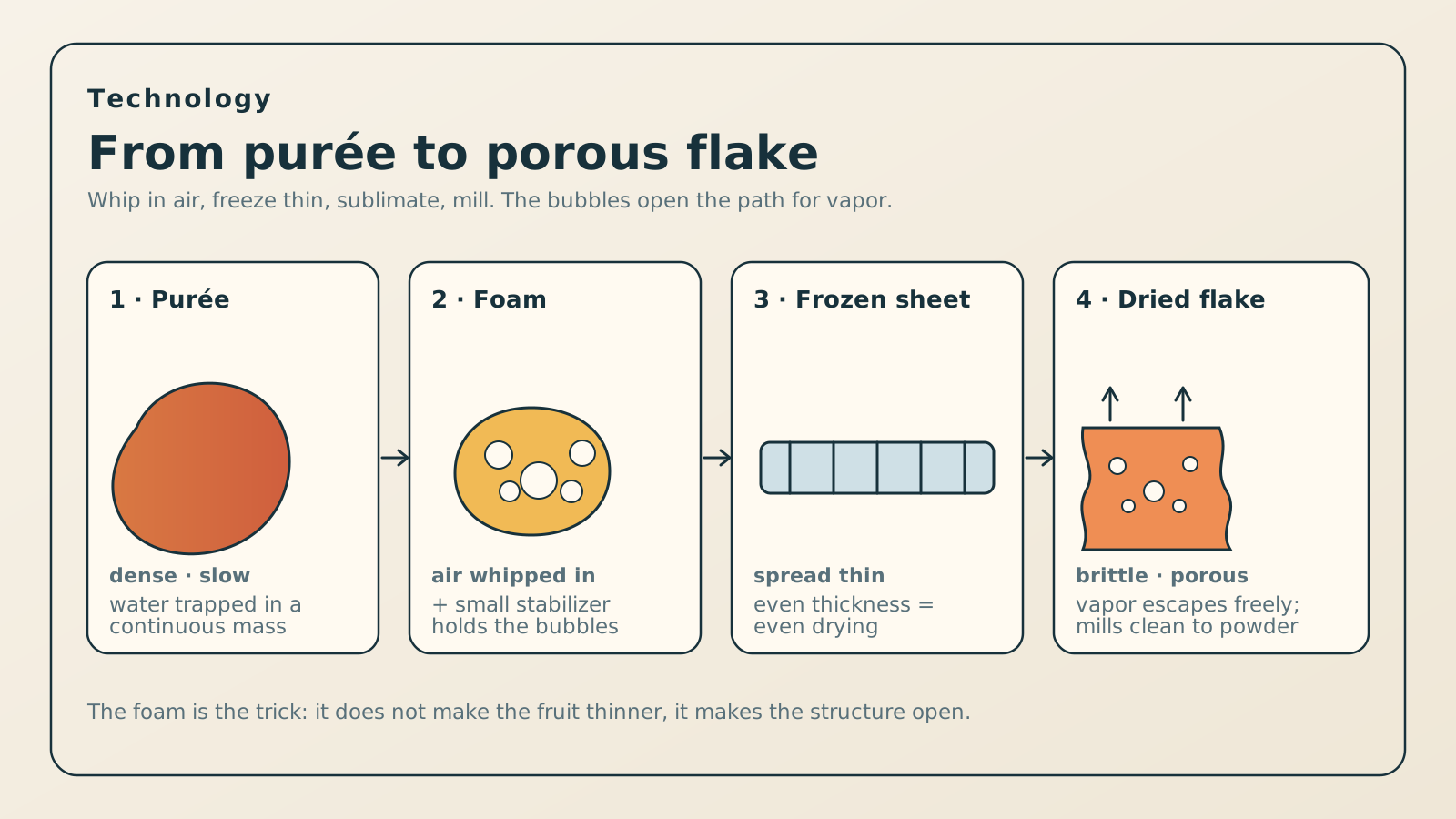
Foam-mat freeze-drying whips a fruit purée or juice with air, usually with a small amount of a foaming or stabilizing agent, then spreads that foam as a thin sheet, freezes it, and freeze-dries it. The trapped air bubbles create an open, porous structure that gives water vapor many more escape paths during sublimation.
The result is faster, more even drying and a finished product that is light, brittle, and easy to mill. The trade-off is that the product is reconstituted from purée, so it no longer shows the original fruit's shape.
Why a plain purée is hard to dry
A dense purée is one of the harder things to freeze-dry well. Water is held throughout a thick, continuous mass, and as the surface dries it can form a tight skin that slows vapor escape from the interior. That tends to produce long cycles and uneven texture, sometimes with a hard or glassy surface over a softer center.
Slicing solves this for firm fruits because thin pieces shorten the path moisture has to travel. But you cannot cleanly slice a passion fruit pulp, a berry reduction, or a juice. Foaming is the workaround: instead of making the fruit thinner, you make it more open.
What the foam actually does
Whipping air into the purée builds a network of bubbles. Once that foam is spread thin and frozen, the structure locks in place. During drying, the bubble walls give vapor a connected set of channels to travel through, rather than forcing it to diffuse through a solid block.
That open structure helps in a few ways at once:
- vapor escapes more freely, which can shorten drying time
- drying is more uniform across the sheet, reducing soft centers
- the finished sheet is light and brittle, so it fractures and mills cleanly
The role of foaming and stabilizing agents
Foam is only useful if it survives long enough to freeze. Many fruit purées do not hold air well on their own, so a small amount of a foaming agent or stabilizer is often added to keep the bubbles from collapsing or coalescing before the sheet is frozen.
This is an honest point for buyers and formulators to track. A foamed product may carry ingredients beyond the fruit itself, and those should appear on the label. Some operators rely on proteins or food-grade hydrocolloids as stabilizers; others lean on the fruit's own pectin and pulp. The right question is not whether help was used, but whether it is disclosed and appropriate for the intended claim.
A foamed crisp or melt can still be a clean, mostly-fruit product, but it is more likely than a plain slice to contain a small functional ingredient. If a label says "100% fruit," that should hold true for a foamed product too, not just for slices.
Sheet thickness and spreading control
Because the foam is dried as a sheet, how evenly it is spread matters as much as the foam quality. A sheet that is thick in some spots and thin in others will dry unevenly, leaving some areas brittle and others slightly soft. That unevenness shows up later as inconsistent texture, variable moisture, and a powder that does not mill predictably.
Good foam-mat operations control the spread thickness tightly and treat it as a process variable, not a cosmetic detail. It is one of the clearest separators between a consistent foamed product and a variable one.
What the finished product is good for
Foamed freeze-dried fruit is not trying to be a whole-piece showcase. It plays to different strengths:
- Crisps and melts that dissolve quickly in the mouth or in liquid
- Powders that mill cleanly from the brittle flake for color, flavor, or blending
- Reconstituted formats for fruits that simply cannot be sliced
That is why foamed products often appear in melt-style snacks, drink powders, and bakery or dairy inclusions, rather than as a bag of recognizable slices.
How buyers should evaluate a foamed product
A foamed product should be judged on its own terms rather than against a sliced one. The useful questions include:
- Bulk density: foamed products are light and airy, which affects fill weight, packaging, and freight.
- Declared ingredients: any foaming or stabilizing agent should be on the label and consistent with the product's claims.
- Sheet and milling consistency: ask how thickness is controlled and how the flake mills if powder is the deliverable.
- Moisture and water activity: an open structure dries well but is still hygroscopic, so the stability target still has to be met and held.
A foamed product that is light, evenly dried, cleanly milling, and honestly labeled can be excellent. The structure is a feature, not a shortcut.
Bottom line
Foam-mat freeze-drying exists because purées and juices do not slice. Whipping in air and freezing the foam opens the structure so vapor escapes faster and the finished product comes out light, brittle, and easy to mill. The technique widens what "freeze-dried fruit" can include, but it also means buyers should pay attention to bulk density, any added foaming agents, and how tightly the sheet is controlled, rather than assuming the product behaves like a freeze-dried slice.
Frequently Asked Questions
What is foam-mat freeze-drying?
It is a method where a fruit purée or juice is whipped with air, and usually a small amount of a stabilizer, into a foam before it is spread thin, frozen, and freeze-dried. The foam structure makes drying faster and the finished product lighter and more brittle.
Why foam the purée instead of freeze-drying it flat?
A dense purée traps water and dries slowly, often with a hard or glassy surface. Foaming opens the structure so vapor has more escape paths, which shortens drying and gives a more uniform, brittle result.
Does foam-mat drying need additives?
Often a small amount of a foaming or stabilizing agent is used to hold the air bubbles long enough to freeze. Some fruits foam adequately on their own, but many purées need help to keep the foam from collapsing before freezing.
Is foamed freeze-dried fruit the same as sliced freeze-dried fruit?
No. Foamed product starts from purée or juice, so it is reconstituted rather than a whole intact piece. It is typically used for crisps, melts, and powders, not for showcasing original fruit shape.
How should a buyer judge a foamed product?
Look at bulk density, any declared foaming or stabilizing ingredients, sheet-thickness consistency, moisture and water activity targets, and how the flake mills if powder is the goal.
Primary sources & further reading
- Water Activity (aw) in Foods U.S. Food & Drug Administration Referenced for the framing of water activity as available moisture, which governs the stability target a foamed product still has to meet.
- Foam-Mat Drying of Fruits and Vegetables: A Review Journal of Food Science and Technology / PubMed Referenced for the general description of foam-mat drying, the role of foaming agents and stabilizers, and how foam structure speeds moisture removal.
- Freeze-Drying of Plant-Based Foods Foods / PubMed Referenced for background on how porous structure and sublimation behavior shape freeze-dried plant products.
External links open in a new tab. We do not receive compensation from any organization listed; sources are referenced because they are primary, current, and publicly verifiable.