- Incoterms change tasks, costs, and risk transfer; they are part of the commercial offer, not shipping fine print.
- EXW, FOB, CIF, and DDP can all be workable for freeze-dried fruit, but they fit different importer capabilities and different levels of supplier support.
- A term that looks convenient can still hide exposure around customs, insurance, delays, claims, and importer-of-record responsibility.
- Buyers should compare quotes only after confirming the named Incoterm, place, documentation scope, and who is truly handling customs clearance and import compliance.
Freeze-dried fruit buyers often compare quotes as if the only commercial variable is the number on the page. In practice, the shipping term can move the real offer almost as much as the fruit spec.
That matters because freeze-dried fruit is light, bulky, packaging-sensitive, and frequently imported across long ocean or air routes. Small misunderstandings around freight control, insurance, customs, or delivery responsibility can erase whatever savings made the quote attractive in the first place.
The direct answer
EXW, FOB, CIF, and DDP change a freeze-dried fruit quote by reallocating tasks, costs, and risk between seller and buyer. The fruit may be identical. The commercial burden is not.
A buyer comparing international offers should treat the Incoterm as part of the price, not as an afterthought below the price.
What Incoterms actually do
The U.S. International Trade Administration describes Incoterms as internationally recognized rules that define the responsibilities of buyers and sellers in export transactions. Trade.gov also notes that the terms clarify tasks, costs, and risks.
That sounds abstract until a container is delayed, a document is missing, an insurance claim needs to be filed, or a pallet of pouches arrives with more compression damage than expected. Then the term becomes concrete very quickly.
For freeze-dried fruit, the important point is simple:
- the product spec tells you what fruit you are buying
- the Incoterm tells you how much of the logistics burden you are buying with it
Why this is especially important in freeze-dried fruit
Freeze-dried fruit is not a generic dense commodity. It travels with some particular pressures:
- pouches can be crush-sensitive
- bulk formats can be moisture-sensitive once mishandled
- shipments are often volumetric rather than heavy
- food documentation and import compliance matter
- delays can create inventory and launch risk even when the product remains microbiologically stable
That means the cost of a weak logistics structure often appears as working-capital drag, stockouts, complaint handling, or claim friction rather than as one simple invoice line.
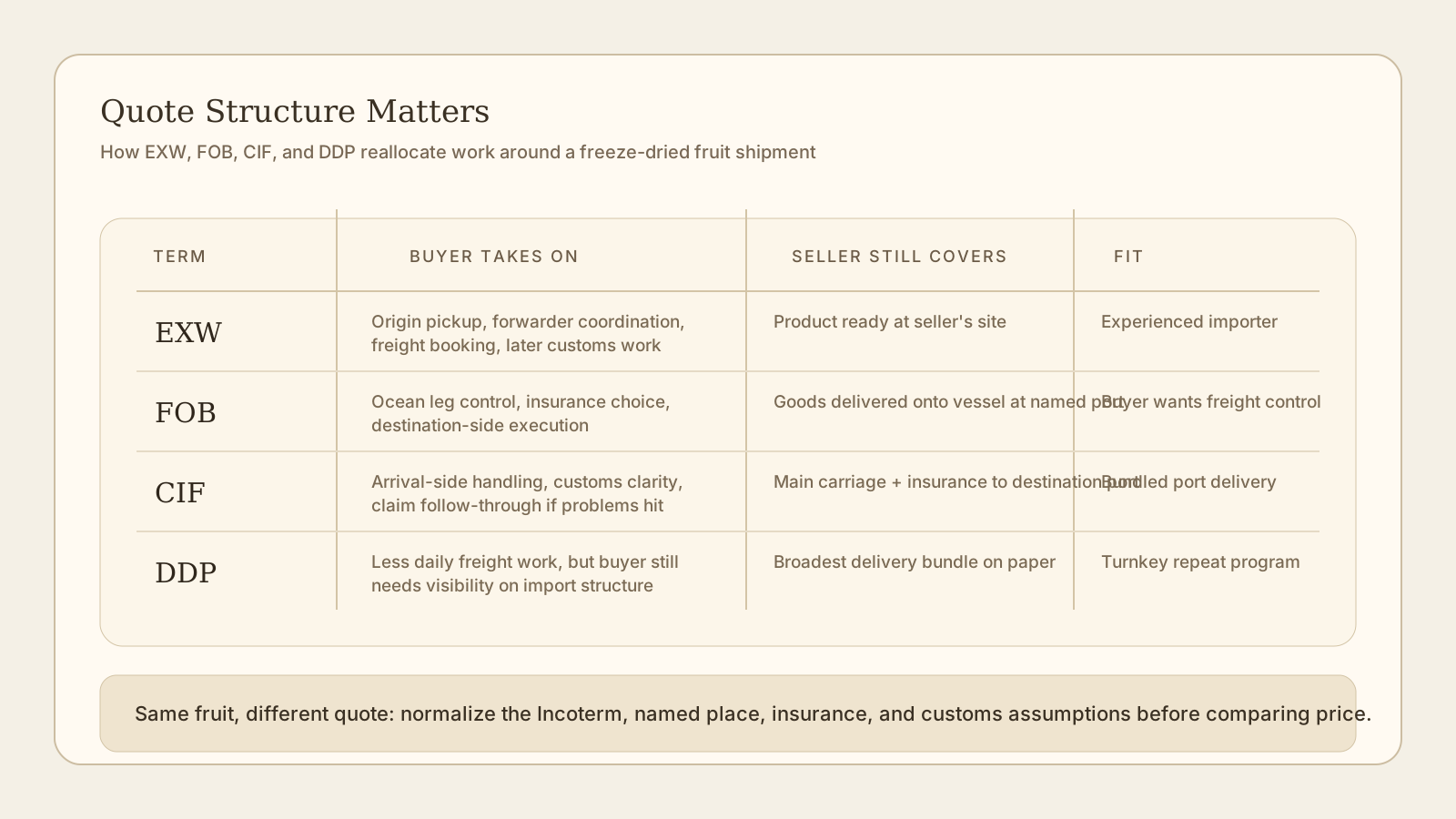
EXW: lowest seller commitment, highest buyer coordination
Under EXW (Ex Works), the seller's job is minimal relative to the later terms. The buyer takes control very early.
In a freeze-dried fruit context, that usually means the buyer or the buyer's forwarder must manage more of the chain:
- origin pickup
- export-side coordination
- freight booking
- document follow-up
- delay escalation
EXW can work for buyers with strong import systems and trusted forwarders. It is less forgiving for smaller brands or first-time buyers who mainly wanted fruit, not a logistics project.
FOB: common shorthand, but still a real dividing line
FOB (Free On Board) is one of the most familiar terms in food importing conversations. In practical buyer language, it often means the seller gets the goods to the named port and onto the vessel, while the buyer takes the main carriage and the later downstream costs and risks from there.
For freeze-dried fruit, FOB often feels like a middle ground:
- the supplier handles more than EXW
- the buyer still keeps control of the main freight leg
- the buyer can use its own forwarder, rate structure, and customs partners
The risk is that some teams use "FOB" loosely. Buyers should confirm the named port, who is booking what, and what documents are actually included before comparing the price with another offer.
CIF: more support, but not a blank check
CIF (Cost, Insurance and Freight) looks simpler because the seller covers more of the freight package and includes insurance. ICC's Incoterms 2020 materials also highlight that insurance terms differ by rule and need to be understood, not assumed.
For freeze-dried fruit, CIF can be useful when the buyer wants fewer origin-side logistics decisions and a clearer delivered-to-port structure. But CIF does not remove the need to read carefully.
The buyer still needs to know:
- what insurance level is actually in place
- what exclusions may exist
- how claims are made
- what happens after arrival at the destination port
That matters because a shipment can be technically insured and still operationally painful to resolve.
DDP: convenient on paper, but only when the structure is real
DDP (Delivered Duty Paid) often looks like the most comfortable term because the seller takes the broadest visible delivery burden.
That can be attractive for buyers who want one landed number, limited coordination, and a simpler receiving experience. For some freeze-dried fruit programs, especially routine repeat buys, DDP may be the cleanest commercial model.
But convenience can hide questions if the quote is not transparent:
- Who is acting as importer?
- Who is paying duties, taxes, and brokerage in practice?
- Which inland delivery assumptions are built into the number?
- What happens if customs holds the shipment?
CBP's importer guidance is a useful reminder here: even when a broker is used, importer responsibilities do not disappear just because a shipment felt turnkey in the quote stage.
The quote is not comparable until the term is comparable
This is where many buying discussions go wrong.
Supplier A may look cheaper than Supplier B, but the offers are not comparable if:
- one quote is EXW and the other is CIF
- one quote includes insurance and the other does not
- one quote ends at port arrival and the other includes inland delivery
- one quote assumes the buyer will handle customs clearance directly and the other assumes a managed import model
A fair comparison starts only after the team normalizes the logistics structure.
What freeze-dried fruit buyers should confirm in writing
Before treating any quote as final, confirm:
- the exact Incoterm
- the named place, port, or delivery point
- the document package included
- whether insurance is included and at what level when relevant
- who is handling customs clearance
- who is paying duties, taxes, and brokerage
- whether inland delivery is included or excluded
ICC's Incoterms 2020 materials are useful here because they make the cost articles more explicit than older rule sets. That helps buyers ask better questions instead of relying on industry shorthand.
Which term fits which buyer
There is no universal best term.
EXW often fits experienced importers with strong forwarders and a desire for maximum control.
FOB often fits buyers who want the supplier to handle origin-side execution but want to control freight and arrival-side partners themselves.
CIF often fits buyers who want more bundled support without going fully door-to-door.
DDP often fits buyers who want the cleanest day-to-day transaction and trust the supplier's logistics system enough to price that convenience fairly.
That is a fit question, not a prestige question.
If the team is debating price before it has aligned the Incoterm, named place, and customs assumptions, it is comparing incomplete offers.
Bottom line
EXW, FOB, CIF, and DDP change a freeze-dried fruit quote because they change who carries logistics work, cost exposure, and risk at each stage of the shipment.
The smarter buying habit is to normalize the term before comparing the price. That usually reveals whether the cheapest quote is actually the cheapest program.
Frequently Asked Questions
Why do Incoterms matter in freeze-dried fruit buying?
Because they define who handles shipping tasks, documents, insurance, customs work, and risk at each step. A case price is not directly comparable if the terms around it are different.
Is DDP always the easiest option for buyers?
Not automatically. DDP can simplify the buyer's day-to-day work, but the buyer still needs clarity on who is acting as importer, how duties and fees are handled, and whether the supplier's logistics model is transparent and reliable.
Why is EXW often harder than it first sounds?
Because the buyer or the buyer's forwarder takes control very early. That can create more work around origin pickup, export coordination, documentation, and delay management.
Does CIF mean the shipment is fully protected?
No. CIF includes insurance, but the insurance terms and the practical claim process still need to be understood. Buyers should confirm what level of coverage actually applies.
What should be written into the quote besides the term itself?
The named place or port, the product spec, pack format, document list, insurance expectations when relevant, and any assumptions about duties, customs brokerage, and inland delivery should all be explicit.
Primary sources & further reading
- Know Your Incoterms International Trade Administration, U.S. Department of Commerce Referenced for the basic function of Incoterms in defining tasks, costs, and risks between buyers and sellers.
- Incoterms 2020 International Chamber of Commerce Referenced for ICC's current framework, including explanatory notes, cost articles, and rule-specific differences such as insurance treatment.
- Tips for New Importers and Exporters U.S. Customs and Border Protection Referenced for CBP's reminder that the importer of record remains responsible for entry correctness and applicable duties, taxes, and fees.
External links open in a new tab. We do not receive compensation from any organization listed; sources are referenced because they are primary, current, and publicly verifiable.