- Freeze-dried fruit can appear dry before the batch has actually cleared the end of primary drying and stabilized through final moisture removal.
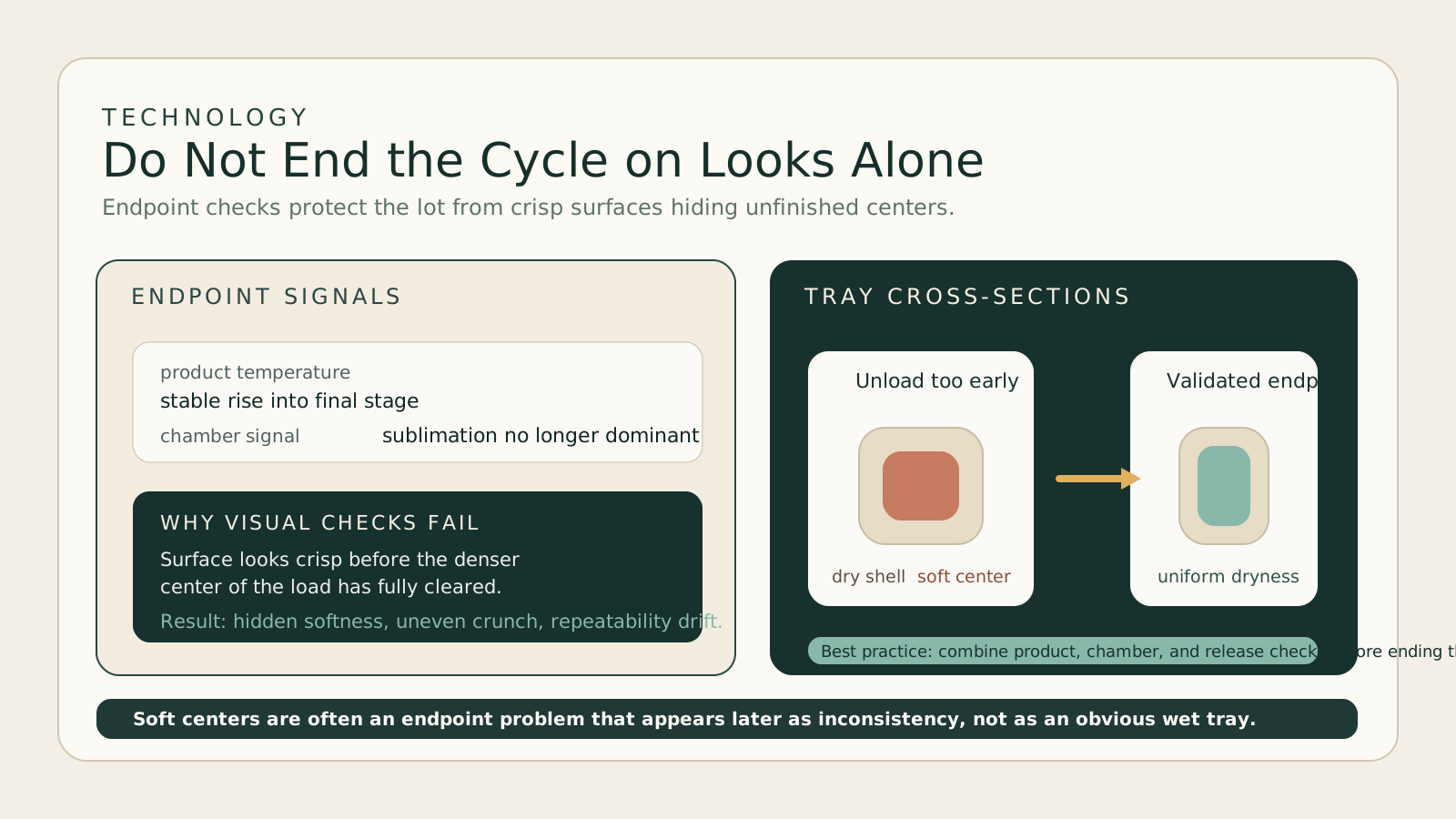
- Useful endpoint decisions combine product-temperature logic, chamber signals, and a defined release routine rather than relying on one instrument or one visual check.
- Weak endpoint control often shows up later as soft centers, uneven crunch, or lot-to-lot texture drift rather than as an obvious factory failure.
- Buyers do not need a supplier's proprietary recipe, but they should expect a credible answer for how dry endpoints are confirmed before unload and packout.
A tray of freeze-dried fruit can look clean, pale, and almost finished while the batch is still one bad decision away from texture trouble.
That is the uncomfortable part of endpoint control: the visual cues that reassure people at unload are not always the cues that protect the lot.
The direct answer
Endpoint checks prevent soft centers in freeze-dried fruit by confirming that the batch has actually moved through the critical end of drying rather than only appearing dry at the surface. In practice, that means pairing product-temperature logic with chamber behavior, defined verification routines, and post-cycle confirmation instead of trusting one indicator by itself.
The exact method varies by system, but the operational principle is stable: do not unload on appearance alone.
Why the center can lag the surface
Freeze-dried fruit does not dry as one uniform shell.
Even within a single tray, pieces differ in:
- thickness
- sugar concentration
- contact with the tray
- position in the load
- exposure to heat and vapor flow
That matters because the outside of a slice or cube may already look dry while deeper structure is still clearing the last part of primary drying or moving unevenly into secondary drying. Reviews on plant-based freeze-drying describe the process as a balance of product temperature, chamber conditions, and structural limits. That same logic is why a visually convincing tray can still hide unfinished drying work.
For fruit, the commercial problem is rarely a dramatic wet center that everyone notices immediately. It is more often a softer bite, an uneven crunch profile, or a lot that drifts faster in storage than the first sample suggested.
Endpoint control is broader than one instrument
The strongest freeze-drying teams do not ask one instrument to carry the entire decision.
They usually build the endpoint from multiple signals, such as:
- product-temperature behavior
- chamber-pressure behavior
- pressure-based endpoint checks
- defined hold time at the end of the cycle
- final product-release testing
The scientific literature on lyophilization endpoint detection is useful here even though much of it comes from adjacent sectors. The key lesson is not that every fruit processor should copy a pharmaceutical routine line by line. The lesson is that drying endpoints become more trustworthy when the decision is supported by several complementary signals rather than by a single hopeful one.
The cited endpoint literature is broader lyophilization research, not a fruit-only operating manual. The article's buyer-facing recommendations are an editorial inference from those validated freeze-drying principles.
Product temperature still does a lot of the real work
One of the easiest mistakes in freeze-drying conversations is treating the machine setpoint as if it were the product condition.
It is not.
Shelf settings, chamber pressure, and cycle time matter only insofar as they produce the right product temperature history and the right removal of ice and bound moisture. That is why serious process design focuses on the product's safe window, not only on the machine's headline settings.
For freeze-dried fruit, product-temperature attention matters because:
- it helps show whether sublimation is still actively consuming energy
- it helps signal when the product is approaching a real transition in the cycle
- it helps prevent the process from being judged only by elapsed time
If a supplier talks confidently about total cycle hours but vaguely about how the end of the cycle is confirmed, the technical story is incomplete.
Pressure signals help, but they are not magic
Pressure-based checks are valuable because the chamber itself changes behavior as drying approaches completion. Research on endpoint determination discusses approaches such as pressure rise and related chamber-signal logic for identifying whether substantial sublimation is still underway.
That is useful because pressure behavior can reveal something the surface cannot: whether the load still contains meaningful ice-removal work.
But pressure methods have limits too. They can be influenced by equipment design, sensor placement, leak behavior, and process context. That is why the stronger habit is not "use pressure" in the abstract. It is "use pressure intelligently alongside other validated indicators."
For fruit processors, that means a sensible question is not:
- Do you use pressure rise?
It is:
- How do you combine chamber behavior with product knowledge before ending the cycle?
What weak endpoint control looks like in the finished fruit
Soft centers are only one symptom.
Other signs of weak endpoint discipline can include:
- some pieces snapping cleanly while others feel hollow or leathery
- texture drift between the top and center of the same production lot
- faster loss of crunch after packout
- more customer complaints about inconsistency than about obvious spoilage
This is one reason endpoint errors can survive longer than buyers expect. The lot may not fail in a dramatic, immediate way. It may fail commercially, through repeatability.
Why "just dry longer" is not a complete answer
Longer cycles can reduce risk in some situations, but longer is not the same as better-controlled.
An overlong cycle can:
- reduce throughput
- raise energy cost
- narrow margin on already expensive fruit
- create a false sense of process security
More importantly, "extra time" does not automatically validate that the right zones of the load were understood. A weak monitoring plan can still leave uncertainty hiding inside a conservative schedule.
The better goal is not maximum caution by duration alone. It is a product-specific endpoint routine that is conservative where needed and efficient where proven.
What buyers should ask suppliers
Buyers do not need a proprietary cycle recipe to test whether a supplier is technically credible. A few direct questions go a long way:
- How is the end of primary drying distinguished from the end of the full cycle?
- What signals are used before unload?
- Is endpoint confirmation product-specific or copied across fruits?
- How is denser or thicker fruit handled differently from thin slices?
- What release testing confirms the endpoint routine is still working?
The goal is not to force the supplier to reveal trade secrets. It is to see whether they describe endpoint control as a real operating discipline or as a vague extension of total cycle time.
Where endpoint logic meets commercial reality
Endpoint discipline is not only a process-engineering issue. It is a cost and trust issue.
If the endpoint is too loose:
- complaints rise
- usable yield may fall
- repeat orders become harder
- the buyer spends more time sorting inconsistency than building the category
If the endpoint is too bluntly conservative:
- cycle economics worsen
- lead times can stretch
- the supplier may start cutting corners elsewhere to recover margin
That is why the best operators treat endpoint design as a commercial control point, not just a technical one.
Bottom line
Endpoint checks protect freeze-dried fruit from soft centers by confirming the batch is truly dry enough before unload, not merely convincing at the surface. Product temperature, chamber behavior, pressure-based logic, and final release checks all matter more when they work together than when any one of them is used alone.
For buyers, the practical takeaway is simple: a supplier should be able to explain how the dry endpoint is confirmed with more discipline than "the tray looked ready."
Frequently Asked Questions
Why can freeze-dried fruit seem dry but still have a soft center?
Because the outer surface may already look crisp while deeper parts of the piece or denser parts of the tray have not fully cleared primary drying or secondary drying. Visual appearance is not a complete endpoint test.
What is an endpoint check in freeze-drying?
It is the set of signals a processor uses to decide that drying has progressed far enough to end the cycle. Depending on the system, that can include product temperature behavior, chamber-pressure behavior, pressure-rise testing, and confirmed final moisture or water-activity checks.
Does one endpoint method work for every fruit?
No. Fruit geometry, sugar level, loading density, and target format all change how conservative the endpoint should be. The principle is the same, but the validated routine should be product-specific.
Why does this matter to buyers?
Because weak endpoint control often shows up as uneven texture, hidden softness, faster complaint rates, and poor lot-to-lot repeatability even when the first sample looked acceptable.
Can a processor just dry longer to stay safe?
Sometimes, but that is not a free fix. Overly conservative cycles can waste capacity and energy, while poorly designed long cycles still do not guarantee that the right parts of the load were actually monitored well.
Primary sources & further reading
- Freeze-Drying of Plant-Based Foods National Library of Medicine / Foods Referenced for plant-food freeze-drying fundamentals including primary drying, secondary drying, collapse risk, and the relationship between product conditions and final structure.
- Determination of End Point of Primary Drying in Freeze-Drying Process Control National Library of Medicine / AAPS PharmSciTech Referenced for endpoint-detection methods such as pressure-based monitoring and the limits of relying on a single signal.
- Practical Advice on the Best Way to Generate a Product Specific, Optimized, Flexible Freeze-Drying Process National Library of Medicine / Pharmaceutics Referenced for modern lyophilization process-design guidance on combining product knowledge, monitoring, and validated operating windows.
External links open in a new tab. We do not receive compensation from any organization listed; sources are referenced because they are primary, current, and publicly verifiable.