- Freeze-dried fruit is unusually vulnerable to dimensional-weight pricing because it is bulky, fragile, and low-density.
- A lighter shipment can still cost more if the carton is large enough to trigger billable cube instead of actual weight.
- Case design, void space, pouch geometry, and pack count all influence freight economics before the truck ever moves.
- The practical comparison is landed cost per usable delivered unit, not just ex-works product price.
Freeze-dried fruit buyers often talk about freight as if it were a simple add-on after the product quote.
That is too simplistic for a category where the product is light, expanded, and easily crushed.
The direct answer
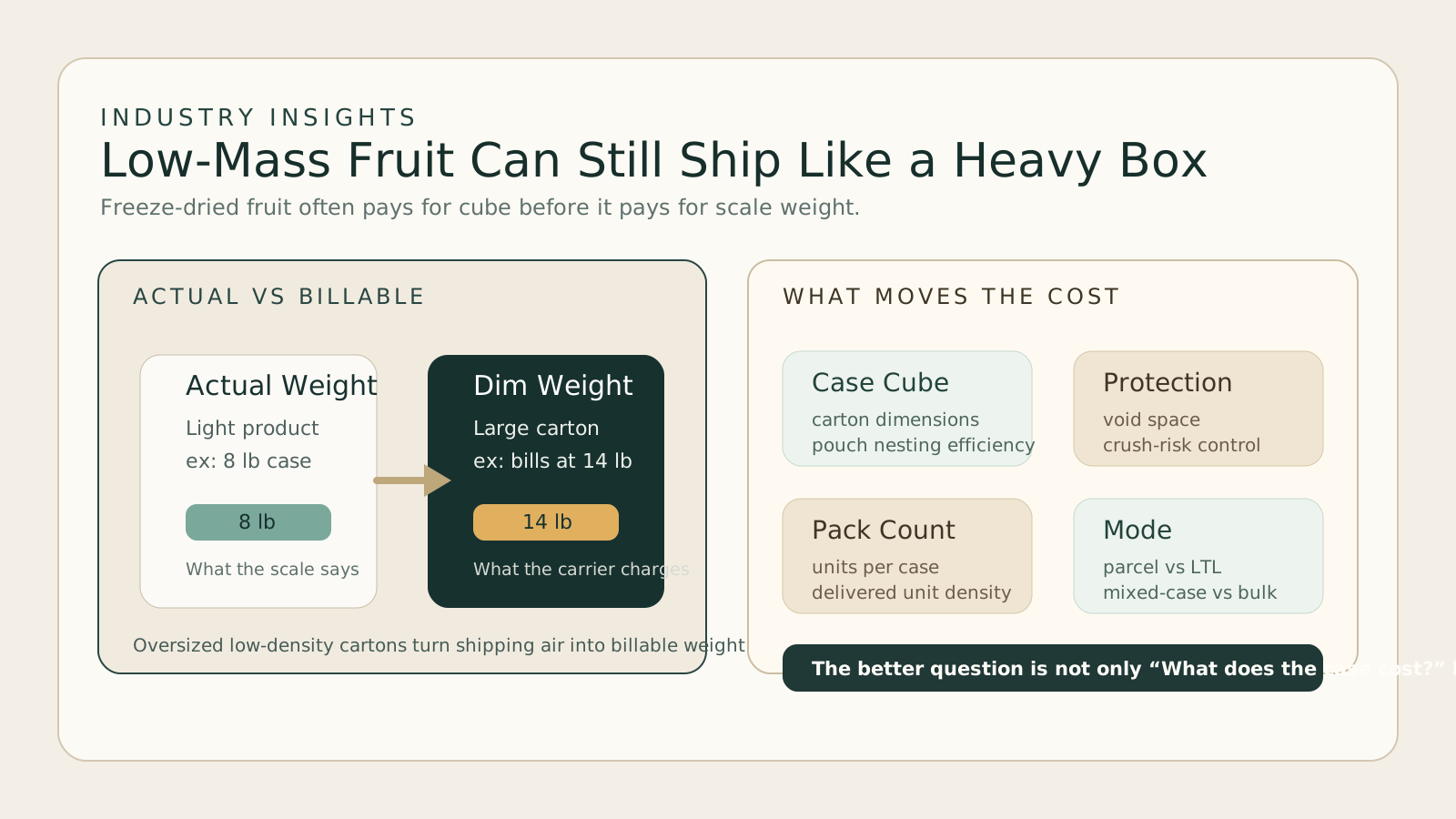
Dimensional weight changes freeze-dried fruit freight cost because carriers may bill a carton by the space it occupies rather than by its actual scale weight. When a package is large relative to its weight, the freight bill follows cube.
That matters in freeze-dried fruit because the category naturally creates:
- low-density packages
- protective void space
- fragile pack formats that do not compress well
The result is that a shipment can be cheap per pound on paper and still expensive to move in reality.
Why freeze-dried fruit gets hit by cube
Freeze-dried fruit is a classic low-density product.
The water is gone, but the expanded cellular structure remains. That leaves a product that is:
- physically large for its weight
- vulnerable to crushing
- often packed with extra headspace or protective geometry
Carriers such as UPS, FedEx, and USPS all make the same basic commercial point in different ways: if the package is large enough relative to actual weight, the billable weight may be dimensional instead of actual.
For freeze-dried fruit, that can happen surprisingly fast. A pouch or mailer that feels light in the hand may still bill like a much heavier package once length, width, and height are converted into dimensional weight.
The quote can look cheap while the delivered case is not
This is one of the easiest buying mistakes in the category.
A supplier can offer a competitive product price while still shipping in a format that inflates freight through:
- oversized cartons
- inefficient pouch nesting
- too much protective void
- low unit count per case
- packaging geometry that wastes pallet footprint
None of those choices are automatically wrong. Some are necessary to protect fragile fruit. The mistake is pretending they do not affect landed cost.
That is why a real cost comparison needs more than the product price. It needs the shipping shape.
Parcel logic and freight logic are related, not identical
Dimensional weight is easiest to understand in parcel shipping because carriers publish straightforward formulas for it.
But the broader lesson also matters in master-case and freight buying:
- poor case density means fewer useful units per pallet
- awkward carton geometry means weaker pallet utilization
- fragile pack formats may force more air and less product into the same shipping footprint
So even when the exact parcel formula is not being used, the same economics still apply. Low-density freight costs more space to move. Freeze-dried fruit is often paying for space before it is paying for mass.
This becomes especially visible when a brand sells through more than one channel at once. A pouch designed for e-commerce protection may cube out differently from a shelf-ready retail case or a bulk foodservice format. The fruit inside may be identical; the freight economics are not.
What smart buyers ask for
The useful buying habit is to stop treating packaging dimensions as a side detail.
Ask for:
- unit dimensions
- master-case dimensions
- net and gross case weight
- units per case
- pallet pattern
- expected shipping mode
Then compare two quotes on a delivered basis, not just a product basis.
Helpful questions include:
- Does the current case cube trigger higher parcel billing?
- Can the pouch geometry nest more efficiently without crushing the fruit?
- Is extra headspace protecting the product or just shipping air?
- Is the best channel one where mixed pallets or distributor stocking reduce parcel exposure?
Those are commercial questions, not packaging trivia.
Where the compromise usually sits
The goal is not "make the box smaller at all costs."
Freeze-dried fruit still needs enough protection to avoid:
The real goal is to find the smallest format that still protects the usable yield. A slightly denser, better-packed case can beat a cheaper-looking loose case if the freight bill drops and the delivered product arrives in better shape.
That is also why some buyers choose a distributor or domestic stocking model even when the factory quote is higher. The freight structure, replenishment pattern, and mixed-case efficiency can win back part of the difference.
Bottom line
Dimensional weight changes freeze-dried fruit freight cost because the category ships a lot of cube for not much mass. That makes carton size, pouch geometry, and case density part of the commercial decision, not just the warehouse decision.
The useful comparison is never just price per case. It is delivered cost per usable unit after the shipping shape has done its damage.
Frequently Asked Questions
What is dimensional weight in simple terms?
It is a carrier pricing method that converts package size into a billable weight. If the package is large relative to its actual weight, the carrier may charge by cube instead of by scale weight.
Why does this matter so much for freeze-dried fruit?
Because the product is light, expanded, and fragile. That combination creates cartons that can look modest on a pallet but still ship as low-density packages.
Can a cheaper product quote still lead to higher freight cost?
Yes. A low ex-works fruit price can be offset by oversized cases, wasted headspace, weak cube efficiency, or shipping formats that push the carton into a higher billable weight band.
Is this only an e-commerce problem?
No. It is most obvious in parcel and direct-to-consumer shipping, but the same density logic also shapes master cases, mixed cases, and freight utilization more broadly.
What should buyers ask suppliers?
Ask for actual case dimensions, net and gross case weight, unit count, pallet pattern, and whether the quote assumes parcel, LTL, or full-container movement.
Primary sources & further reading
- Shipping Dimensions and Weight UPS Referenced for UPS's explanation that dimensional weight is used when a package is large relative to its weight and for the dimensional-weight calculation logic.
- What is Dimensional Weight? FedEx Referenced for FedEx's explanation that shippers are charged on dimensional or actual weight, whichever is greater, and that packaging efficiency changes cost.
- Mail & Shipping Services United States Postal Service Referenced for USPS's dimensional-weight threshold and example showing how large low-density parcels can bill above their scale weight.
External links open in a new tab. We do not receive compensation from any organization listed; sources are referenced because they are primary, current, and publicly verifiable.