- When freeze-dried fruit is imported, the quote currency decides who carries exchange-rate risk between the quote and the actual payment.
- A price held in the supplier's currency can drift in dollar terms even when the supplier never changes their number.
- Buyers manage this with clear quote currency, price-validity windows, payment timing, and, for larger commitments, simple hedging or FX clauses.
A freeze-dried fruit quote looks like a single number. It is really a number plus a hidden assumption about exchange rates and timing. Change the currency the price is firm in, or the gap between quote and payment, and the cost can move without anyone touching the price line.
The direct answer
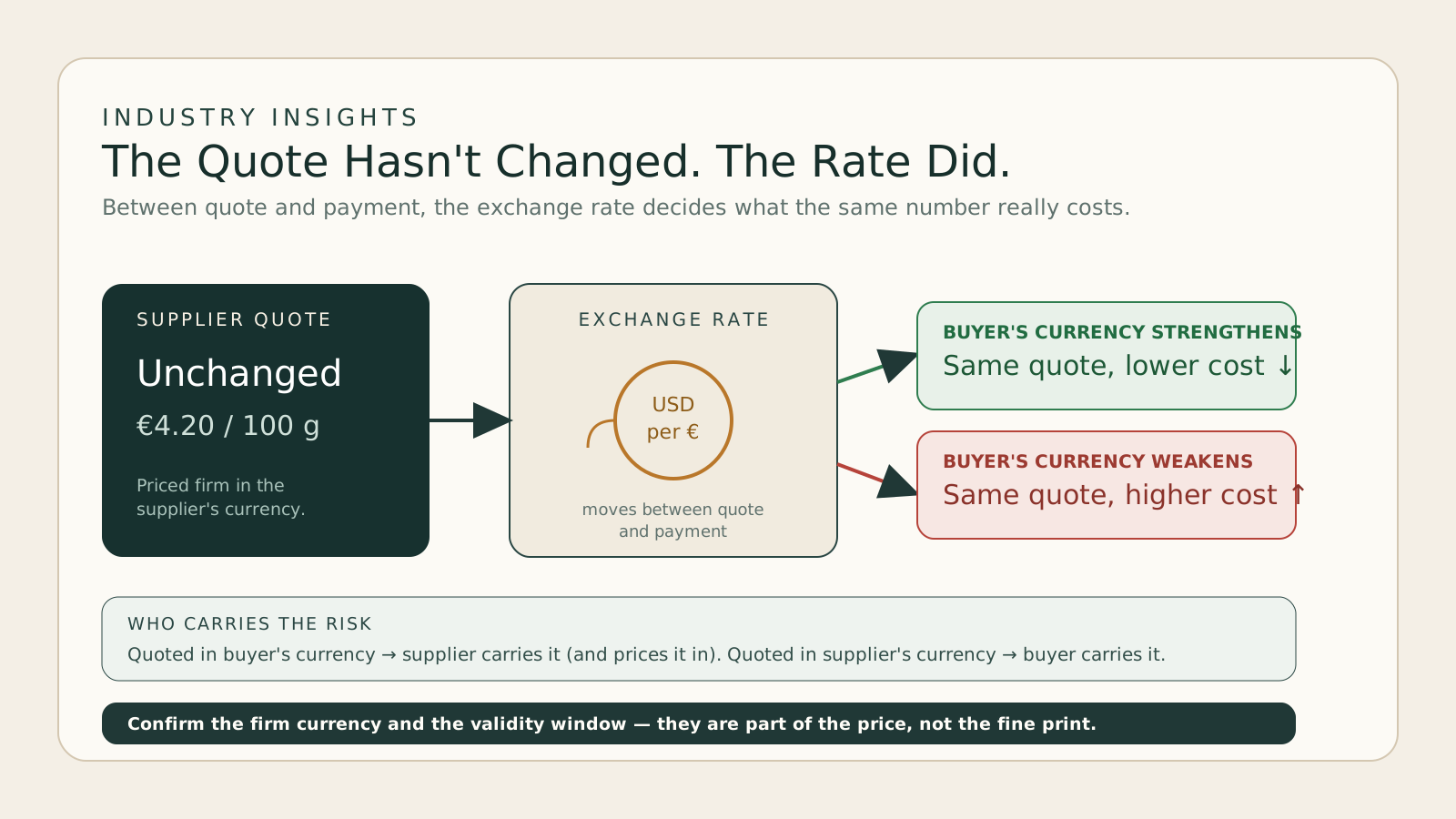
Most freeze-dried fruit on the global market crosses a border before it reaches a buyer, which means a quote almost always involves a currency conversion somewhere. The quote currency decides who carries the exchange-rate risk between the moment the price is agreed and the moment money actually moves. If the rate shifts in that window, either the buyer or the supplier absorbs the difference, depending on how the deal is written.
So the practical question is not only "what is the price?" but "in what currency is this price firm, and for how long?"
Why an unchanged price can still cost more
Imagine a supplier abroad prices freeze-dried mango in their home currency. They quote, the buyer accepts, and weeks pass before payment clears. During those weeks the buyer's currency weakens against the supplier's currency.
The supplier never raised their price. Their number is identical. But in the buyer's own currency, the same order now costs more, because each unit of the supplier's currency takes more of the buyer's money to buy. The reverse can happen too: if the buyer's currency strengthens, the same quote quietly gets cheaper.
This is the core idea behind currency risk. The cost of a cross-border purchase is the supplier's price multiplied by an exchange rate that does not hold still.
Who carries the risk depends on the quote currency
The currency the price is firm in is the lever that assigns this risk.
- Quoted firm in the buyer's currency. The buyer's cost for that order is fixed. The supplier carries the exchange exposure, and they usually price it in, sometimes with a higher number or a short validity window.
- Quoted firm in the supplier's currency. The supplier's revenue is fixed. The buyer carries the exposure and will pay more or less in their own currency depending on which way the rate moves before payment.
- Quoted in a third reference currency. Common in commodity-style trade. Both sides may then carry some exposure relative to their own home currency.
None of these is automatically better. They simply decide where the risk sits. The mistake is not noticing the question at all, then being surprised when a familiar supplier's quote feels more expensive than last quarter even though the fruit and the price look the same.
A short quote-validity window is often a currency signal. When a supplier's home currency is volatile, they protect themselves by keeping quotes valid for only a few days. Treat that date as a live part of the offer, not boilerplate.
Currency sits on top of the usual cost drivers
Exchange rates do not replace the other things that move freeze-dried fruit cost. They stack on top of them.
A landed cost already reflects yield, fruit input price, freight, duties, and handling. Currency is an additional multiplier applied across the cross-border portion. That is why two quarters with similar fruit and freight can still produce different invoices: the rate moved underneath everything else.
It also interacts with timing pressures buyers already know:
- seasonal pricing, where fruit input cost rises and falls through the year
- lead times that lengthen the gap between quote and payment
- freight and duty changes that hit at the same time as rate moves
When several of these line up, the swing can look dramatic even though each individual factor moved a normal amount.
Trade terms and pricing currency are different questions
It is easy to blur Incoterms with currency, but they answer separate questions.
Trade terms such as EXW, FOB, CIF, or DDP define who handles and pays for shipping, insurance, and risk of loss along the route. They shape what is bundled into the number. The pricing currency, separately, defines what money that number is denominated in and who carries exchange exposure.
A quote can be DDP and still leave the buyer fully exposed to currency if it is firm in the supplier's currency. A buyer reviewing a quote should read both layers: what the term includes, and what currency the price is locked in.
What buyers actually do about it
For most freeze-dried fruit buyers, managing currency is mostly housekeeping, not financial engineering.
- Confirm the quote currency in writing. Know exactly which currency the price is firm in before treating it as comparable to another supplier's quote.
- Treat the validity window as binding. Re-confirm prices that have aged, especially across a volatile rate.
- Watch payment timing. The longer the gap between agreement and payment, the more room the rate has to move.
- Compare quotes in one currency. Convert competing offers into a single currency on the same day before ranking them, so you are not comparing two different exchange-rate snapshots.
- Scale the tools to the commitment. For large, repeating volumes, simple hedging such as a forward contract, or an agreed FX-adjustment clause, can stabilize the program. For small orders, the housekeeping above is usually enough.
The goal is not to predict exchange rates. It is to know where the risk sits and to avoid being surprised by it.
Bottom line
A freeze-dried fruit quote is a price and an exchange-rate assumption traveling together. The currency the price is firm in decides who absorbs a rate move between quote and payment, and the validity window hints at how nervous the supplier is about that move. Buyers who read currency and timing alongside the headline number compare offers fairly and avoid blaming a supplier for a cost change the supplier never made.
Frequently Asked Questions
Why does currency matter if the supplier quotes in US dollars?
If the quote is firm in dollars, the supplier is carrying the exchange risk on their side, and your dollar cost is stable for that order. But the supplier prices that risk in. When their home currency is volatile, a dollar quote often sits higher or comes with a short validity window, because they are protecting themselves against the rate moving against them before they get paid.
What is the safest currency for a buyer to be quoted in?
There is no universally safe choice; it depends on which currency you hold and how long until payment. Being quoted in your own functional currency removes your direct exchange exposure for that order, but it does not make the underlying cost disappear. It simply moves the risk to the supplier, who may price it back in. The clearer goal is knowing exactly which currency the price is firm in and for how long.
How long should a freeze-dried fruit quote stay valid?
There is no fixed rule, but quotes often carry a validity window precisely because of currency and input movement. A very short window can signal that the supplier is exposed to a volatile rate. Buyers should treat the validity date as part of the price and confirm it before assuming an old quote still holds.
Do small buyers need to hedge currency?
Usually not formally. For small or occasional orders, managing quote currency, validity windows, and payment timing is normally enough. Forward contracts and FX clauses tend to make sense only for larger, repeating commitments where a rate move would meaningfully change the program's economics.
Primary sources & further reading
- Currency Risk Investopedia Referenced for the general definition of exchange-rate (currency) risk and how it affects cross-border transactions.
- Forward Contract Investopedia Referenced for the basic explanation of how forward contracts lock an exchange rate for a future transaction.
- Incoterms Rules International Chamber of Commerce Referenced for the role of trade terms in defining responsibilities in international transactions, alongside the separate question of pricing currency.
External links open in a new tab. We do not receive compensation from any organization listed; sources are referenced because they are primary, current, and publicly verifiable.