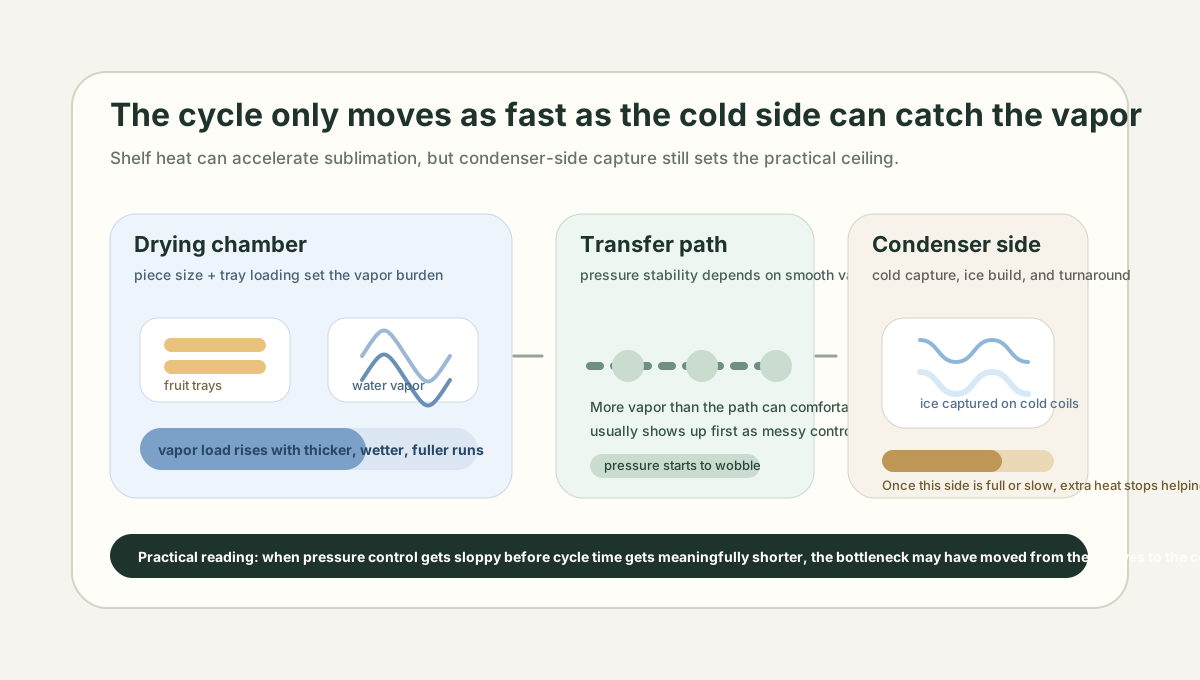
- The condenser is where sublimated water vapor is captured as ice, so it sets a practical ceiling on how much vapor a cycle can move at once.
- Aggressive shelf settings, heavy tray loading, and thick high-moisture fruit pieces can all create more vapor than the condenser side can comfortably absorb.
- When condenser capacity becomes the bottleneck, chamber pressure stability and endpoint confidence usually degrade before an operator sees an obvious alarm.
- Cycle speed should be optimized as a chamber-plus-condenser balance, not as a shelf-temperature contest.
Many freeze-drying conversations still sound as if cycle speed is controlled by only two knobs: shelf temperature and chamber pressure.
That is incomplete. A third limit sits on the cold side of the machine.
The direct answer
Condenser capacity shapes freeze-dried fruit cycle speed because every gram of water leaving the fruit during primary drying has to be captured on the condenser side of the system. When vapor generation rises faster than the condenser can comfortably absorb and hold, pressure control becomes harder, the system stops responding cleanly to more aggressive settings, and the expected cycle-speed gain starts to flatten.
In other words, a freeze dryer is not only a heating-and-vacuum machine. It is also a vapor-handling machine.
What the condenser is actually doing
During primary drying, ice inside the fruit sublimes into water vapor. That vapor then has to move away from the product and re-freeze on a colder surface in the condenser. The food-process reviews cited below describe that condenser step as part of the normal freeze-drying path, not as a side accessory.
That matters because throughput is constrained by the whole path:
- water leaving the fruit
- vapor moving through the chamber and ducting
- vapor depositing as ice on the condenser
If one part of that chain becomes the bottleneck, the entire cycle slows or becomes less stable.
Why "more aggressive" eventually stops helping
Teams often try to cut cycle time by raising shelf temperature, loading more fruit per run, or pushing thicker formats through a familiar recipe. Sometimes that works. Sometimes it only shifts the stress downstream.
Once the vapor stream becomes too heavy for the condenser side to manage comfortably, several things can happen:
- chamber pressure control gets less clean
- temperature gains stop turning into proportional time savings
- drying uniformity worsens across tray positions
- endpoint confidence drops even if the cycle appears to finish
This is why "we ran it hotter and got no faster" is not a contradiction. The bottleneck may have moved away from the shelves and into vapor capture.
Fruit format changes the load on the condenser
Not every fruit stresses the machine the same way.
High-moisture fruit, dense tray loading, broad piece-size spread, and larger cross-sections can all create a heavier or less predictable vapor demand. Thin pieces may release water quickly. Thick pieces may drag the cycle longer. Mixed loads can do both at once, creating unstable compromises.
That means condenser pressure is not an abstract equipment topic. It connects directly to commercial choices such as:
- whether a supplier wants large premium pieces or faster commodity output
- whether one chamber is running one fruit format or a mixed-format compromise
- whether a processor is chasing short cycle times during a busy season
A system that is comfortable with apple dices may feel strained with mango chunks or whole berries under a more aggressive recipe.
The bottleneck usually shows up before a failure does
Operators do not always get one dramatic warning that says "the condenser is now your problem." More often the signs are indirect:
- one part of the chamber dries differently from another
- the lot reaches the moisture target but feels less consistent
- the process can be sped up on paper but not in repeatable production
- defrost turnaround starts affecting throughput more than the drying recipe itself
That last point is underappreciated. Condenser performance is not only about instantaneous vapor capture. It also affects how quickly the system can be turned around between loads. If the cold side becomes the pacing item for the room, then chamber availability on the schedule becomes less meaningful than it looks.
Why this matters for buyers and brand owners
Most buyers will never ask a supplier for a condenser-capacity curve, and that is fine. The practical value is in recognizing what equipment limits look like when they reach the product.
If a supplier regularly pushes a machine near its condenser-side comfort limit, the risk often appears as:
- broader texture variance
- softer centers in thicker pieces
- inconsistent moisture or water activity
- more lot-to-lot surprises when product format changes
The issue may not be visible on a single approval sample. It usually becomes visible across multiple runs, especially when seasonality, tray loading, or fruit geometry changes.
A better way to think about optimization
The strongest freeze-drying teams do not treat speed as a shelf-only problem. They balance the whole system:
- piece thickness
- tray loading
- chamber pressure target
- shelf heat input
- condenser-side vapor capture
- turnaround between loads
That systems view matters more than bragging about one aggressive setpoint. A recipe that looks fast in isolation can be slower in real production if it destabilizes the condenser side, increases rework, or widens endpoint variation enough to force extra caution later.
Questions worth asking a supplier
Buyers do not need proprietary cycle details to probe this topic intelligently. Better questions include:
- How do you adjust the cycle for thicker or wetter fruit formats?
- How do you confirm endpoint consistency across tray positions?
- What changes when you move from small pieces to large visible pieces?
- Where do you usually see variability first when a run is pushed too hard?
- How do you manage turnaround between heavy loads?
Those questions do not ask for trade secrets. They ask whether the supplier understands the machine as a balanced process rather than a simple vacuum oven.
The sources below explain the process physics and the equipment-capability limits. The article's buying implications are an editorial inference from those constraints: a machine that is condenser-limited is usually harder to run repeatably, even when it can still finish the batch.
Bottom line
Condenser capacity shapes freeze-dried fruit cycle speed because the vapor leaving the fruit has to be captured somewhere cold enough, fast enough, and consistently enough to keep the process stable. When that side of the system becomes the limit, hotter shelves and bolder recipes stop buying clean throughput.
For operators, that is a process-balance issue. For buyers, it is a clue about why some suppliers look fast in conversation but uneven in the bag.
Frequently Asked Questions
What does the condenser do in a freeze dryer?
It captures the water vapor leaving the frozen fruit and turns that vapor back into ice on a much colder surface. That keeps vapor moving away from the product and helps the system hold the low-pressure conditions needed for sublimation.
Can a stronger vacuum pump solve a condenser bottleneck?
Not by itself. The pump helps evacuate non-condensable gases and support pressure control, but the ice load still has to be captured on the condenser side. If vapor generation is exceeding condenser-side capacity, more pump alone does not magically create more cold capture.
Which fruits stress condenser capacity most?
Usually the fruits and formats that send a lot of water out quickly: high-moisture loads, thicker cuts, dense tray packing, and cycles pushed aggressively during primary drying. The exact limit depends on the machine and the product geometry.
What does a condenser-limited cycle look like on the floor?
Operators often see pressure control become less steady, product variability increase across the chamber, or the expected time savings from hotter shelves disappear. The cycle may still finish, but not with the same consistency.
Why should buyers care about this if they do not run the dryer?
Because it affects repeatability. A supplier that pushes throughput past the condenser's comfort zone may produce larger lot-to-lot swings in texture, color, and residual moisture even if the sample bag looked good.
Primary sources & further reading
- The Freeze-Drying of Foods—The Characteristic of the Process Course and the Effect of Its Parameters on the Physical Properties of Food Materials Foods / PubMed Central Referenced for the food-process review's description of sublimation, pressure control, and vapor re-sublimation on the condenser surface.
- Freeze-Drying of Plant-Based Foods Foods / PubMed Central Referenced for the review's summary of primary drying, endpoint methods, and the role of condenser pressure among practical monitoring tools.
- Equipment Capability Measurement of Laboratory Freeze-Dryers: a Comparison of Two Methods AAPS PharmSciTech / PubMed Central Referenced for the general lyophilizer-capacity discussion that equipment limits can come from refrigeration capacity, condenser surface area, or the chamber-to-condenser duct.
External links open in a new tab. We do not receive compensation from any organization listed; sources are referenced because they are primary, current, and publicly verifiable.