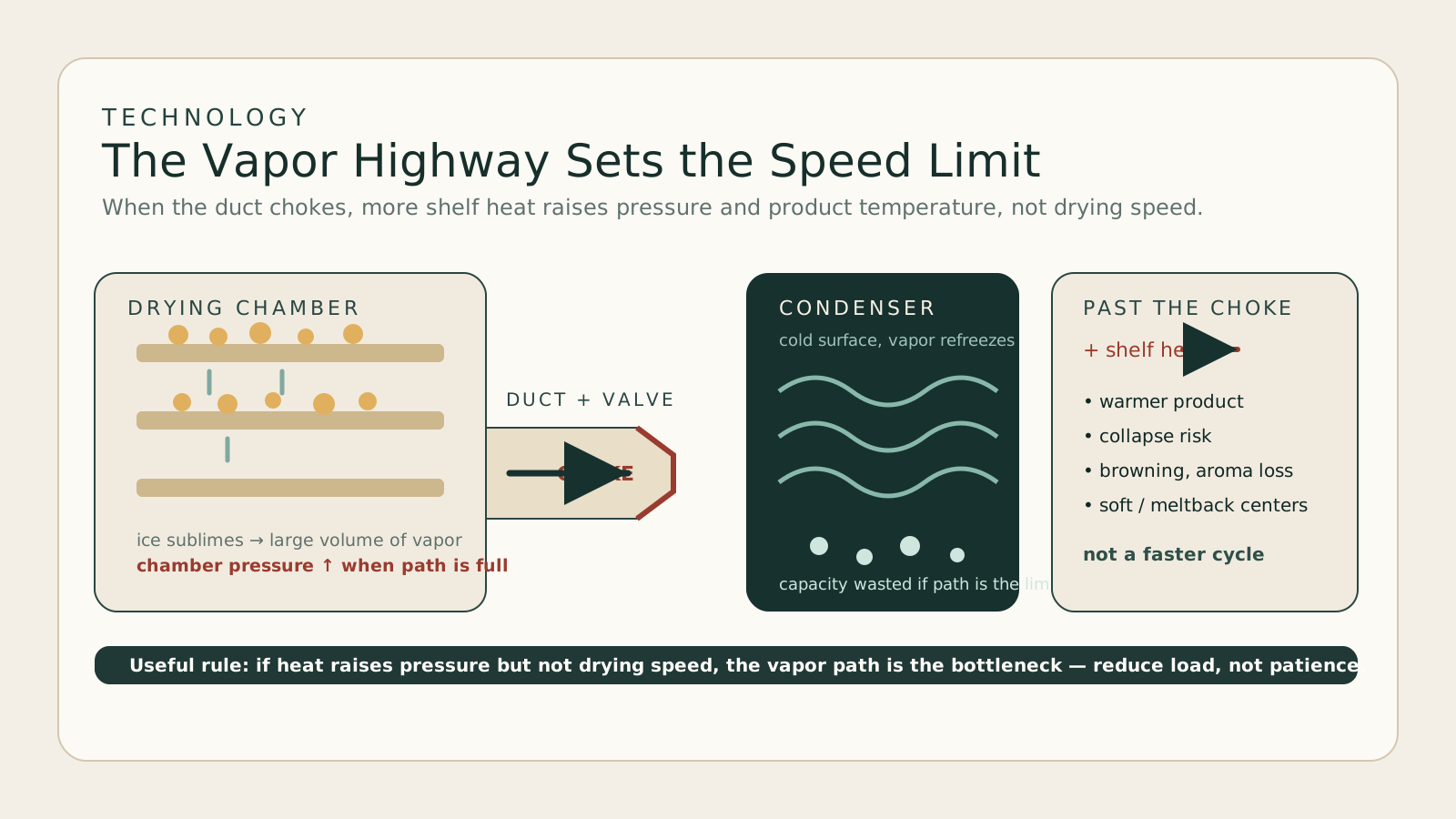
- Sublimation creates a large volume of low-pressure water vapor that must travel to the condenser; the duct and valve between them have a finite capacity.
- When vapor flow approaches that limit, the path 'chokes' and chamber pressure rises even if you add more shelf heat, so the cycle stops getting faster.
- Pushing heat into a choked system mostly raises product temperature, which risks collapse, browning, and meltback instead of faster drying.
- The practical fix is matching batch load and ramp rate to the machine's real vapor capacity, not just trusting the shelf temperature setpoint.
Freeze-drying looks like a heating problem. You put fruit on a shelf, warm the shelf, and water leaves. So when a cycle runs long, the obvious move is to add heat.
That instinct works until it does not. At some point more shelf heat stops shortening the cycle and starts raising product temperature instead. The reason is usually not the fruit. It is the vapor path between the chamber and the condenser.
The direct answer
During primary drying, ice does not melt. It sublimes, turning straight from solid to vapor. That vapor has to travel from the product, through the chamber, through a duct and isolation valve, to the cold condenser where it refreezes.
Water vapor at freeze-drying pressures is extremely low density, so a modest amount of ice becomes a very large volume of gas. The duct and valve between chamber and condenser can only pass so much of that gas per second. When sublimation tries to exceed that limit, the path chokes: flow hits a ceiling, and chamber pressure rises instead of vapor moving faster.
Once you are choked, adding shelf heat no longer speeds drying. It mostly warms the product, which is exactly what you do not want.
Why so much vapor is the problem
The counterintuitive part is volume. A gram of ice is small. The same water as vapor at a typical primary-drying pressure occupies a huge space, because low pressure means low density.
That means even a normal-looking batch generates a torrent of gas during peak sublimation. The machine has to move that gas continuously, or pressure backs up in the chamber.
Think of it like a stadium emptying through one exit. The crowd size is fine. The doorway is the constraint. You can encourage people to leave faster, but past a point the door sets the rate, not their willingness to move.
What "choked" actually feels like on the gauges
You usually do not get a warning light. You read it from the trends:
- chamber pressure drifts above your control setpoint and the controller struggles to pull it back down
- shelf temperature keeps climbing on its ramp, but the product-temperature curve flattens higher than expected
- the cycle does not shorten in proportion to the extra heat you added
- two batches with the same recipe behave differently when one is loaded heavier
Individually these can have other causes. Together, with a heavy load and an aggressive ramp, they point at a transport limit rather than a heat limit.
If raising shelf temperature raises chamber pressure but not drying speed, you are probably past the vapor path's capacity. Heat is no longer your lever.
Why the bottleneck is often the duct, not the condenser
It is tempting to blame the condenser, and condenser refrigeration capacity does matter. But the condenser can be cold and capable while the connecting path is the narrow point.
The duct cross-section and the isolation valve both restrict how fast vapor can pass. At very low pressure, gas flow through that opening reaches a maximum rate that further pressure difference cannot exceed. That is the choke. A bigger or colder condenser sitting behind a narrow valve does not raise the ceiling, because the gas cannot get to it any faster.
This is why two machines with similar condensers can have very different real-world throughput. The geometry between chamber and condenser, not just the cold surface, sets the limit.
Why choking hurts the fruit, not just the schedule
Here is the quality consequence. Sublimation is cooling: as ice leaves, it pulls heat out of the product, which keeps the drying front cold. That self-cooling is what protects structure during primary drying.
When flow chokes, sublimation cannot speed up to absorb the extra shelf heat. So the heat you add accumulates in the product. Temperature near the still-frozen core creeps upward toward the range where the freeze-concentrated structure softens.
For fruit, that is when problems appear:
- collapse, where the open pore structure slumps and the piece turns dense and glassy
- browning and aroma loss from warmer tissue
- meltback or soft centers, where part of the piece never dries as clean, brittle foam
So a choked, over-heated cycle can be worse than a slower one. You spend energy making the product hotter and the texture poorer at the same time.
Practical ways to stay under the ceiling
The goal is to match vapor demand to the path's real capacity rather than fighting it with heat.
Load to capacity, not to volume. The biggest lever is how much ice you ask the machine to sublime at once. The chamber may physically hold more trays than the vapor path can serve cleanly during peak drying. Find the load where pressure stays controllable, not the load that fills the shelves.
Shape the ramp. Peak sublimation usually happens early in primary drying. A gentler heat ramp early keeps the instantaneous vapor rate under the choke, then heat can rise later as the front recedes and demand falls.
Control to pressure, watch product temperature. Use chamber pressure as the signal that you are near the limit, and treat product temperature as the line you must not cross. If pressure will not hold at setpoint, back off heat rather than push through.
Know your machine's curve. Equipment has a practical maximum sublimation rate. Mapping it once, by watching where pressure starts to run away as load and heat increase, tells you the real operating envelope better than the nameplate ever will.
The takeaway
Freeze-drying fruit is a transport problem dressed up as a heating problem. Heat starts the cycle, but the vapor highway between chamber and condenser sets the speed limit. When that path chokes, more heat buys you higher product temperature and worse texture, not a faster cycle.
The operators who get consistent fruit are usually the ones who stopped chasing the shelf setpoint and started respecting the door the vapor has to fit through.
Frequently Asked Questions
What is choked flow in a freeze dryer?
It is the point where water vapor moving from the drying chamber to the condenser reaches the maximum rate the connecting duct and valve can carry. Beyond that, adding more sublimation does not increase flow; instead the chamber pressure climbs.
How do I know my cycle is choked rather than heat-limited?
A telltale sign is that chamber pressure rises and drifts above your setpoint while shelf temperature keeps climbing but the product is not drying faster. If more heat raises pressure without shortening the cycle, the path is likely the bottleneck.
Does a bigger condenser fix choked flow?
Condenser capacity matters, but choking often happens in the duct and isolation valve between chamber and condenser, not at the cold surface itself. A larger condenser does not help if the connecting path is the narrow point.
Why does choked flow hurt freeze-dried fruit quality?
When flow is capped, extra shelf heat goes into warming the product instead of driving sublimation. Warmer product near the drying front raises the risk of structural collapse, browning, and soft or meltback regions.
Can I just lower the load to avoid it?
Often yes. A smaller sublimation load per cycle keeps vapor demand under the path's capacity. The tradeoff is throughput, which is why operators try to find the largest load the machine can dry cleanly rather than the largest load it can physically hold.
Primary sources & further reading
- Practical Advice on Scientific Design of Freeze-Drying Process: 2023 Update National Library of Medicine / AAPS PharmSciTech Referenced for the concept of maximum sublimation rate, equipment capability curves, and the limits imposed by the chamber-to-condenser path.
- The Freeze-Drying of Foods—The Characteristic of the Process Course and the Effect of Its Parameters on the Physical Properties of Food Materials National Library of Medicine / Foods Referenced for the relationship between sublimation, vapor transport, chamber pressure, and the physical properties of freeze-dried food.
- Freeze-Drying of Plant-Based Foods National Library of Medicine / Foods Referenced for how product temperature near the drying front relates to collapse and quality in plant tissue.
External links open in a new tab. We do not receive compensation from any organization listed; sources are referenced because they are primary, current, and publicly verifiable.