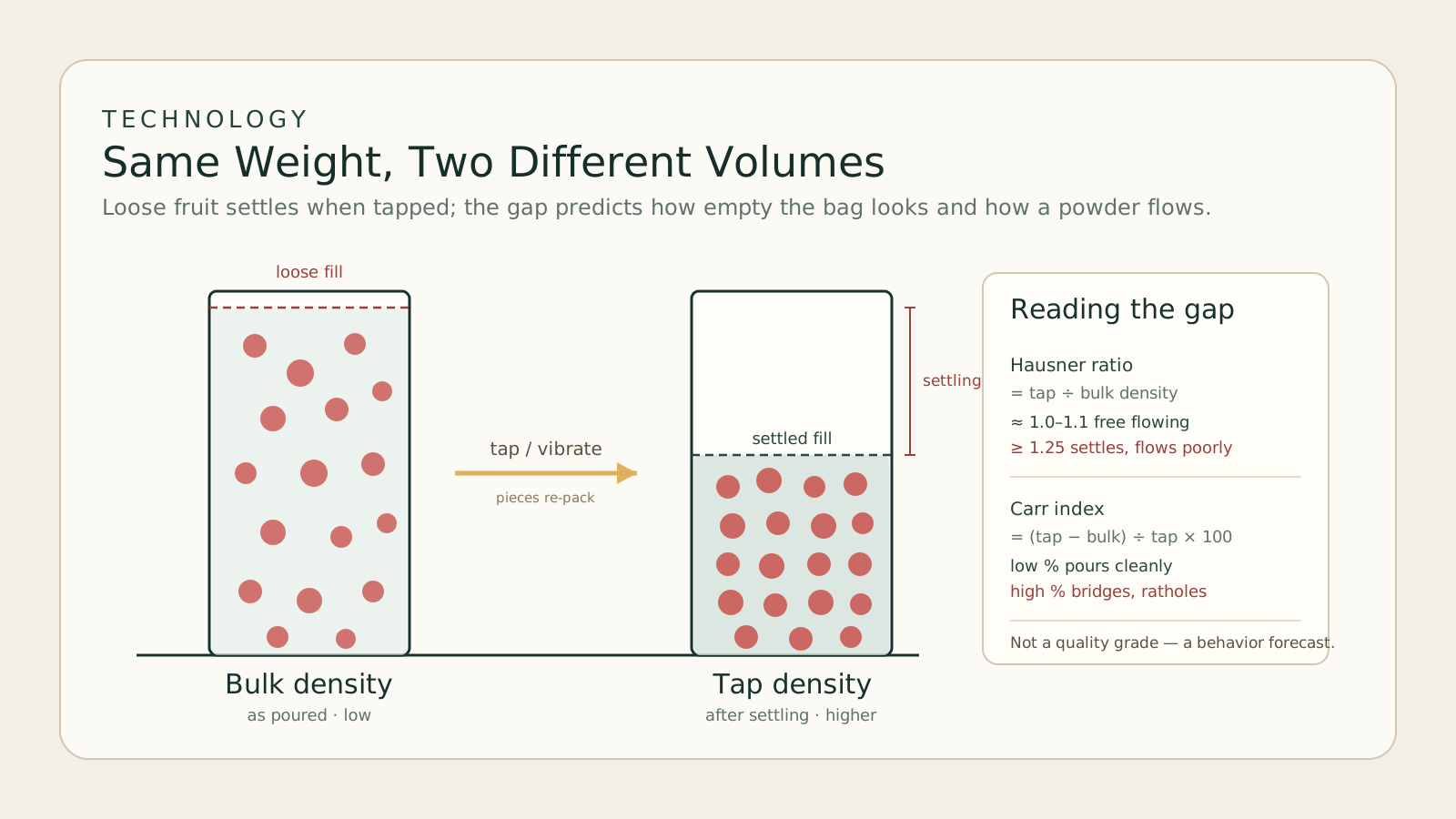
- Bulk density (loose) and tap density (settled) describe how much freeze-dried fruit fits in a given volume; both are low because the product is porous and air-filled.
- The gap between them, captured by the Hausner ratio and Carr index, predicts how much a product will settle in the bag and how freely it flows on a filling line.
- Low, variable density is why net weight and fill volume drift apart, why pouches look underfilled, and why powders bridge or rathole in hoppers.
- Asking a supplier for bulk and tap density alongside particle size turns guesswork about bag size and line behavior into something you can plan.
Net weight tells you how much product is in the bag. It does not tell you how much room that product needs, how much it will sink during shipping, or whether a powdered version will pour cleanly out of a filling hopper. Those depend on density — and freeze-dried fruit has two densities worth knowing, not one.
The direct answer
Bulk density is the mass of freeze-dried fruit divided by the total volume it fills when poured loosely, air gaps included. Tap density is the mass divided by the smaller volume the same product reaches after being tapped or vibrated until it stops settling. Both are low for freeze-dried fruit because the pieces are porous and full of trapped air. The difference between the two numbers is where most of the practical behavior lives: it predicts how much a pack settles, how empty it looks on arrival, and how the product flows on a line.
Why freeze-dried fruit sits at the light end
Drying by sublimation is the whole reason the density is low. Water leaves the frozen fruit as vapor without passing through a liquid stage, so the structure never slumps to fill the space the ice used to occupy. What remains is a rigid scaffold of sugars, fiber, and cell-wall fragments wrapped around a lot of empty volume.
That open structure is desirable. It is what gives clean crunch, fast rehydration, and intense flavor release. But it also means a kilogram of freeze-dried strawberry slices occupies far more space than a kilogram of raisins or fresh fruit. The product is, in packaging terms, mostly air that you are paying to protect and ship.
Bulk versus tap: the same product, two volumes
Pour freeze-dried fruit into a container and it bridges against itself, leaving large voids. That loose arrangement gives the bulk density. Tap the container and the pieces rearrange into a tighter packing, voids shrink, and the volume drops. The mass has not changed, so the density rises. That settled value is the tap density.
A pouch filled to the correct net weight at the plant is usually filled at something close to bulk density. By the time it reaches a shelf, vibration during transit has nudged the contents toward tap density. The weight is unchanged and correct, but the product now occupies less volume, so the bag looks underfilled. This is settling, not shorting.
The size of that gap varies by fruit and format. Whole, irregular pieces with rough edges bridge more and settle more. Uniform dice settle less. Powders can go either way depending on particle size and how much fine material they contain.
Hausner ratio and Carr index: turning the gap into a number
Two simple indices summarize the bulk-to-tap relationship.
The Hausner ratio is tap density divided by bulk density. A ratio near 1.0 to 1.1 describes a product that is already well packed and pours freely. As the ratio climbs past about 1.25, the product settles substantially and tends to flow poorly.
The Carr compressibility index expresses the same gap as a percentage: the difference between tap and bulk density divided by tap density, times one hundred. Low single digits indicate free flow; values in the high teens and above indicate a product that resists flowing and is prone to bridging.
Neither index is a grade of quality. They are descriptions of behavior. A high Hausner ratio is not a defect — but it does tell you the pouch will look emptier after shipping and that a powdered version may need flow aids or line adjustments.
Where this shows up in real packaging decisions
The first place is bag sizing. If you size a pouch to the loose bulk volume, it will look generous at fill and slumped on arrival. If you size closer to tap density, the line has to work harder to settle product into the bag during filling. Most well-run packs split the difference deliberately, and they can only do that if they know both densities.
The second is fill-weight consistency. Volumetric fillers meter by volume, not weight. When density drifts between lots — because a fruit ran wetter, was cut thicker, or carried more fines — a fixed volume delivers a different weight. Checkweighers then reject more bags, or the line overfills to stay safe and gives product away. Weighing-based fillers handle this better but are slower.
The third is powder flow. Freeze-dried fruit powders with a high Hausner ratio bridge over hopper outlets or carve a narrow channel straight through the middle, a failure called ratholing. Both starve the downstream process and create weight swings. Knowing the flow indices ahead of time tells you whether you need a steeper hopper, vibration, an agitator, or a coarser particle spec.
What to ask a supplier for
Most suppliers can report bulk and tap density if asked, and the two numbers cost nothing to provide. Request them on the spec sheet alongside particle size and moisture, and ask whether they are measured by a defined method so lots are comparable.
Weigh a known mass into a graduated cylinder and read the loose volume for bulk density. Tap the cylinder on the bench a fixed number of times until the level stops dropping, then read the settled volume for tap density. Use the same cylinder and tap count every time. It will not match a lab tap-density tester exactly, but it gives a consistent lot-to-lot comparison you can act on.
The takeaway
Freeze-dried fruit is light because it is supposed to be — the trapped air is a sign the structure survived drying. But that same lightness, and how much it varies, is what drives bag sizing, fill-weight accuracy, the slumped look of a shipped pouch, and whether a powder pours or jams. Bulk density and tap density, plus the simple ratio between them, convert all of that from surprise into something you can specify and plan around.
Frequently Asked Questions
What is the difference between bulk density and tap density?
Bulk density is the mass of product divided by the volume it occupies when poured loosely into a container, including all the air between and inside the pieces. Tap density is the mass divided by the smaller volume reached after the container is tapped or vibrated until the product stops settling. Tap density is always equal to or higher than bulk density.
Why is freeze-dried fruit so low in density?
Freeze-drying removes water by sublimation without collapsing the structure, so the finished piece keeps the porous, open framework the water used to fill. The result is a rigid but mostly empty solid. That trapped air is what makes the product light, crisp, and low in both bulk and tap density.
What does the Hausner ratio tell a buyer?
The Hausner ratio is tap density divided by bulk density. A value near 1.0 to 1.1 means the product is already well packed and flows freely. Higher values, roughly 1.25 and above, signal a product that settles a lot and tends to flow poorly, which matters for both how empty a bag looks after shipping and how a powder behaves in a hopper.
Does low density mean lower quality?
No. Low density is a normal consequence of good freeze-drying and intact structure. It only becomes a problem when it is unexpected or highly variable, because that is what disrupts fill weights, bag sizing, and line throughput. Consistent density, even if low, is easy to design around.
How do I measure tap density without lab equipment?
A rough version uses a graduated cylinder: weigh a known mass of product, read the loose volume, then tap the cylinder on a bench a fixed number of times until the level stops dropping and read the settled volume. Lab methods standardize the cylinder, tap height, and tap count, but the same principle gives a usable in-house comparison between lots.
Primary sources & further reading
- Bulk density, tapped density and related flow indices (Carr index, Hausner ratio) United States Pharmacopeia, General Chapter on Powder Flow Referenced for standard definitions of bulk density, tapped density, the Carr compressibility index, and the Hausner ratio as flow indicators.
- Physical properties of foods and food processing systems ScienceDirect topic overview Referenced for the general relationship between porosity, particle structure, and bulk density in dried and porous foods.
External links open in a new tab. We do not receive compensation from any organization listed; sources are referenced because they are primary, current, and publicly verifiable.