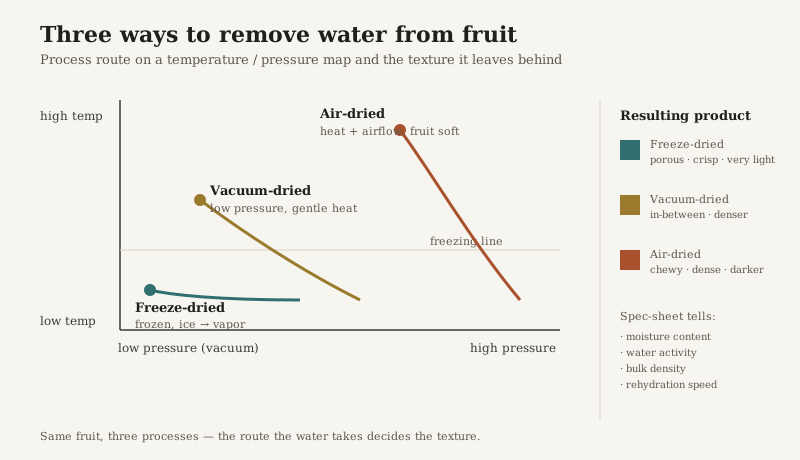
- Freeze-drying removes water as vapor from frozen fruit under vacuum, which preserves structure and gives the crisp, low-density texture buyers associate with the category.
- Air-drying uses heat and airflow above freezing, which shrinks and densifies the fruit into a chewy or leathery piece, usually at a much lower cost per kilogram.
- Vacuum drying sits in between: lower temperatures than hot air but no frozen sublimation step, so texture and color land between the other two methods.
- On a spec sheet, the clearest tells are moisture content, water activity, bulk density, and rehydration behavior, not the marketing word on the front of the bag.
Buyers often treat dried fruit as one category with a price ladder. In practice, the three common methods, freeze-drying, hot-air drying, and vacuum drying, are different physical processes that leave behind different products. The fruit can start identical and end up with different texture, color, density, moisture, and shelf behavior depending only on how the water left.
This article walks through how each method works, what it does to the fruit, and how to read the differences on a spec sheet instead of trusting the word on the front of the bag.
The direct answer
The methods differ in the state the water is in when it leaves and how much heat the fruit sees while it leaves.
Freeze-drying freezes the fruit solid, then removes that ice directly as vapor under deep vacuum, so the fruit never passes through a wet, collapsing stage. Air-drying heats the fruit above freezing and carries moisture away with moving air, so the fruit shrinks as liquid water evaporates from a soft matrix. Vacuum drying lowers the pressure to let water evaporate at gentler temperatures than hot air, but without the full frozen-sublimation route of freeze-drying.
Those three routes explain almost everything a buyer notices later: crunch versus chew, light versus dense, vivid versus muted, fast versus slow rehydration.
How freeze-drying removes water
Freeze-drying happens in two physical moves. First the fruit is frozen, locking water in place as ice crystals. Then, under vacuum, heat is fed in carefully so that ice turns straight to vapor without melting, a transition called sublimation. A cold condenser captures that vapor.
Because the fruit is frozen and held below its structural limit while the ice leaves, the solid framework stays roughly where it was. The spaces the ice crystals occupied become open pores. That porous, dry skeleton is what reads as crisp and snappable, and it is also why freeze-dried fruit is so light: most of the volume is now air.
The trade is time and energy. The cycle is long, the equipment runs a vacuum and a refrigerated condenser, and nearly all the water is removed, so the finished weight is a small fraction of the starting fresh weight.
How air-drying removes water
Hot-air drying, sometimes sold as conventional dried, dehydrated, or sun-dried fruit, works above freezing. Warm air moves across the fruit, liquid water diffuses to the surface, and it evaporates.
The catch is that the fruit is soft while this happens. As water leaves a pliable matrix, the structure collapses inward and the piece shrinks and densifies. The result is the familiar chewy or leathery texture of raisins, dried apricots, and dried mango strips. Color often shifts darker, partly from heat and partly from browning reactions that run more readily at higher temperatures and longer warm hold times.
Air-drying is fast and cheap by comparison, and it usually leaves more residual moisture in the finished product, which keeps water activity higher and the texture flexible rather than brittle.
How vacuum drying removes water
Vacuum drying lowers the chamber pressure so water can evaporate at lower temperatures than open-air heating would require. It is gentler on color and some heat-sensitive attributes than hot air, but it typically removes liquid water from fruit that is not held frozen throughout, so it does not rely on sublimation in the way freeze-drying does.
The practical outcome lands between the other two. Vacuum-dried fruit is usually denser and chewier than freeze-dried, but often crisper, lighter, and brighter than the same fruit run through hot air. Variants such as microwave-assisted or puffed vacuum drying push texture closer to crisp, which is part of why the boundary between methods can blur on a shelf.
Words like dried, dehydrated, crispy, and even freeze-dried are not tightly standardized across every market and product. Two bags labeled the same way can come from different processes. The measured properties below are a more honest read than the marketing term.
Reading the differences on a spec sheet
The cleanest way to tell the methods apart is to ignore adjectives and look at four measured properties.
Moisture content is the most direct. Freeze-dried fruit usually lands very low, often in the low single-digit percentages. Air-dried fruit typically carries meaningfully more residual water, which is why it stays pliable. Vacuum-dried sits in between or near freeze-dried depending on the cycle.
Water activity, the availability of water for spoilage and texture change, tracks with moisture but is the better stability indicator. Lower water activity generally means a crisper, more stable dry product; higher water activity means a softer, more perishable one.
Bulk density is a fast physical tell. Freeze-dried pieces are strikingly light for their size because they are mostly pore space. Air-dried pieces are dense and heavy for their size because the structure collapsed. Vacuum-dried sits between.
Rehydration behavior closes the case. Freeze-dried fruit takes water back quickly and moves toward its original shape because the open pores act like a sponge. Air-dried fruit rehydrates slowly and incompletely because the collapsed matrix has fewer open channels.
What this means for sourcing and use
Match the method to the job rather than defaulting to the most premium term.
For a crisp standalone snack, a clean topping that needs to stay brittle, or an inclusion that should keep its shape and bright color, freeze-dried is usually the right structure, and the price reflects the process. For chewy snacking, baking where some moisture and chew are welcome, or cost-sensitive bulk fruit, air-dried can be the better fit. Vacuum-dried can be worth sampling when a buyer wants something crisper than chewy but at a different cost or texture point than freeze-dried.
When comparing quotes, make sure the comparison is method-to-method, not just price-to-price. A lower number per kilogram often reflects a denser, higher-moisture product with more water still in the bag, which is a different thing to put on a shelf.
Bottom line
Freeze-drying, air-drying, and vacuum drying are not grades of the same product; they are different processes that remove water in different physical states and leave the fruit in different conditions. Freeze-drying preserves a porous, crisp, low-density structure at high cost. Air-drying produces a dense, chewy, lower-cost piece with more residual moisture. Vacuum drying lands in between.
The reliable way to know which one is in the bag is to read moisture, water activity, density, and rehydration behavior, then decide whether that physical reality matches the product you intended to buy.
Frequently Asked Questions
What is the main difference between freeze-dried and air-dried fruit?
Freeze-dried fruit is frozen first, then has its ice removed as vapor under vacuum, which keeps the original shape and creates a porous, crisp piece. Air-dried fruit is dried with heat and airflow above freezing, so it shrinks and becomes chewy or leathery. The two methods produce very different texture, density, and moisture levels even from the same raw fruit.
Is vacuum-dried fruit the same as freeze-dried fruit?
No. Both use reduced pressure, but freeze-drying removes water from frozen fruit by sublimation, while vacuum drying typically removes liquid water by evaporation at low pressure and moderate heat without a full frozen-sublimation step. Vacuum-dried fruit usually ends up denser and chewier than freeze-dried and crisper than hot-air-dried.
Which drying method keeps fruit crispiest?
Freeze-drying generally produces the crispest, lightest texture because the porous internal structure created during freezing survives the process. Air-dried fruit is rarely crisp; it is usually pliable or hard. Vacuum drying can be crisp depending on the cycle but is typically less open and brittle than freeze-dried.
Why is freeze-dried fruit more expensive than air-dried fruit?
Freeze-drying uses a longer, energy-intensive cycle under vacuum with a refrigerated condenser, and it removes nearly all the water, so yields per kilogram of fresh fruit are low. Air-drying is faster, simpler, and retains more residual moisture, which lowers cost per kilogram of finished product.
How can a buyer tell which method was used?
Ask for moisture content, water activity, and bulk density, and look at rehydration behavior. Freeze-dried fruit is very light, very low moisture, and rehydrates quickly toward its original shape. Air-dried fruit is denser, chewier, and rehydrates slowly. The process word on the front panel is less reliable than these measured values.