- Blueberry, strawberry, apple, and cranberry are usually the easiest starting points because they balance familiarity, visibility, and handling.
- Scones and quick breads often reward smaller pieces or crumbles more than oversized premium snack cuts do.
- Powder is useful when even flavor matters more than piece identity, especially in batters where fragile fruit would disappear anyway.
- The best freeze-dried fruit for baking is the format that still performs after mixing and baking, not the one that looked most premium in the bag.
The best freeze-dried fruit for baking is rarely the same fruit format that looks best in a snack pouch.
That matters because muffins, scones, and quick breads all reward fruit differently. One application wants visible pockets. Another wants even flavor. Another wants a clean dough that still handles well at scale.
The direct answer
For most bakers and product developers, blueberry, strawberry, apple, and cranberry are the strongest starting points for muffins, scones, and quick breads. They are familiar, reasonably versatile, and available in formats that can survive mixing without turning the product into dust.
The bigger decision is not only which fruit, but which form:
- pieces for visible identity
- small crumbles for controlled distribution
- powder for even flavor across the full bite
Why these three baked formats behave differently
Muffins, scones, and quick breads all sit under the same broad bakery umbrella, but they do not treat fruit the same way.
Muffins
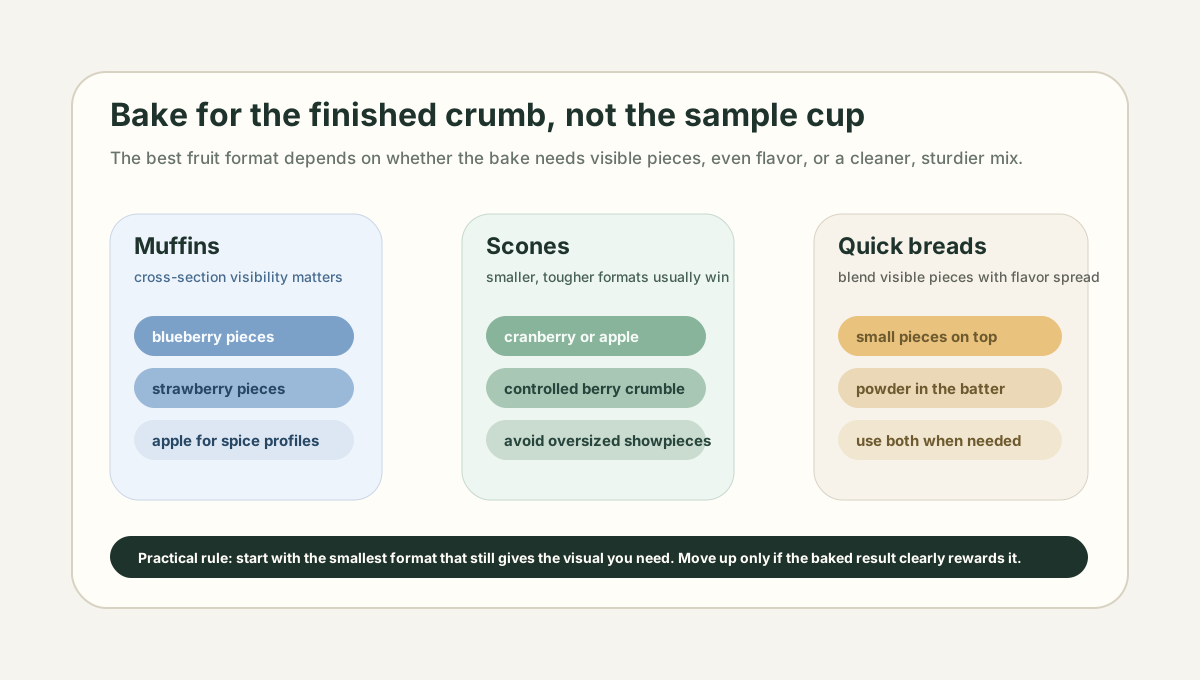
Muffins usually reward visible pieces because the cross-section matters. Consumers expect to see fruit pockets and color variation when they break the top.
Scones
Scones are less forgiving of oversized fragile pieces. Dough handling, shaping, and cutting can crush premium snack-style fruit more than people expect.
Quick breads
Loaf-style quick breads often tolerate a mix of formats well. Visible pieces can carry the cut face while powder or fine crumble spreads flavor through the batter.
That is why one fruit format can look perfect in a muffin and clumsy in a scone.
Best all-around choices
Blueberry
Blueberry is one of the safest all-around baking choices. It is familiar, visually recognizable, and often available in small enough pieces to distribute well.
Best for:
- classic muffins
- lemon-blueberry scones
- loaf cakes where small fruit pockets matter
Blueberry works especially well when you want the product to read "fruit" immediately without needing a dramatic topping.
Strawberry
Strawberry brings stronger color contrast than blueberry and often reads a little more premium. It is especially useful when the bakery item wants a bright berry cue rather than a subtle one.
Best for:
- vanilla or white-chocolate muffins
- strawberry-lemon quick breads
- pink-red visual contrast in lighter batters
The caution is format. Very large slices can be beautiful in theory and awkward in mixing.
Apple
Apple is often underrated in freeze-dried baking applications. It gives a softer visual contrast than berries but fits warm spice profiles very naturally.
Best for:
- cinnamon muffins
- oat-led quick breads
- scones where berry bleed is not the goal
Apple is especially useful when you want fruit presence without turning the product into a berry-themed item.
Cranberry
Cranberry works well when tartness matters as much as fruit identity. It helps richer doughs feel brighter and often suits bakery formats better than a solo snack bag.
Best for:
- orange-cranberry scones
- holiday-style loaves
- products where acid contrast is doing part of the flavor work
When smaller pieces beat premium showpieces
This is one of the easiest ways to overspend.
Large whole or nearly whole fruit pieces often make sense for retail snacking because appearance is the product. In baking, that same premium visual spec can become wasted cost if the fruit breaks during mixing, shaping, or slicing.
Smaller pieces or controlled crumble are often better for:
- even distribution
- fewer empty bites
- cleaner scaling in production
- less damage during handling
If the fruit will be folded, pressed, or sliced after baking, smaller often looks more intentional in the final product than oversized pieces that broke unpredictably.
When powder is the smarter choice
Powder is not only for smoothies and coatings. In muffins and quick breads, it can do a job pieces cannot.
Use powder when you want:
- flavor in every bite
- color spread through the batter
- less concern about fragile inclusion integrity
- fruit character without obvious chunk identity
This can be especially useful with more delicate fruits such as raspberry or blackberry, where the strongest commercial value may be flavor and color rather than intact piece geometry in the finished bake.
Many strong products use both:
- pieces for visible fruit cues
- powder for background flavor coverage
Matching fruit to the style of bake
A practical shortcut is to ask what role the fruit is playing.
If the fruit is there to be seen:
- choose recognizable pieces
- keep the cut controlled
- avoid paying for giant showpieces unless the finished product truly rewards them
If the fruit is there to flavor the whole product:
- move toward crumble or powder
- choose fruits with clear acid or aroma character
- let the batter carry the fruit note instead of forcing visual drama
If the fruit is there to support a warm or spiced profile:
- apple and cranberry often outperform tropical or highly delicate fruits
- berry accents can still work, but the base flavor matters more
A useful buying rule for bakers
Start with the smallest format that still delivers the visual you need. Then move up only if the finished bake clearly benefits.
That rule protects against a common mistake: buying retail-snack fruit for a bakery application that will never preserve retail-snack appearance anyway.
Bottom line
The best freeze-dried fruit for muffins, scones, and quick breads is usually blueberry, strawberry, apple, or cranberry in a format that matches the bake. Pieces help when visible fruit identity matters. Crumble and powder help when even distribution or cleaner handling matters more.
The winning choice is not the fruit that looked best in the sample bag. It is the one that still looks deliberate after mixing, baking, and slicing.
Frequently Asked Questions
What freeze-dried fruit works best in muffins?
Blueberry and strawberry are usually the easiest muffin choices because they are recognizable and available in manageable piece sizes. Apple and cranberry also work well in spiced or oat-led muffins where their flavor fits the base.
What freeze-dried fruit works best in scones?
Scones often reward smaller pieces, crumbles, or controlled dices because the dough is handled more directly and larger fragile pieces can break during shaping. Cranberry, blueberry, apple, and citrus-friendly berry accents tend to work well.
Should I use pieces or powder in quick breads?
Use pieces when visible fruit identity matters. Use powder when you want more even flavor throughout the loaf or batter, or when the fruit would otherwise be too fragile to stay distinct.
Is the most expensive whole-piece fruit best for baking?
Not usually. Premium whole pieces are often overbuilt for muffins and quick breads because the mixing and baking process can break them down. A smaller, more controlled cut often gives better value.
Which fruits are hardest to use in these baked formats?
Very fragile berries and very soft tropical formats can be harder to keep visually clean. They can still work well, but often as smaller pieces, crumbles, or powder instead of showpiece cuts.