- Strawberry, raspberry, blueberry, and cherry are the easiest all-around freeze-dried fruits for chocolate bark and candy.
- Whole slices look dramatic, but smaller pieces and controlled crumble often distribute better across bark and dipped candy.
- Dark, milk, and white chocolate each pair best with slightly different fruit personalities.
- The key handling rule is to add the fruit late and store the finished candy dry so the fruit stays crisp.
Chocolate bark is simple enough that every inclusion shows. That is why freeze-dried fruit works so well here. The fruit does not only add flavor. It also decides whether the bark feels bright, flat, premium, playful, or clumsy.
The direct answer
The best freeze-dried fruit for chocolate bark and candy is usually strawberry, raspberry, blueberry, or cherry. These fruits bring enough acidity, aroma, and color to stand up to chocolate while still staying crisp when handled well.
The ideal choice depends on the chocolate base and whether the fruit's job is to headline the bark, add contrast, or act as a supporting accent.
What chocolate bark needs from the fruit
Chocolate bark is not a gentle application. The fruit has to:
- taste clear against fat and sweetness
- stay visually distinct on the surface
- avoid introducing moisture
- feel crisp rather than chewy
Fresh fruit fails that test quickly because water and chocolate do not cooperate well. Freeze-dried fruit solves the moisture problem and creates a more vivid contrast in both texture and flavor.
That makes the application especially good for tart and aromatic fruits.
Strawberry is the safest all-around choice
Freeze-dried strawberry is often the easiest starting point because it does several jobs well at once:
- clear fruit identity
- strong color
- familiar flavor
- enough acidity to balance sweet chocolate
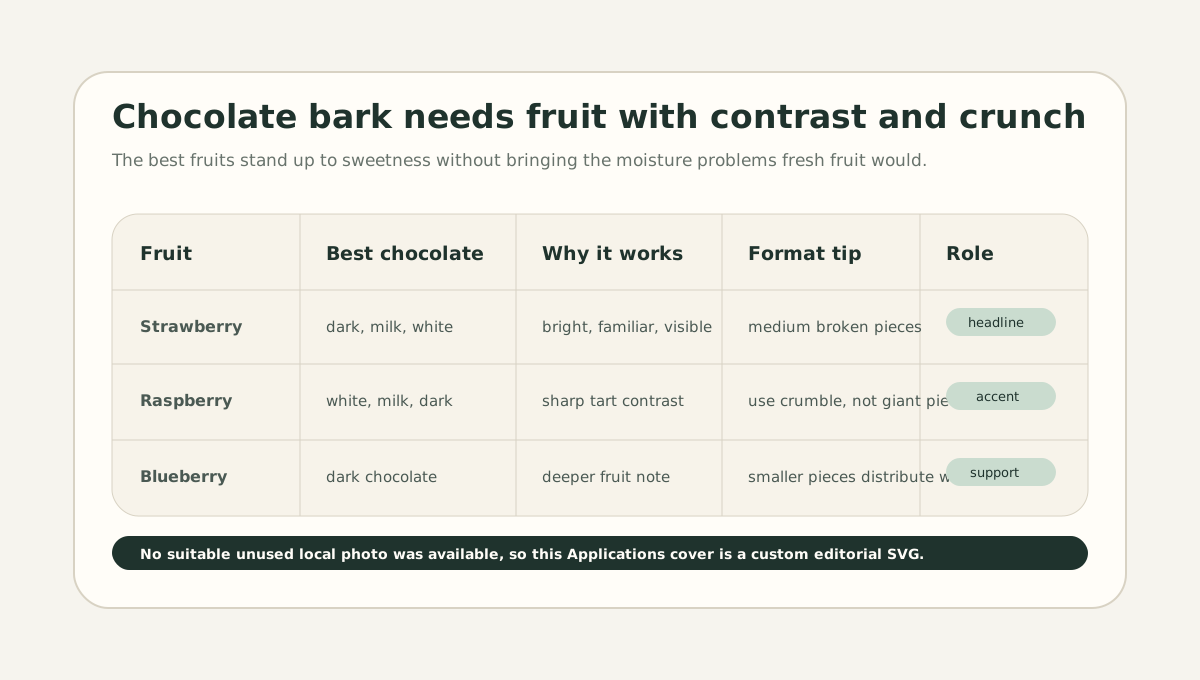
It works with dark, milk, and white chocolate, which makes it unusually flexible. Whole slices can look dramatic, but medium broken pieces are often more practical because they distribute more evenly and are easier to bite through in a bark sheet.
Raspberry brings the sharpest contrast
Raspberry is one of the strongest fruits for white chocolate and sweeter milk chocolate because it adds a cleaner tart edge than many other options.
It is especially useful when the bark risks becoming one-note sweet. Raspberry also works well in:
- yogurt-style coatings
- chocolate-covered clusters
- candy bars with fruit pieces on the finish
The caution is fragility. Raspberry breaks easily, so controlled crumble is often a better candy format than large showcase pieces.
Blueberry and cherry make darker chocolate feel deeper
Blueberry and cherry usually feel more restrained than strawberry or raspberry, but they are excellent with darker chocolate profiles.
Blueberry is useful when you want:
- a darker visual accent
- softer acidity
- smaller, more even distribution
Cherry is useful when you want:
- a richer fruit note
- more dramatic pairing with dark chocolate
- a dessert-like flavor profile without syrupy chew
Both can make bark feel more grown-up than bright-red berry toppings alone.
Mango and tropical fruits are more specialized
Freeze-dried mango, pineapple, banana, and other tropical fruits can work in candy, but they usually need a more deliberate concept.
Mango pairs best when the bark also includes:
- coconut
- lime-style notes
- white chocolate
- toasted nuts
Banana can work in a nostalgic milk-chocolate direction, but it can also make the bark feel softer or sweeter than intended if the fruit note is not balanced.
Tropical fruits are usually best when they support a theme rather than carry the whole bark by themselves.
Piece size matters more than people expect
The prettiest fruit is not always the best fruit for bark.
Very large pieces can:
- crack off the surface
- make the bark harder to cut
- create uneven bites
- dominate the chocolate instead of balancing it
That is why many successful bark formats use:
- medium broken pieces
- controlled crumble
- a mix of visible pieces plus some fine dust
The visible pieces provide fruit identity, while the smaller fragments create more even distribution.
Match the fruit to the chocolate
A simple pairing rule helps:
- dark chocolate likes cherry, blueberry, raspberry, and strawberry
- milk chocolate likes strawberry, banana, cherry, and gentler berry mixes
- white chocolate likes raspberry, strawberry, mango, and tart tropical accents
This is less about rigid rules than about contrast. Sweeter chocolate usually benefits from fruit with sharper edges. More bitter chocolate can carry deeper or calmer fruit tones.
Add the fruit late and store the candy dry
Freeze-dried fruit solves the moisture problem compared with fresh fruit, but it is still hygroscopic. That means handling still matters.
For better results:
- add the fruit near the end of the chocolate-setting process
- avoid letting the fruit sit in a humid room
- store finished bark in a dry airtight container
- protect the bark from repeated warm-room condensation
If the finished candy softens, the issue is usually environmental humidity rather than the fruit being inherently wrong for the job.
Bottom line
The best freeze-dried fruit for chocolate bark and candy is the fruit that brings contrast without fighting the chocolate. Strawberry and raspberry are the easiest all-around wins. Blueberry and cherry work especially well for darker profiles. Tropical fruits can be excellent when the flavor direction is clear.
Choose fruit for the job it needs to do in the bark, not only for how impressive it looks by itself.
Frequently Asked Questions
What is the best freeze-dried fruit for chocolate bark?
For most bark recipes, strawberry and raspberry are the easiest starting points because they bring visible color and enough tartness to balance sweet chocolate. Blueberry and cherry are also strong choices when you want a darker fruit profile.
Why use freeze-dried fruit instead of fresh fruit in candy?
Because freeze-dried fruit adds flavor and crunch without the free moisture that can shorten texture life or interfere with chocolate's finish.
Does freeze-dried fruit stay crunchy in chocolate?
It can, especially when the fruit is added late and the finished bark is stored in a dry container. Over time, humidity and repeated handling can still soften the fruit surface.
Is powder or whole fruit better for candy?
They do different jobs. Powder is useful for coating, color, and even flavor spread. Whole or broken pieces are better when you want visible fruit identity and a more obvious crunch.
Which freeze-dried fruit works best with white chocolate?
Raspberry, strawberry, passion fruit-style blends, and tart berry accents usually work especially well because white chocolate benefits from sharper fruit contrast.