- Banana ripeness controls sweetness, aroma, browning risk, and final texture.
- Slices are the dominant format because they dry predictably and read clearly to consumers.
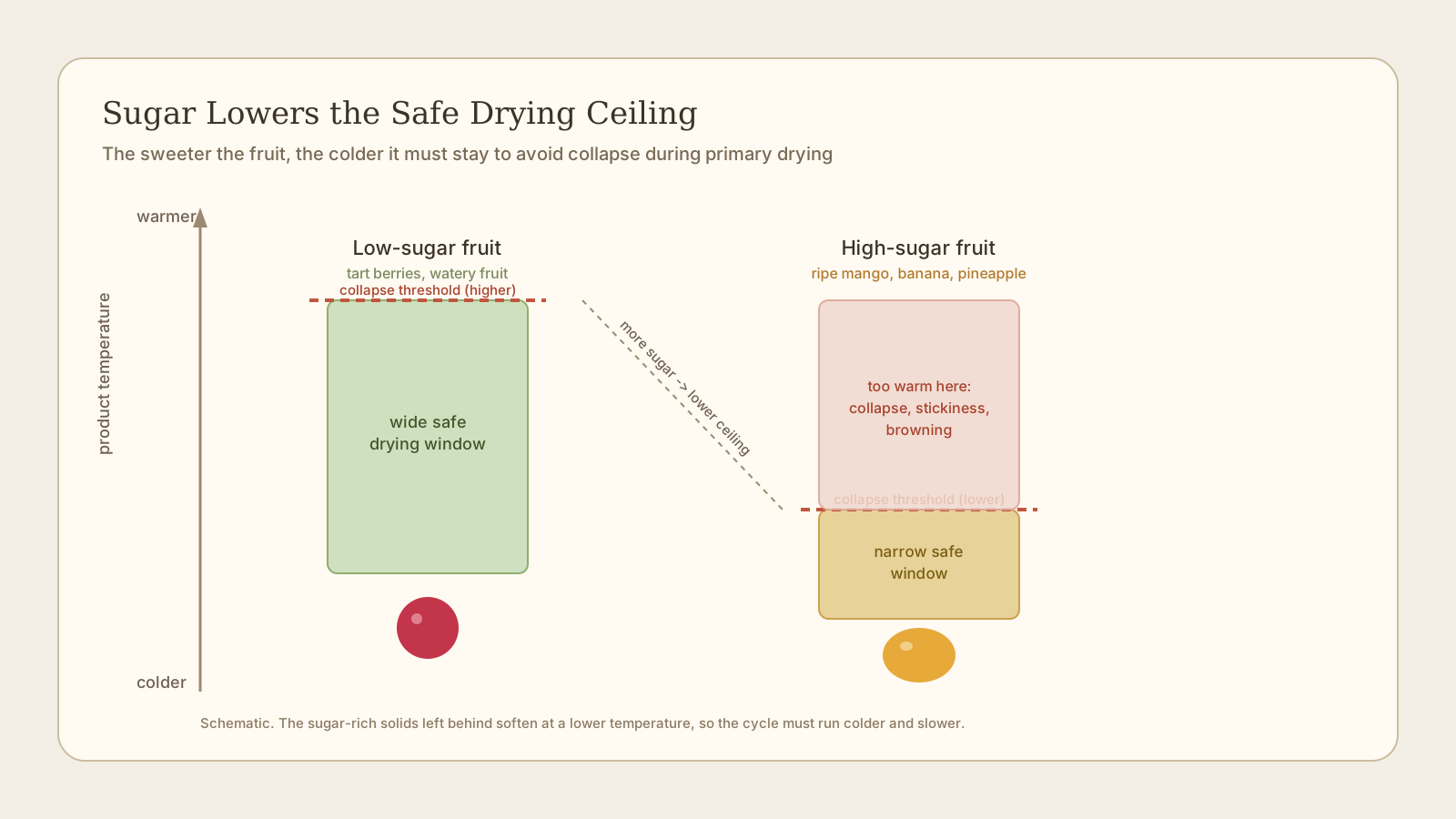
- Under-ripe banana can taste starchy; over-ripe banana can brown and collapse.
- Buyers should ask about ripeness target, anti-browning steps, slice thickness, and breakage.
Banana is familiar, affordable, and easy to sell, but freeze-dried banana quality depends heavily on ripeness. For freeze-dried fruit buyers, banana is not just a flavor. It is a set of processing choices: raw material quality, cut format, moisture control, aroma retention, breakage, and how clearly the finished piece still communicates the fruit.
Use this guide as a practical sourcing tool. The goal is not to rank every possible banana product. It is to understand what usually separates a strong freeze-dried banana sample from one that looks good on a sell sheet but disappoints in the bag.
Quick comparison: banana formats for freeze-drying
| Ripeness stage | Freeze-dried personality | Risk | Best use |
|---|---|---|---|
| Slightly under-ripe | Pale, firm, less sweet | Starchy flavor | Budget blends |
| Ripe | Sweet, familiar, balanced | Moderate browning | Snack slices, cereal |
| Very ripe | Strong aroma, dessert-like | Collapse, dark color | Powders, fillings |
| Plantain-style | Starchy, less sweet | Tough texture | Specialty savory or ingredient use |
Why banana behaves the way it does
Banana changes dramatically as starch converts to sugar. Freeze-drying preserves that stage. A ripe banana slice can become crisp, sweet, and easy to recognize. Under-ripe banana can feel chalky or bland. Very ripe banana can bring strong aroma but may brown, stick, or lose shape before drying. Enzymatic browning is a key issue, so some processors use pre-treatments to protect color. Slice thickness also matters: thin slices are crisp and fragile, while thicker slices can feel more substantial but may dry less evenly. Slice thickness is why good freeze-dried banana slices snap rather than bend.
The technical question is always the same: does the finished piece preserve the best part of the fruit, or does the process amplify the weaknesses? Freeze-drying removes water, but it does not create better raw material. If the fruit begins with weak aroma, poor maturity, too much fiber, or inconsistent sizing, the final product will usually show it.
What quality looks like in the finished bag
A strong freeze-dried banana sample usually has these signals:
- Cream to pale yellow color without excessive gray-brown tones.
- Clean banana aroma, not cardboard.
- Crisp slice texture without leathery centers.
- Low sticking between pieces.
- Sweetness that feels ripe rather than sugary or starchy.
These signals matter because consumers judge freeze-dried fruit quickly. They see the color first, smell the product when the pouch opens, and then decide whether the texture feels worth buying again.
Sourcing reality
Banana is often treated as a commodity input, but buyers should still ask about cultivar, ripeness, pre-treatment, slice thickness, and whether the product is sweetened. For snack bags, visual consistency matters. For cereals, bakery, and inclusions, uniform slice diameter and breakage may matter more than perfect appearance.
Ask for the fruit type or variety when available, origin, harvest or processing window, raw material state, cut format, moisture or water activity target, added ingredients, and expected breakage rate after shipping.
Best-use formats
For premium snack positioning, use the format that lets the fruit remain recognizable. For ingredient use, consistency may matter more than beauty. Smaller pieces, powders, and broken formats can be excellent when they are sold honestly for toppings, bakery, cereals, bars, fillings, or blends.
For mixed fruit snacks, banana should have a clear job. It can provide color, aroma, acidity, sweetness, novelty, or texture. If it does not play one of those roles clearly, it may disappear behind louder fruits like mango, pineapple, or strawberry.
How to read a banana label
A useful label should tell you whether the product is plain fruit or sweetened, what format is inside, and sometimes the origin or variety. If the label only says "banana" but the price is premium, the sample itself needs to justify that price through color, aroma, texture, and piece integrity.
For buyers, the better question is not "is this freeze-dried banana good?" It is "does this banana format match the claim, the price, and the way the customer will actually use it?"
How banana compares
A quick reference for how banana sits alongside the freeze-drying personalities of its closest siblings.
| Fruit | Brix | Fiber | Aroma | Color stability | Breakage risk | Typical format |
|---|---|---|---|---|---|---|
| Bananathis report | 15–22° | Medium | Strong (ripe) | Poor | Low | Slices · powder |
| Mango | 10–22° | Low → High (cultivar) | Very strong | Strong | Medium | Slices · cubes · powder |
| Pineapple | 11–15° | High | Strong | Moderate | Medium | Chunks · tidbits · powder |
| Papaya | 8–12° | Low | Mild | Moderate | Medium | Cubes · slices · powder |
| Passion fruit | 13–18° | Low (seeds present) | Very strong | Moderate | n/a (pulp) | Powder · flakes |
| Guava | 8–13° | High | Very strong | Moderate | Medium | Slices · cubes · powder |
Values are typical industry ranges. Variety, origin, harvest window, and process all shift them.
Conclusion
Freeze-dried banana works best when sourcing, format, and processing are aligned. The best products do not simply remove water from fruit. They protect the fruit's strongest signal, whether that is aroma, color, acidity, sweetness, crunch, or visual identity.
That is the difference between a novelty item and a product that earns a permanent place in a snack mix, topping lineup, or ingredient spec.
Frequently Asked Questions
Why does ripeness matter so much for freeze-dried banana?
Banana changes dramatically as starch converts to sugar — freeze-drying simply preserves whatever stage the fruit was at when frozen. Under-ripe banana can taste chalky or starchy. Ripe banana becomes crisp, sweet, and recognizable. Very ripe banana brings strong aroma but may brown, stick, or collapse before drying.
What ripeness stage works best for freeze-dried banana slices?
Slightly past fully yellow but before brown spotting is usually the sweet spot — enough sugar conversion for clean banana flavor without the structural collapse that comes with very-ripe fruit. Suppliers selecting bananas for premium freeze-dried snacks usually have a tight ripeness window.
Why are some freeze-dried banana pieces gray, brown, or sticky?
Banana is prone to enzymatic browning once cut. Visible darkening usually points to slow handling between slicing and freezing, or weak anti-browning pre-treatment. Stickiness usually means residual moisture is high — either the drying endpoint was loose or the packaging let humidity back in.
Are Cavendish or specialty bananas better for freeze-drying?
Cavendish is the practical default — available year-round, predictable, and familiar. Smaller dessert bananas like Lady Finger or apple banana can deliver more aroma and flavor density but cost more and ship less reliably. Plantains and cooking bananas are a different category entirely — starchy, not sweet.
What's the difference between freeze-dried banana slices and powder?
Slices deliver visible identity, crunch, and a snack-ready bite. Powder concentrates banana sweetness and aroma for blends, bars, fillings, and drinks. The same raw fruit can become very different finished products depending on cut format and milling.
Can plantains be freeze-dried like bananas?
Yes, but they are a different product. Plantains are starchier and lower in sugar than dessert bananas, so freeze-dried plantain feels firmer and more cracker-like rather than candy-sweet. It belongs in savory or ingredient applications, not in dessert-banana snack mixes.
What should buyers ask suppliers about freeze-dried banana?
Ask the fruit type or variety, ripeness target at processing, anti-browning approach, slice thickness, target moisture or water activity, expected breakage rate, and whether added sugar or oil is used. The label should match the bag.