- Removing water concentrates the fruit's existing sugars; it does not itself add sugar.
- On U.S. labels, read Total Sugars and Includes Added Sugars together, using the serving weight.
- Fruit juice concentrate needs context; a carrier ingredient is not interchangeable with the Added Sugars line.
- Compare ingredient statements and intended uses before comparing bag prices.
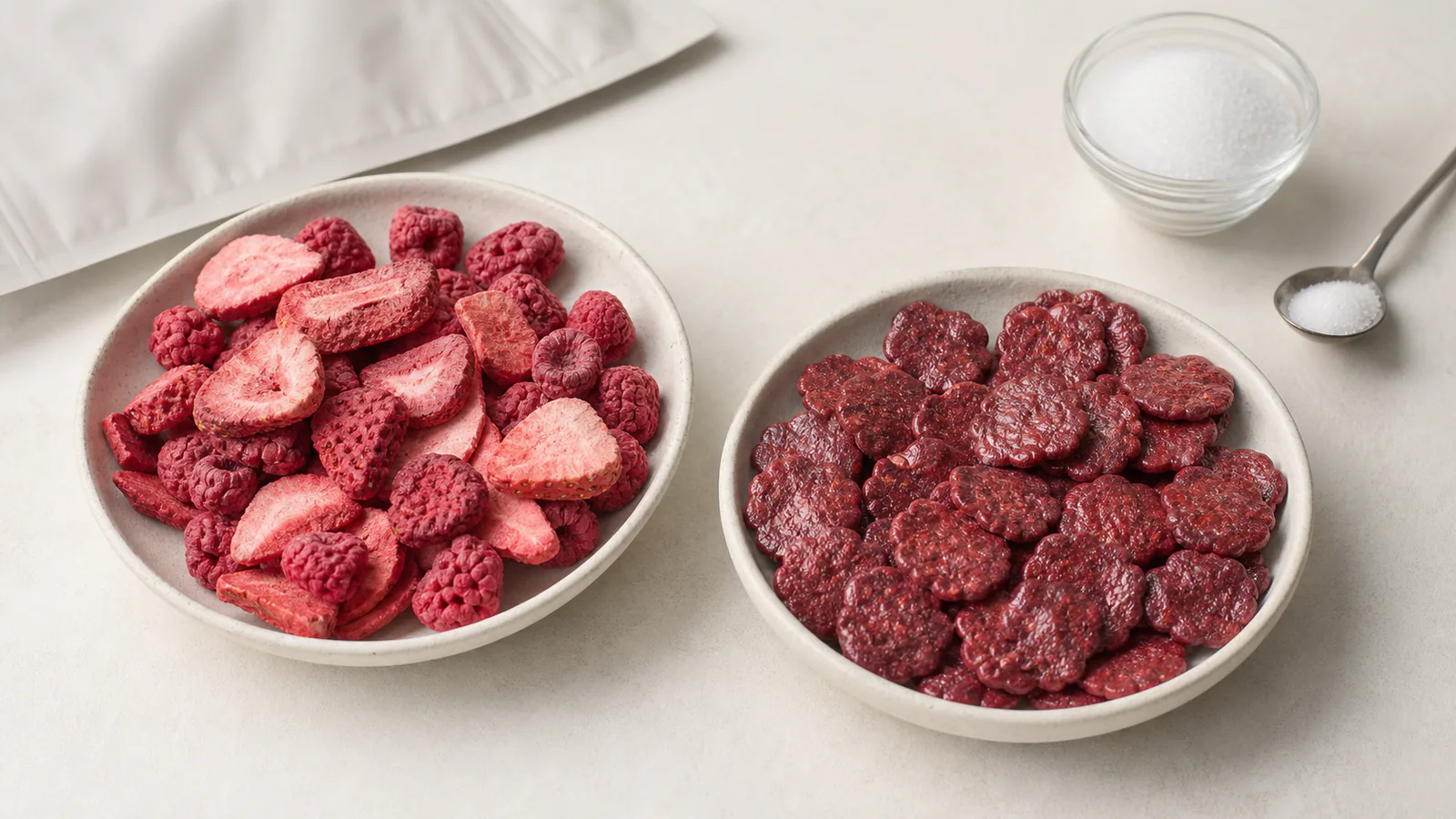
Plain freeze-dried fruit can taste very sweet without added sugar. Freeze-drying removes water, leaving the fruit solids in a much lighter product. Sweetened fruit pieces, coated snacks, and formulated powders may sit beside plain fruit on the shelf, so taste and the words on the front of a bag are not enough to distinguish them.
This guide covers U.S. packaged-food labels. Start with the ingredient statement, then use the Nutrition Facts panel to understand the sugar declaration.
Read two parts of the label together
The FDA explains Total Sugars and Added Sugars as related measurements: the first includes naturally present sugars as well as added sugars; the second identifies the added portion. Do not add the two figures together.
Use this order when comparing bags:
- Read every ingredient. A statement naming only the fruit answers a different question from one listing fruit, sugar, and a coating.
- Find Total Sugars and Includes Added Sugars. Where provided, the latter separates added sugar from the total.
- Check serving weight. Two different serving sizes make the displayed gram amounts difficult to compare directly.
- Match the format. Plain slices, sweetened crisps, and drink powders serve different purposes. The buyer's quality guide explains the broader comparison.
Why fresh-fruit sugar is the wrong comparison
A fresh strawberry contains water that a freeze-dried strawberry has lost. Equal weights of the two products therefore contain different amounts of fruit solids. A higher sugar number per gram of freeze-dried fruit does not establish that the manufacturer added sweetener.
When two dried products use different serving weights, an arithmetic comparison can help: divide the displayed sugar grams by the serving grams, then multiply by the same reference weight. That calculation compares label values; it cannot recover a recipe or prove how much fresh fruit was used. Serving declarations are rounded.
Ingredients that need different questions
| Label clue | Useful next check |
|---|---|
| Sugar, honey, or syrup | Read the finished product's Added Sugars declaration. |
| Fruit juice concentrate | Check its use and the finished declaration; concentrated-juice rules include exceptions. |
| Maltodextrin or starch | Ask what function it serves and check the finished declaration rather than inferring an Added Sugars value from the name. |
| Citric acid or flavoring | These make the ingredient list more than fruit alone; they are not themselves proof that sugar was added. |
The U.S. regulation specifies when concentrated-juice sugars count as added sugars and lists exceptions. The ingredient name alone is insufficient to resolve every formulation. It also permits rounding: a displayed zero is not a laboratory claim of absolute absence.
Why a producer might formulate the product
Some snacks aim for a particular sweetness, coating, or texture. Powders may need a carrier or a processing step to behave in a dry blend or drink. Those choices should be assessed through the actual formulation, rather than assuming every added ingredient is sugar or that every powder is plain milled fruit. Our fruit-powder agglomeration guide explains the handling questions to ask.
If plain fruit is your priority, check the current ingredient panel even when buying a familiar brand. OhCrisp is the publisher's brand; its product pages are examples to inspect, rather than evidence that another brand or every item in a range has the same recipe.
Use the label for the decision you are making
For a crunchy snack, compare ingredients alongside texture and piece integrity. For oatmeal or overnight oats, also decide whether you want recognizable pieces or fruit dispersed through the bowl. A product can suit one job and be a poor fit for the other.
The useful distinction is plain fruit versus the actual formulated product in your hand. Neither bag weight, sweetness, nor a single ingredient name can replace reading both parts of the label.
Frequently Asked Questions
Does freeze-drying add sugar to fruit?
No. Freeze-drying removes water. A manufacturer may separately add sugar, syrup, coatings, or other ingredients, so check the finished product's ingredient list and Nutrition Facts panel.
Does high Total Sugars mean sugar was added?
No. Total Sugars includes naturally occurring and added sugars. Water removal changes the amount of fruit solids in each gram, so comparing equal weights of fresh and freeze-dried fruit cannot establish that a sweetener was added.
Is fruit juice concentrate always labeled as added sugar?
Not in every use. U.S. rules include certain sugars from concentrated juices and provide exceptions, including specified juice and fruit-spread uses. Read the finished product's Added Sugars declaration rather than applying one rule to every occurrence of the ingredient.
Does 0 g Added Sugars mean the product contains only fruit?
No. A product can contain ingredients other than fruit without those ingredients being added sugars. Label rounding also applies. Use the ingredient statement to check whether the product contains only fruit.
Primary sources & further reading
- Added Sugars on the Nutrition Facts Label U.S. Food & Drug Administration Defines Total Sugars and Added Sugars and explains how the two declarations fit together.
- 21 CFR 101.9(c)(6) — Carbohydrates, Total Sugars, and Added Sugars Electronic Code of Federal Regulations Primary rule for sugar declarations, concentrated-juice exceptions, and rounding. Reviewed November 9, 2026; this guide discusses U.S. labels.
External links open in a new tab. We do not receive compensation from any organization listed; sources are referenced because they are primary, current, and publicly verifiable.