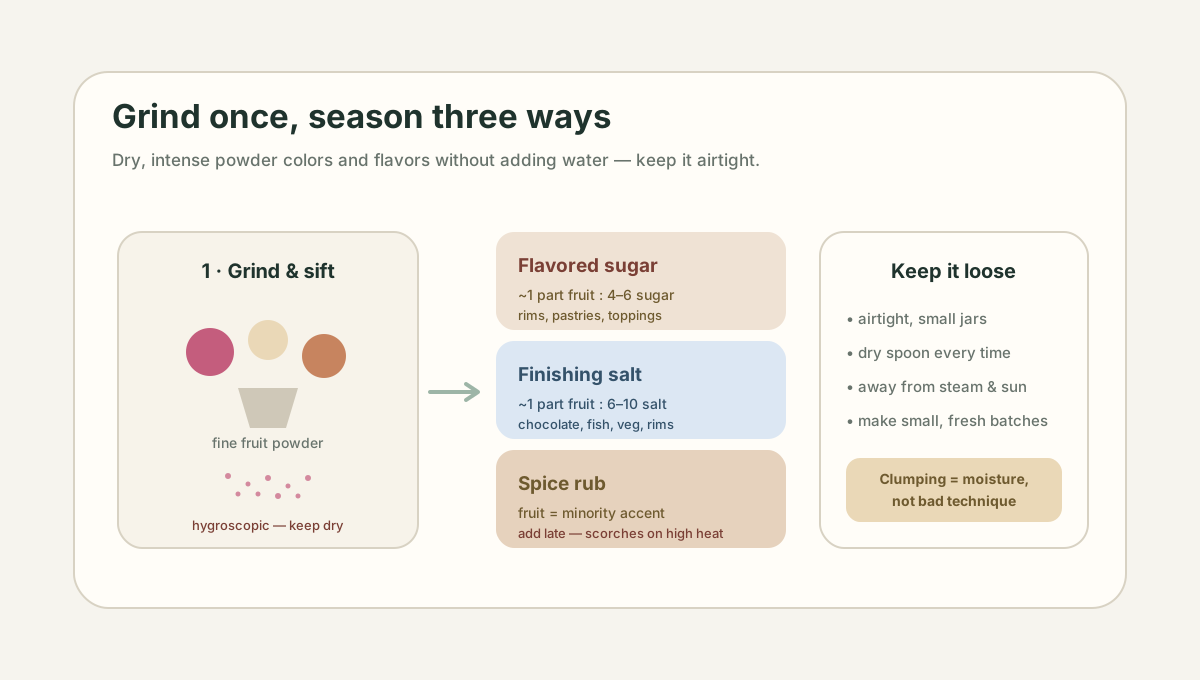
- Freeze-dried fruit grinds to a fine, intense powder that flavors and colors dry mixes without adding water.
- Because the powder is hygroscopic, the enemy of a good flavored sugar or salt is humidity, not technique.
- Sweet, savory, and rub applications each want a different fruit-to-base ratio and grind.
- Make small batches, store airtight with the powder kept dry, and add fruit late in rubs to avoid scorching.
Freeze-dried fruit has one property that makes it unusually good for seasoning blends: it is intensely flavored and bone dry at the same time. Grind a handful of freeze-dried raspberries or mangoes into powder and you get vivid color and concentrated fruit flavor with essentially no added water. That is exactly what a flavored sugar, a finishing salt, or a fruit-forward spice rub needs, because the whole point of a dry seasoning is to deliver flavor without turning to paste.
The technique itself is almost trivial: grind, blend, store. What separates a loose, bright, shelf-friendly mix from a clumped, faded disappointment is not skill at the grinder. It is managing moisture and getting the ratio right for the job.
The direct answer
Grind freeze-dried fruit to a fine powder and blend it into sugar, salt, or a spice base. The powder colors and flavors the mix without adding water, which is why it works where fresh or jam-based flavoring would fail. The two things that decide your results are humidity, because the powder absorbs moisture aggressively and will clump, and ratio, because sweet, savory, and rub applications each want a different balance of fruit to base.
Why freeze-dried fruit is the right tool here
Most ways of adding fruit flavor to a dry mix fight against the format. Fresh fruit and purées add water that dissolves sugar and dampens salt. Extracts add flavor but no color or texture. Jams and syrups are wet by definition. Freeze-dried fruit sidesteps all of that: removing the water leaves a porous solid that grinds to a fine powder carrying the fruit's color, acidity, and aroma in concentrated form.
That concentration is the appeal and the warning. A small amount of powder goes a long way, so it is easy to overshoot on flavor and on color. It also means the powder is thirsty. The same porosity that makes it grind so finely makes it pull moisture from the air, which is the single fact that governs everything about storing these mixes.
Making the powder
Start with a clean, dry grinder, a spice mill, a small blender, or a mortar and pestle. Everything that touches the fruit should be dry, since even a faintly damp bowl will start the powder clumping. Grind the freeze-dried pieces to a fine, even powder.
Some fruits leave bits behind. Raspberry and blackberry carry seeds, and a few fruits have fibrous flecks, so passing the powder through a fine sieve gives a smoother seasoning and a cleaner color. Work in small amounts and keep the finished powder covered until you blend it, because it begins absorbing ambient moisture the moment it is exposed.
If you remember one thing, make it this: freeze-dried fruit powder is hygroscopic. It draws water out of the air, out of warm sugar, and off a wet spoon. Grind on a dry day if you can, keep tools dry, and seal the mix immediately. Nearly every clumping or fading problem traces back to moisture, not to the recipe.
Flavored sugars
Flavored sugar is the most forgiving application and a good place to start. Blend fruit powder into granulated sugar, tasting as you go. A bright, assertive sugar often lands somewhere around one part fruit powder to four to six parts sugar, but intensity varies a lot by fruit, so adjust rather than follow a number blindly. Strawberry, raspberry, and mango all make vivid sugars; tart fruits give a pleasant sourness that plays well on the rim of a drink or dusted over pastries.
Use these sugars where the color and tartness are a feature: rimming glasses, finishing shortbread or doughnuts, sprinkling over yogurt or whipped cream, or folding into a sugar topping just before baking. Keep them out of long, high-heat baking if you want the color to survive, since prolonged heat dulls both the hue and the fresh aroma.
Finishing salts
Finishing salts flip the ratio. Here the salt should still clearly read as salt, with the fruit as an accent, so use less powder, roughly one part fruit to six to ten parts salt, and choose a flaky or coarse salt for texture. A raspberry or strawberry salt is striking on dark chocolate, caramels, and rich desserts; a citrus-fruit salt brightens grilled vegetables, fish, and the rim of a savory cocktail.
Because flaky salt has a larger particle size than fruit powder, blend gently so the powder coats the crystals rather than sifting to the bottom. As with the sugars, treat these as finishes added at the end, where the color and burst of fruit acidity land before heat has a chance to mute them.
Spice rubs
Rubs are where fruit powder gets interesting and where the one real cooking caveat lives. Folding freeze-dried fruit into a savory blend, with paprika, chili, garlic, pepper, and a little sugar and salt, adds fruit acidity and color that pair naturally with pork, poultry, and grilled vegetables. A mango or pineapple powder leans tropical; a tart berry powder cuts through fatty meats.
The caveat is heat. Fruit powder contains sugars and delicate aromatics that scorch and turn bitter under high, direct flame, the same way a sugary rub can burn. Two approaches avoid that. Add the fruit component toward the end of cooking, or after, as a finishing dust rather than a base layer that sits over the fire. And keep the fruit a minority of the blend so a little scorching does not dominate. For lower-heat preparations, roasting, baking, or a quick finish, fruit-forward rubs behave well from the start.
Storing what you make
Storage is just the moisture rule applied to the jar. Keep flavored sugars, salts, and rubs in airtight containers, ideally small ones so the mix is not repeatedly exposed to humid air. Store them away from the steam of a stovetop and out of direct sun, which fades color. Use a dry spoon every time.
Expect color and aroma to soften over weeks regardless, because the same fragility that makes the powder so vivid also makes it impermanent. That is an argument for small, frequent batches rather than one large jar that sits half-used. If a mix turns hard, damp, or noticeably dull, it has done its time.
Bottom line
Freeze-dried fruit is an ideal seasoning ingredient because it delivers concentrated fruit flavor and color while staying completely dry. Grind it fine, sieve out seeds, and blend it into sugar at a bold ratio, into salt at a lighter one, or into a spice rub as a minority accent that you add late to avoid scorching. The technique is easy; the discipline is moisture. Keep the powder and the finished mix dry and airtight, make small batches, and you get bright, naturally colored seasonings that outperform anything from a bottle.
Frequently Asked Questions
How do I turn freeze-dried fruit into powder for seasoning?
Grind the pieces in a clean, dry spice grinder, blender, or mortar until fine, then sift out seeds or fibrous bits if needed. Keep everything dry, because the powder picks up moisture quickly and will clump if it meets humidity or damp tools.
What ratio of fruit powder to sugar or salt should I use?
It depends on intensity. A bright flavored sugar often lands around one part fruit powder to four to six parts sugar, while a finishing salt usually wants less fruit, roughly one part fruit to six to ten parts salt, so the salt still reads as salt. Start lean and adjust to taste.
Why does my flavored sugar or salt clump?
Freeze-dried fruit powder is hygroscopic, meaning it readily absorbs moisture from the air, sugar, or salt. Clumping is almost always a humidity problem: damp ambient air, a wet spoon, or storage without a tight seal. Keep the mix dry and airtight, and add a little extra base if it tightens up.
Can I use these mixes in cooking, or only as a finish?
Both, with a caveat. Flavored sugars and salts are excellent as finishes and rim coatings. In spice rubs, fruit powder can scorch and turn bitter under high direct heat, so it works best added toward the end of cooking or used on lower-heat preparations.
How long do flavored sugars and salts keep?
Stored airtight and dry, they keep for weeks to a few months, though color and aroma slowly fade. Because moisture is the main risk, small batches stored well outperform large batches that sit open. Discard any mix that has gone hard, damp, or dull.
Primary sources & further reading
- Water Activity in Foods: Fundamentals and Applications Barbosa-Cánovas et al. (IFT Press / Wiley) Referenced for the hygroscopic behavior of low-moisture powders and how they absorb ambient moisture.
- On Food and Cooking: The Science and Lore of the Kitchen Harold McGee (Scribner) Referenced for general principles of how heat, sugars, and fruit acids behave during cooking and finishing.
External links open in a new tab. We do not receive compensation from any organization listed; sources are referenced because they are primary, current, and publicly verifiable.