- Freeze-dried fruit is concentrated and nearly water-free, so it flavors spirits and drinks intensely without adding the dilution fresh fruit brings.
- Whole pieces work for fast infusions and garnishes; ground powder works for rims, dusting, and instant flavor in shaken drinks.
- Because it has no moisture of its own, it absorbs liquid quickly, so infusions move faster and powders can clump if added to a wet rim too early.
- It is a flavor and color tool, not a health claim. Treat alcohol responsibly and keep the focus on taste and presentation.
Fresh fruit is the default at a bar, but it has two stubborn flaws for drinks: it carries a lot of water, which dilutes whatever you put it in, and it goes soft and dull quickly once cut. Freeze-dried fruit sidesteps both. It is concentrated, shelf-stable, and intensely colored, which makes it a quietly useful tool for infusions, garnishes, rims, and fast flavoring.
This is a practical guide to using it behind a home bar, with an eye to how its dryness changes the way it behaves.
Why dryness is the whole point
Freeze-dried fruit has had almost all of its water removed while keeping its structure and most of its flavor. That single fact drives everything about how it acts in a drink.
Because it is nearly water-free, it does not dilute. A fresh strawberry muddled into a drink adds juice and water; a freeze-dried one adds flavor and color with almost no liquid of its own. And because its structure is open and porous, it is thirsty. Drop it into a spirit and it starts pulling that liquid into its pores immediately, which is why infusions with freeze-dried fruit tend to move faster than infusions with fresh.
That thirst is also the thing to manage. The fruit will grab any moisture nearby, so a powder hitting a wet glass rim too early will clump, and a garnish perched on a drink will soften within minutes. Used with that in mind, the dryness is an advantage rather than a nuisance.
Quick infusions
Freeze-dried fruit makes fast, clean infusions because the open structure gives the spirit easy access to the flavor.
A simple approach: add freeze-dried pieces to a clear spirit like vodka, gin, or a light rum, let it sit, then strain. Because the fruit rehydrates and releases flavor quickly, infusions that might take days with fresh fruit can reach a strong flavor much faster. Taste as you go rather than relying on a fixed time, since the pace depends on how much fruit you use and how finely it is broken.
A few practical notes:
- More surface area means faster infusion, so lightly crushed pieces work quicker than whole ones.
- Strain through a fine mesh, since the rehydrated fruit breaks down and leaves sediment.
- Expect some color transfer. Red berries and dragon fruit tint a spirit beautifully; this is a feature for presentation.
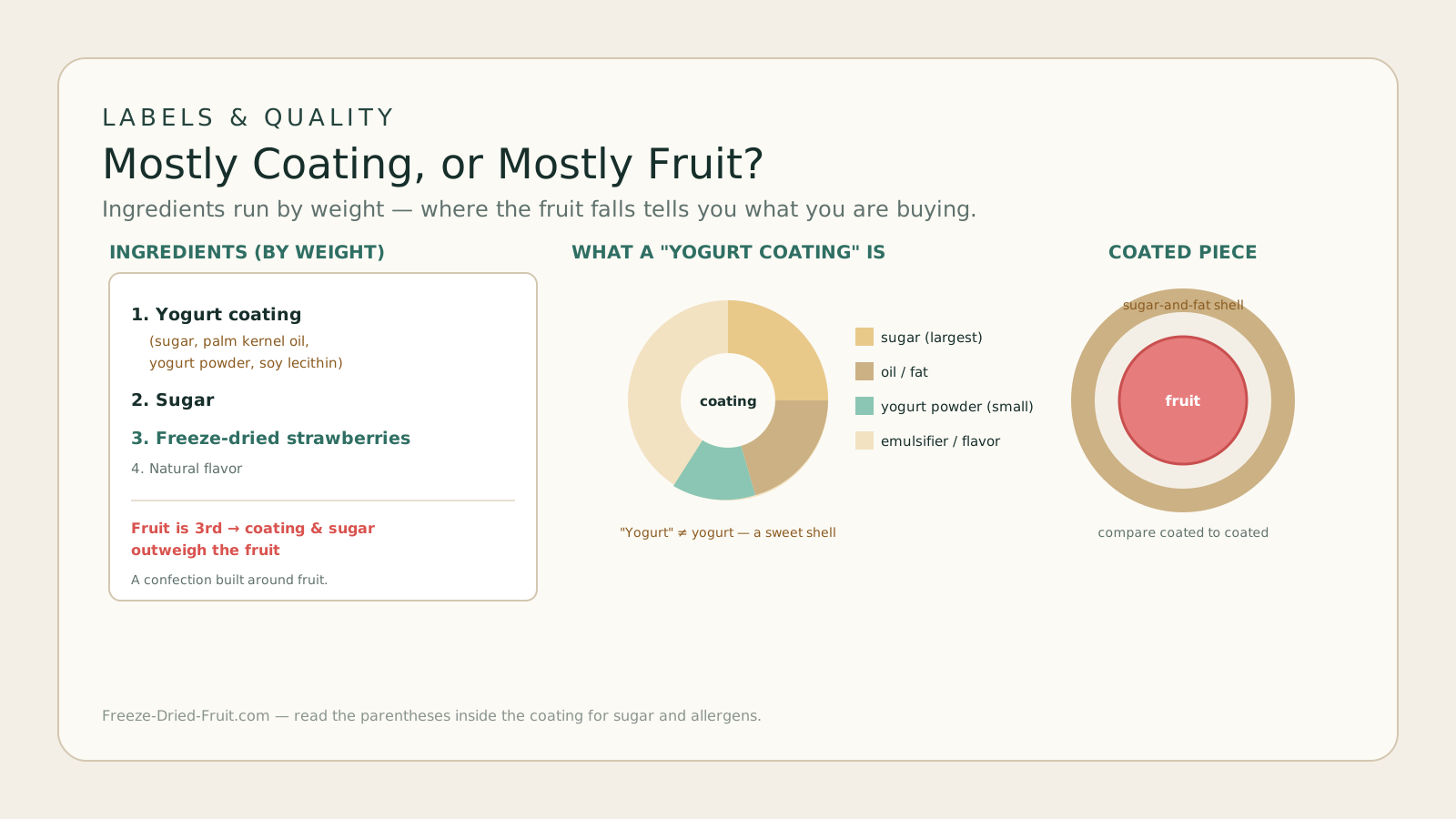
- The fruit gives up flavor and color but does not add sugar unless the product itself contains added sugar, so check the label if sweetness matters to your recipe.
Powders for rims, dusting, and shaken drinks
Ground freeze-dried fruit is one of the most versatile bar tools you can make. Buzz pieces into a fine powder in a clean, dry grinder and you have concentrated color and flavor that dissolves fast.
Uses for the powder include:
- Rimming a glass, on its own or mixed with sugar or salt, for a fruit-colored edge.
- Dusting the top of a creamy or foamed drink for color and aroma.
- Adding directly to a shaker, where it disperses and flavors the drink instantly without the dilution of fresh purée.
Because the powder is thirsty, a rim works best if you set up the glass right before serving. Moisten the rim, dip it in the powder, and use it promptly. If you coat a rim and let it sit, the powder pulls moisture from the air and the glass and turns tacky or streaky.
Keep the powder in a sealed, dry container with the cap on tight. Like all freeze-dried fruit, it pulls moisture from the air and will cake if left open, which dulls both its color and its flow.
Garnishes that hold up
Whole or halved freeze-dried pieces make striking garnishes: a bright, dry strawberry or a ring of freeze-dried orange reads as vivid and intentional. They also stay crisp far longer on a serving tray than cut fresh fruit, which makes them practical for setting up several drinks at once.
The trade-off is contact with liquid. A piece floated on a drink or perched on a wet rim will start to soften as it absorbs moisture. Two ways to work with that:
- Add the garnish at the last moment, so guests see and smell it crisp.
- Lean into the softening when you want it, letting a piece slowly rehydrate in the glass as an edible, flavor-releasing element.
For a garnish meant to stay crunchy, keep it clear of the liquid, on the rim's dry side or on a pick above the surface.
Non-alcoholic and batch uses
Everything above works in mocktails, sparkling water, lemonade, and iced tea, where the lack of dilution is just as valuable. Powder stirred into sparkling water gives instant color and fruit flavor; pieces dropped into a pitcher slowly infuse and double as a garnish.
For batching, remember the thirst factor: if you are pre-rimming glasses or pre-garnishing for a party, do it as close to serving as you can, because the fruit will keep pulling in moisture the whole time it waits.
A note on expectations
Freeze-dried fruit in drinks is a flavor, color, and presentation tool. It is not a wellness add-on, and pairing it with alcohol does not make a drink healthier. Use it because it tastes good and looks good, drink responsibly, and let the fruit do the job it is genuinely great at: concentrated flavor and clean color without the dilution and mess of fresh.
Bottom line
Freeze-dried fruit earns its place behind a bar because it is concentrated, dry, and vivid. It infuses spirits quickly, grinds into a powder perfect for rims and dusting, and makes garnishes that hold their crispness until they touch liquid. Work with its one quirk, that it absorbs moisture fast, by infusing and straining deliberately, rimming just before serving, and garnishing at the last minute, and it becomes one of the most flexible flavor tools in the kitchen.