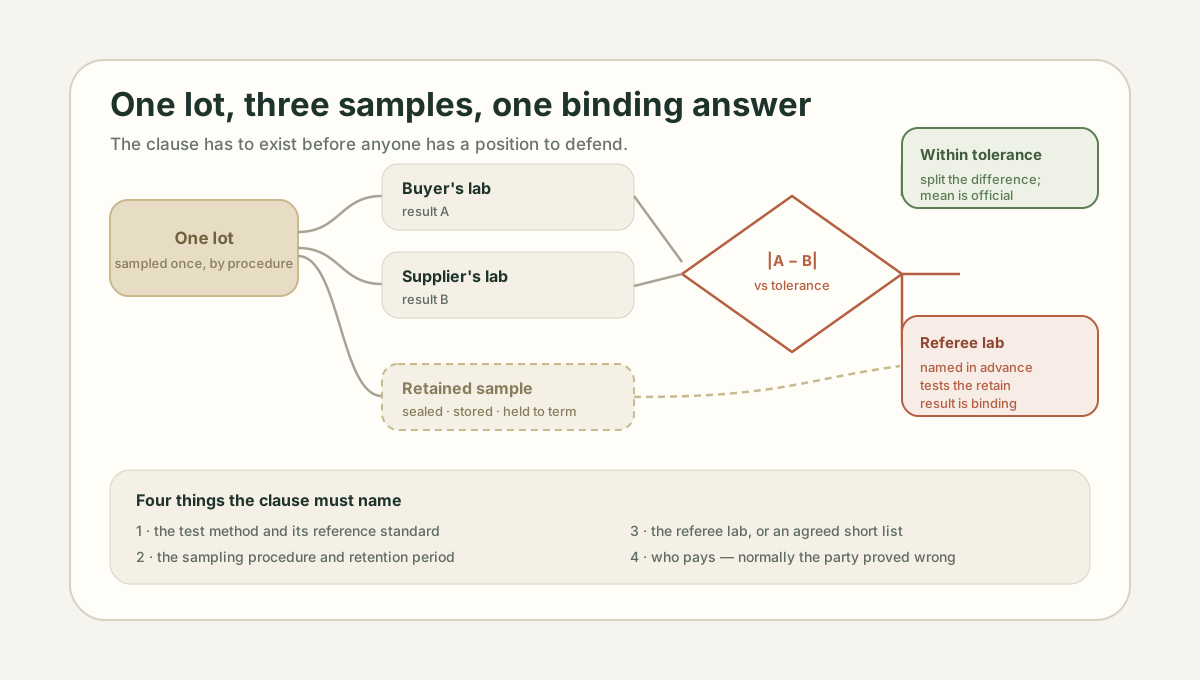
- A referee (or umpire) lab is a neutral third laboratory, agreed by both parties before shipment, whose result is contractually binding when buyer and supplier labs disagree.
- The clause is only useful if it also specifies the test method, the sample the referee will test, and a retention period long enough for the dispute to surface.
- Many contracts include a tolerance band: if the two results differ by less than an agreed limit, the parties split the difference rather than escalating.
- Cost allocation is usually loser-pays, which is what keeps either side from calling a referee over a trivial gap.
A lot of freeze-dried strawberry lands. Receiving pulls a sample, the buyer's lab reports water activity above spec, and the lot goes on hold. The supplier's certificate of analysis, issued three weeks earlier from the same production run, says the lot was comfortably inside spec.
Both labs are accredited. Both are confident. Neither is obviously wrong. What happens next is decided almost entirely by what the contract says — and most contracts say nothing.
The direct answer
A referee lab clause names, in advance, an independent third laboratory whose result both parties accept as binding when their own labs disagree. It works because it is agreed before anyone has a position to defend. Once a lot is on hold and money is at stake, agreeing on a neutral lab becomes a negotiation rather than a procedure.
The clause has four working parts: who the referee is, which method they use, which sample they test, and who pays. Miss any one and the clause will not hold up when you need it.
Why competent labs disagree
It is tempting to read a discrepancy as someone being sloppy. Usually it is something more structural.
Method. Moisture measured by loss-on-drying and moisture measured by Karl Fischer titration are not the same measurement and will not produce the same number on the same sample. Unless the contract names the method, "moisture ≤ 3%" is an incomplete specification.
Sampling. Freeze-dried fruit is not homogeneous. Piece size varies, fines settle, and the top of a tote is not the bottom. Two labs testing two different samples from the same lot are, in a real sense, testing two different things.
Timing and transit. A sample drawn at the point of loading and a sample drawn after a container crossed an ocean have had different exposure histories. For a hygroscopic product, that gap is not theoretical.
Inherent reproducibility. Every validated method has a reproducibility range — the expected spread between labs running the same method on the same material. A difference inside that range is not a disagreement. It is the method behaving normally.
The tolerance band that prevents most escalations
Traded-commodity practice has a useful device sometimes called a splitting limit. The contract sets a tolerance: if the absolute difference between the two parties' results falls within it, the parties split the difference and the average is treated as the official result. Only when the gap exceeds the tolerance does the referee get involved.
This single provision resolves the majority of disputes without a third lab, and it does so on a basis both sides agreed to when neither knew which way it would cut.
The tolerance should reflect the reproducibility of the named method, not a round number that sounds reasonable. If you set it tighter than the method can deliver, you will send routine analytical noise to a referee lab and pay for it.
Which sample the referee actually tests
This is where clauses most often fail in practice. Naming a referee lab is easy. Ensuring there is a valid sample for them to test, months later, is operational.
The referee should test a retained sample drawn at the same time and by the same documented procedure as the samples the two disputing labs used. A fresh sample pulled from remaining inventory after the argument started answers a different question — the condition of that inventory today, not the condition of the lot at transfer of risk.
Commodity practice for traded cargo commonly holds reserve samples for around three months after loading or discharge, specifically so a party has time to request umpire analysis. Umpire labs typically analyse in triplicate against established international methods.
For a freeze-dried fruit program, the right retention window is whatever covers your realistic worst case: receiving inspection, warehousing, a production run, and a downstream customer complaint. If your complaints surface four months after receipt and your retains are discarded at ninety days, the clause is decorative.
Retained samples also need to be stored under conditions that preserve them. A retain for a hygroscopic product held in an unsealed bag in an ambient warehouse is not evidence of anything.
Choosing the referee before you need one
The referee should be named in the contract, or at minimum drawn from a short list agreed by both parties at contract close. Useful criteria:
- Accreditation to a recognised standard for the specific method in dispute, not just general accreditation.
- Genuine independence — no commercial relationship with either party, including routine testing work for one side.
- Demonstrated capability on the specific matrix. Freeze-dried fruit is not the same analytical problem as a liquid or a grain.
- Turnaround that fits your commercial reality. A binding result that arrives after the lot has expired is not a resolution.
- Geography. International shipments raise the practical question of where the retains sit and how they travel.
The cost clause is what makes it work
Most referee provisions are loser-pays: the party whose result the referee contradicts bears the cost of the referee analysis and often the associated sample handling. This is not primarily about the money. It is a filter. Without it, a referee call is free to initiate, and it will get used tactically — to delay payment, to buy time on a lot someone no longer wants, or to apply pressure in an unrelated negotiation.
What to put in the contract
At minimum, a workable clause specifies:
- The named test method and its reference standard, for each disputed parameter.
- The sampling procedure and who witnesses it.
- Retained sample quantity, storage conditions, and retention period.
- The tolerance band and the split-the-difference rule inside it.
- The named referee lab or an agreed short list.
- The window in which a referee analysis may be requested after result exchange.
- Cost allocation.
- An explicit statement that the referee result is final and binding for the disputed parameter.
The honest limitation
A referee clause resolves the analytical question. It does not resolve everything. If the disagreement is really about whether the lot was damaged in transit, or whether the spec was ever appropriate for the application, a third lab result will not settle it — it will just tell you a number that both sides now have to accept.
That is still worth a great deal. Most lot disputes stall because there is no agreed mechanism to establish a fact. A referee clause supplies one, cheaply, before anyone has a reason to argue about it.
Frequently Asked Questions
What is a referee lab?
A referee lab — also called an umpire lab — is an independent third-party laboratory that both buyer and supplier agree to accept as the tiebreaker when their own labs produce conflicting results on the same lot. Its analysis is contractually binding on both parties.
Why do two competent labs get different numbers?
Usually because of method, sampling, or timing rather than incompetence. Moisture by loss-on-drying and moisture by Karl Fischer are different measurements. A sample drawn at loading and one drawn at discharge have had different journeys. Every analytical method also has an inherent reproducibility range.
Which sample does the referee test?
It should be a retained sample drawn at the same time and by the same procedure as the samples the two disputing labs used — not a fresh sample pulled from the lot months later. This is why retention practice matters as much as the clause itself.
How long should retained samples be kept?
Long enough for a dispute to emerge and be raised. Commodity practice commonly holds reserve samples for around three months after loading or discharge, but for freeze-dried fruit the retention period should be tied to how long receiving inspection, downstream use, and complaint cycles realistically take in your program.
Who pays for the referee analysis?
Most clauses put the cost on whichever party's result the referee's finding contradicts. That structure discourages calling a referee over differences that fall inside normal method variation.
Primary sources & further reading
- What a Certified Referee Laboratory Is & What to Expect When Working With One Barrow-Agee Laboratories Referenced for the role of a certified referee laboratory in settling quality disputes between processors and their customers.
- Umpire analysis RC Inspection Group Referenced for the practice of agreeing an independent umpire laboratory before contract close, and for reserve-sample retention practice in traded commodities.
- Commercial Sampling and Analysis: Reflexions on the Splitting Limit Procedure ScienceDirect Referenced for the splitting-limit concept, where results within an agreed tolerance are averaged rather than escalated.
External links open in a new tab. We do not receive compensation from any organization listed; sources are referenced because they are primary, current, and publicly verifiable.